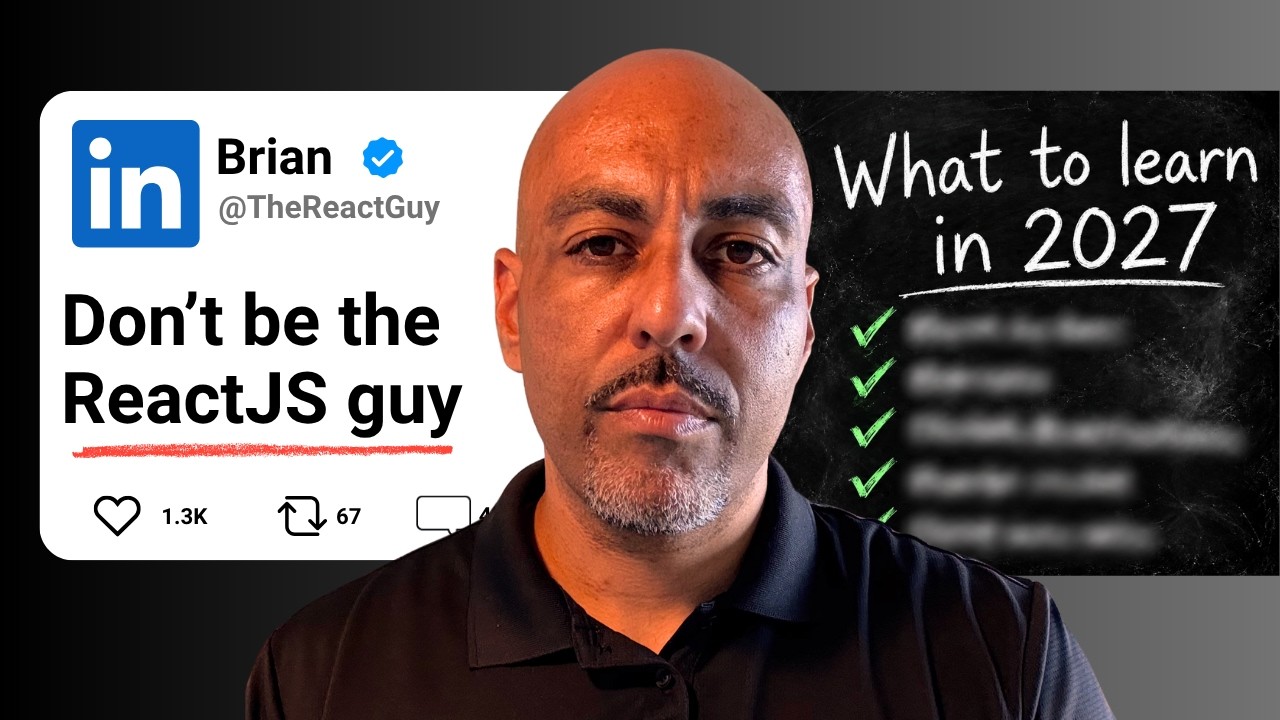
The video emphasizes that by 2027, software developers should focus on broadening their skills beyond technical expertise, particularly by becoming trusted AI intermediaries, effective communicators, and versatile engineers skilled in AI systems and software maintenance. It highlights the growing importance of roles that combine technical ability with emotional intelligence and cross-team collaboration to adapt to the evolving AI-driven industry.
The video discusses the evolving landscape for software developers heading into 2027, emphasizing that being the top technical expert in a specific programming language or domain is no longer a sustainable career advantage. The speaker reflects on the challenges developers have faced recently and highlights that traditional advice like mastering niche languages or frameworks is becoming less relevant. Instead, developers need to adapt by broadening their skill sets beyond just technical prowess, especially as AI and automation reshape the industry.
The first key area to focus on is becoming a trusted human intermediary in the AI space. Since many people and businesses remain skeptical or distrustful of AI, developers who can demystify AI tools, cut through the hype, and demonstrate practical applications within organizations will be highly valuable. This role involves emotional intelligence and the ability to communicate AI’s realistic benefits without overselling or causing fear, positioning such developers as essential liaisons between technology and business teams.
Teaching and communication skills are the second major bet. As software tools and AI evolve rapidly, the ability to explain complex technical concepts to non-technical stakeholders will become a critical differentiator. Developers who can patiently educate colleagues, leadership, and other departments about why certain technologies and processes exist—like CI/CD pipelines or cloud services—will not only save their jobs but also enhance organizational understanding and productivity.
The third and fourth bets are more technical but aligned with the AI revolution. Learning AI engineering—building systems around AI models, agents, and vector databases—is a promising path as demand for these skills grows. Additionally, there will be a significant need for developers who can clean up and maintain AI-generated or hastily built software, helping founders and teams stabilize and scale their products. This cleanup work offers opportunities especially for junior developers to gain experience and contribute meaningfully.
Finally, the speaker highlights the rise of internal forward deployed engineers—developers who embed themselves within different teams to build tailored AI solutions that improve workflows and solve specific problems. This role combines technical skill with cross-team collaboration and business insight. Overall, the advice is to go wide rather than deep: develop a broad understanding of technology, business, and communication to remain adaptable and valuable in a rapidly changing software development landscape.