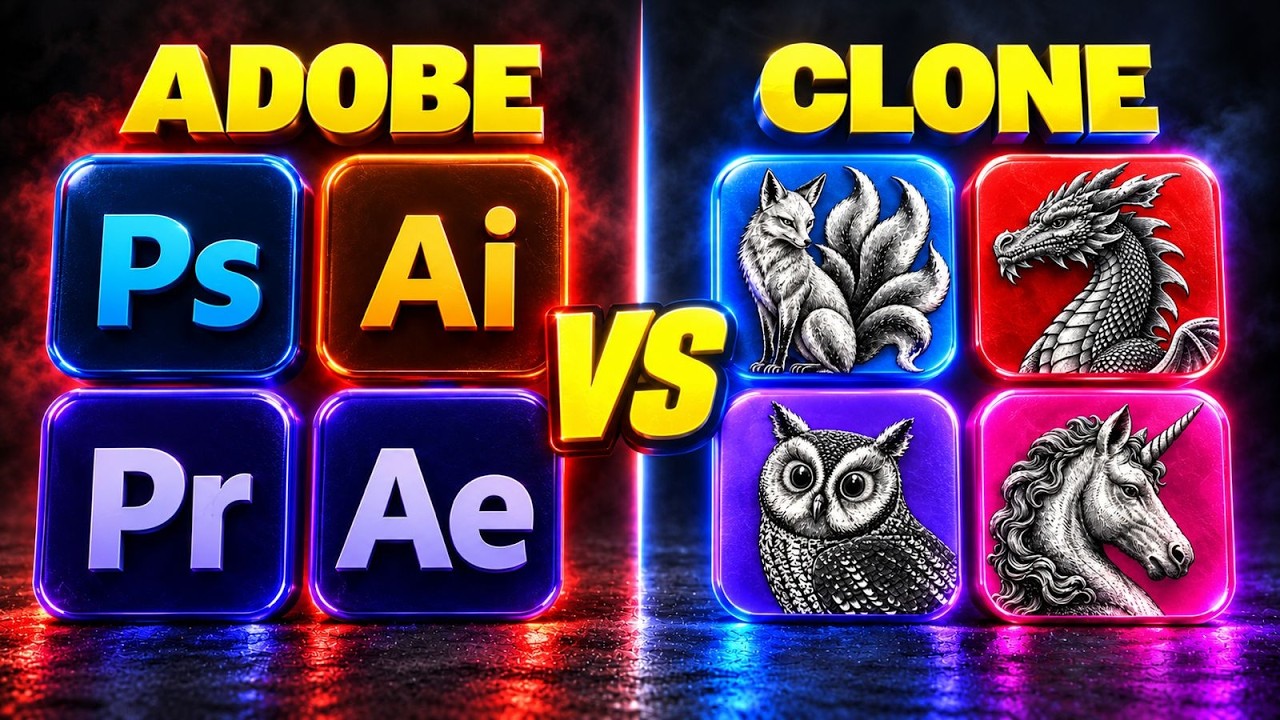
The video explores a set of free, AI-powered clones of Adobe’s most expensive software, including Photoshop, Premiere Pro, and After Effects, all built using the AI model Claude. The creator tests these alternatives—PhotoCraft for Photoshop, FilmCraft for Premiere Pro, and EffectCraft for After Effects—by running identical tasks on both the Adobe originals and the clones, comparing quality, speed, and usability. While PhotoCraft performs well on basic image editing tasks like watermarking, blurring faces, and resizing for social media, it falls short on more complex edits such as object removal, where Photoshop still outperforms it in quality and reliability.
FilmCraft, the Premiere Pro alternative, handles simple video editing tasks like noise reduction and montage creation reasonably well but struggles with advanced audio cleanup and lacks key features such as text-based editing and fast export speeds. Premiere Pro remains superior in handling difficult audio and offers a more mature feature set and faster performance. However, FilmCraft’s ability to complete basic editing tasks quickly and for free makes it a viable option for less demanding users. Both tools showed limitations in tasks like creating short vertical videos with captions, where neither delivered perfect results.
EffectCraft, the After Effects clone, impresses the creator the most among the three, delivering smooth and visually appealing motion graphics and animations comparable to Adobe’s After Effects. Simple animations like lower thirds and kinetic text quotes were executed well by both tools, and even more complex tasks like logo reveals were handled competently by EffectCraft. This suggests that for motion graphics, the free alternative is closer to professional-grade software than the other clones.
The video also highlights the importance of plugin ecosystems, where Adobe’s mature library of plugins, such as Art List, offers significant advantages by integrating AI-powered image, video, and audio generation directly within Adobe apps. This level of integration and professional support remains a key differentiator that free clones currently lack. The creator acknowledges that while these free tools are not ready to replace Adobe for professional work, they are useful for occasional tasks and represent a growing trend of AI-driven, open-source software alternatives.
Finally, the video discusses the broader implications of these AI clones, including ethical and legal debates around intellectual property and clean room builds, where no original source code is used but features are replicated. The creator notes that while Adobe and Microsoft have not commented on potential lawsuits, the software landscape is rapidly changing with more affordable, user-driven alternatives emerging. This shift could pressure large companies to improve their products and customer support. The video concludes by encouraging viewers to experiment with these tools and even create their own AI-powered features, signaling an exciting future for accessible, customizable software.
Useful Links
- Claude AI Model — Explains the AI technology underlying the free Adobe software clones discussed in the video.