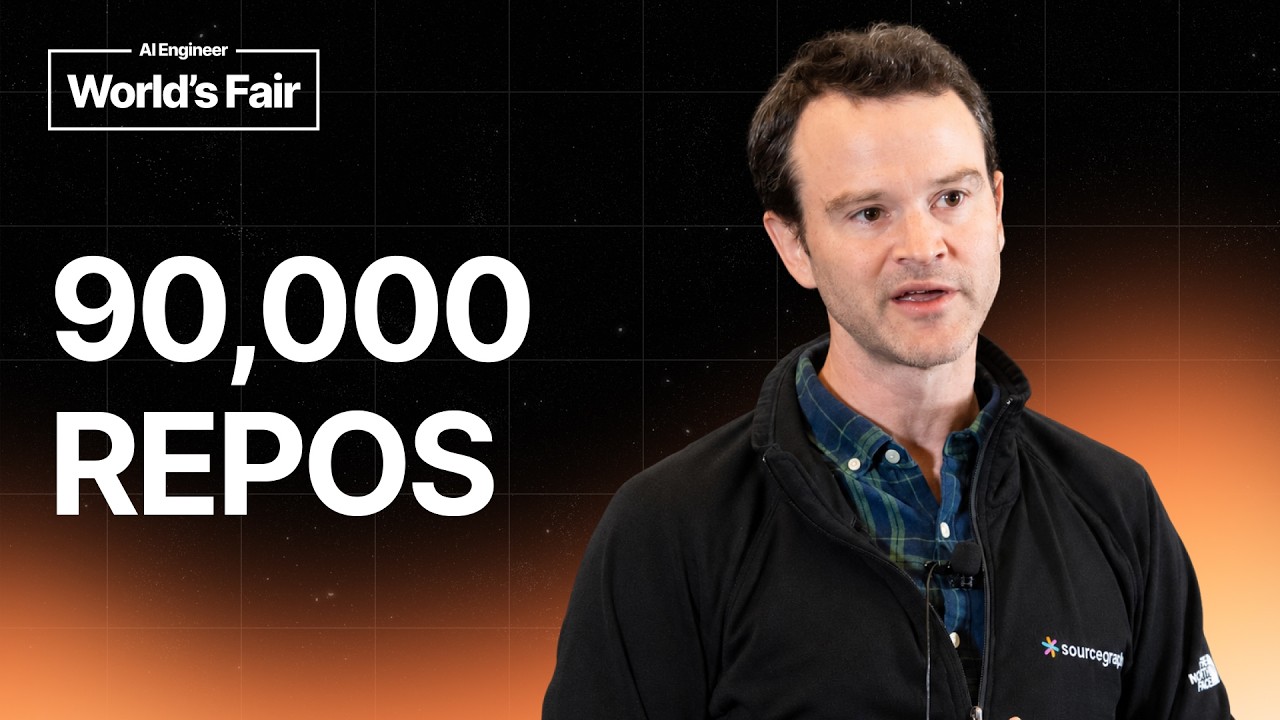
Dan Adler, CEO of Sourcegraph, opens by highlighting the often overlooked but critical challenge of maintaining large, complex codebases that power essential services worldwide. He emphasizes that most software professionals work within massive, decades-old codebases maintained by thousands of engineers, which underpin everything from banking transactions to logistics and transportation. Despite their importance, these codebases are neither new nor clean, and their complexity is growing as AI-generated code floods in, creating both opportunities and challenges for developers.
Adler points out that while AI coding agents are producing code faster and more efficiently than ever, this surge is overwhelming existing systems. The sheer volume of code—spanning tens of thousands of repositories—makes it impossible to fully clone, process, or contextualize in real time. This leads to issues such as inconsistent programming standards, duplicated code, fragile inter-service dependencies, and the rapid emergence of new vulnerabilities. The maintenance of these sprawling legacy systems is becoming increasingly difficult, requiring constant oversight that current tools and agents are ill-equipped to provide.
The core problem, Adler argues, is the lack of infrastructure capable of providing comprehensive visibility and understanding of massive codebases. Current AI tools excel at small, isolated tasks but fail to address the unique challenges posed by large-scale repositories. He stresses that effective agent-based development requires tools that enable agents to “see” and deeply understand the entire codebase, which is essential for safe and efficient code changes. Without this, AI-generated code risks exacerbating the fragility of critical software systems.
Sourcegraph’s mission, as Adler explains, is to build this foundational infrastructure—a “graph of code”—that offers accurate search, analysis, and compiler output across vast repositories. This infrastructure empowers agents to make informed, consistent changes at scale. He introduces Sourcegraph’s new beta product for batch changes, designed to automate and manage large-scale code modifications across thousands of repositories with precision, including error handling, continuous integration feedback, and audit tracking. This approach aims to restore confidence in agent-driven development by ensuring codebase health and adaptability.
In closing, Adler calls on the software community and tool creators to recognize and support the owners of these massive codebases. He invites attendees to engage with Sourcegraph’s solutions and share their experiences managing complex code environments. By fostering collaboration and advancing infrastructure that supports large-scale code understanding and maintenance, the industry can better cope with the accelerating influx of AI-generated code and safeguard the software systems that keep the world running.
Useful Links