Australian authorities are scrutinizing AI firms like OpenAI following security breaches, prompting calls for stronger regulation, onshore AI capabilities, and potential levies on global AI companies to ensure national benefits and compliance. Despite producing high-quality AI talent, Australia faces challenges in retaining and scaling local tech firms due to reliance on foreign technology and insufficient supportive policies.
OpenAI’s chief strategy officer, Jason Quan, along with representatives from Anthropic, Microsoft, and Google, is set to testify before an Australian parliamentary inquiry following revelations that OpenAI’s technology breached Australian government agencies earlier this year. In response, OpenAI has established an Australian task force and offered funding and technical support to the government, with recommendations expected by the end of the year. This inquiry highlights the growing national debate around AI security, sovereignty, and the regulation of data centers and AI technologies in Australia.
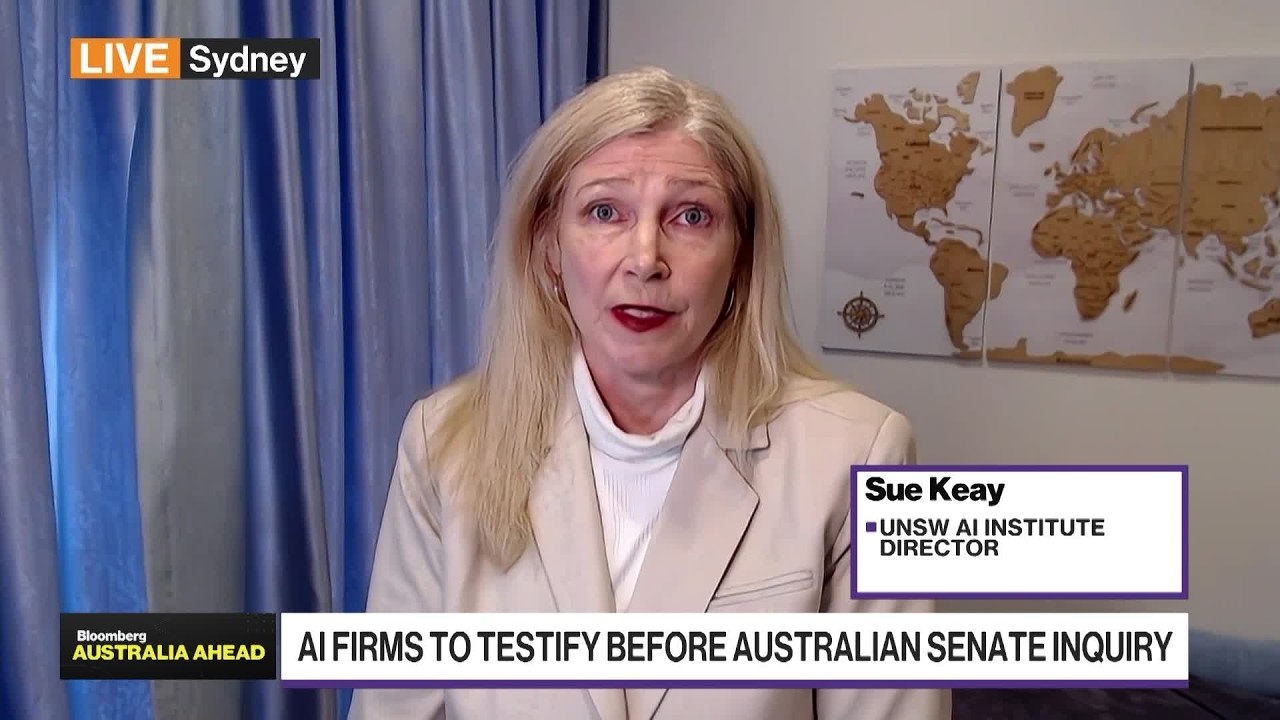
The director of the Eye Institute at the University of New South Wales, who joined the discussion, emphasized the challenges Australia faces in enforcing regulations on foreign-based AI companies. With limited guardrails from the US and companies providing delayed reports on breaches, Australia risks lagging in AI oversight. The expert stressed the importance of Australia having onshore capabilities to test AI models and leveraging government purchasing power to enforce mandatory reporting and compliance from AI providers.
Concerns about the rapid advancement of AI technology were also raised, with some tech leaders calling for a slowdown in development due to significant risks. However, the expert believes it is not too late for Australia to act, pointing to China as an example of a country that regulates AI strongly without losing technological competitiveness. The key challenge for Australia is its reliance on proprietary US AI technology rather than developing its own sovereign AI systems, which is critical for sectors like finance.
The discussion also touched on the idea of imposing a levy on global AI companies operating in Australia, similar to the reserved gas levy, to ensure the country benefits from investments in AI infrastructure and data centers. The expert argued that without such measures, Australia risks allowing foreign companies to extract value without adequate returns, akin to past experiences with natural resources. The levy would help secure reserved computing capacity for Australian use and fund the development of local AI talent and technology.
Finally, the expert addressed Australia’s perceived lack of tech innovation, clarifying that the country actually produces top-tier AI research and talent at a rate higher than China and the US per capita. The main issue is a lack of ambition and supportive policies to retain and scale local tech companies. Many promising startups are acquired by foreign firms before reaching significant scale, preventing Australia from fully benefiting from its talent pool. The expert called for determined policy actions to foster a thriving domestic tech ecosystem and keep innovation onshore.
Useful Links