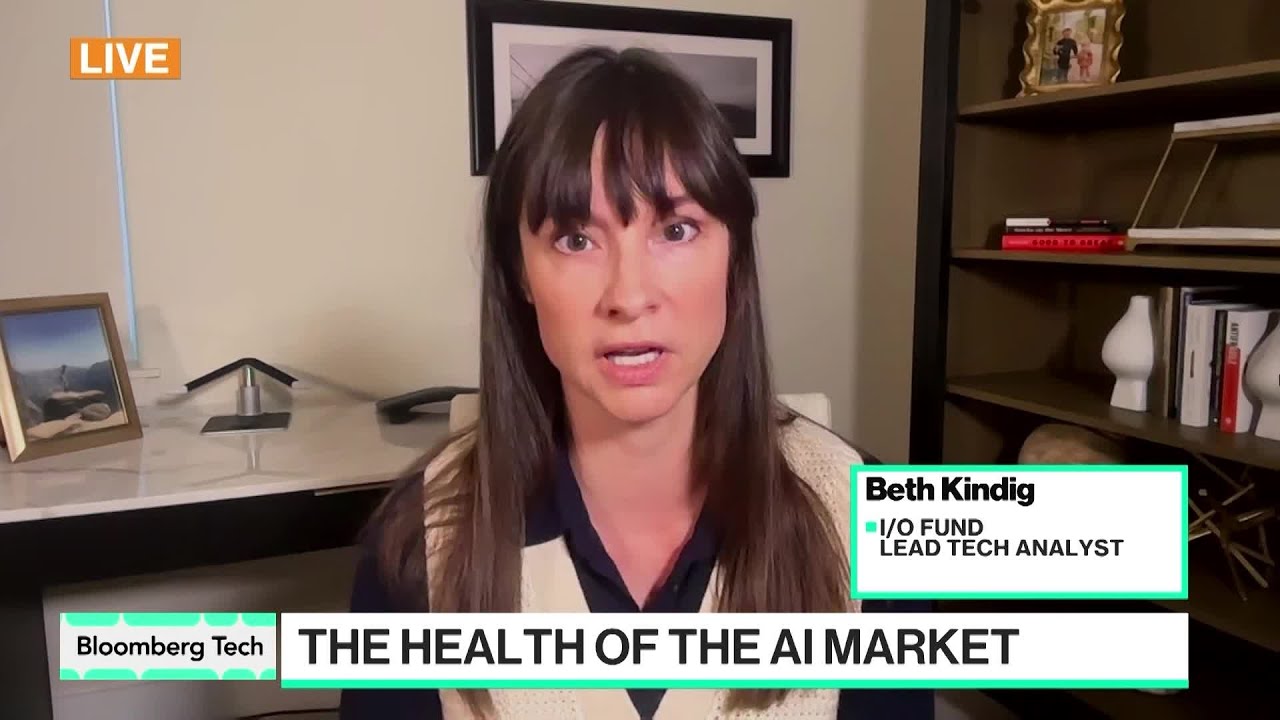
Ed Kindig highlights the critical role of analog semiconductors in the AI market, focusing on companies like Furtive and Amphenol, and emphasizes the significance of NVIDIA’s advancing GPU technologies in driving near-term supply chain growth. Despite geopolitical tensions and supply chain challenges, he remains optimistic about the semiconductor and AI sectors as transformative, long-term investment opportunities with strong potential to boost global GDP.
In the discussion, Ed Kindig emphasizes his hyper-focus on the AI market within the semiconductor industry, particularly on analog semiconductors that are crucial components in AI systems. He highlights companies like Furtive and Amphenol as key suppliers in this space, noting their importance in the supply chain for AI products such as those from NVIDIA. Kindig expresses excitement about the initial positive reports on the health of the AI market, addressing concerns some have about it being a potential bubble.
Kindig points out that while there is significant attention on onshoring semiconductor manufacturing in the U.S., including major investments by companies like TSMC in Arizona, his primary focus remains on the AI product cycle rather than the manufacturing timeline. He explains that true domestic supply chain localization will take years to achieve. Instead, he is closely watching NVIDIA’s current product developments, particularly the transition from 8 GPU units to 72 GPU units with their Blackwell architecture, which represents a massive increase in complexity and is expected to drive a surge in supply chain activity in the near term.
Regarding NVIDIA’s future prospects, Kindig suggests that investors should look forward to more information about NVIDIA’s Rubin project, which may be revealed around March. He notes that NVIDIA is currently shipping its Blackwell Alton GPUs in volume, and any forward-looking news on Rubin could be significant for investors. Kindig also mentions his attendance at GTC DC, where such product announcements might be made, indicating that these events are critical for gauging NVIDIA’s technological advancements and market impact.
The conversation also touches on geopolitical issues, particularly the recent U.S.-Australia deal concerning rare earth elements, which is seen as a strategic move in response to China’s use of rare earths as leverage in trade negotiations. Kindig acknowledges the importance of these rare earth materials but views the ongoing interdependence between the U.S. and China as a complex dynamic that investors should monitor carefully. He suggests that while rare earth stocks have seen dramatic gains, the broader focus should be on how global manufacturing demand continues to outstrip supply, which is a more critical factor for investment decisions.
Finally, Kindig expresses optimism about the resolution of trade tensions, noting that industry leaders, including NVIDIA’s CEO, are keen on restoring cooperative relations between the U.S. and China. He believes that despite geopolitical tensions, the semiconductor and AI sectors represent one of the best investable opportunities of our lifetime due to their powerful potential to drive GDP growth. This long-term perspective on the transformative impact of AI and semiconductors underpins his investment strategy and outlook.