This week’s AI news for academia covers controversies like Nicholas Pollson’s record 257 AI-generated papers, many removed for quality concerns, alongside the development of tools like Idea Lens to detect AI-derived ideas and Google’s Deep Review for expert AI-assisted peer feedback. These developments highlight ongoing debates about AI’s impact on research integrity, productivity, and the evolving role of AI in academic publishing and evaluation.
This week in AI news for academia highlights several significant developments and controversies. A professor named Nicholas Pollson has set a world record by producing an astonishing 257 AI-generated papers in 2026 alone, many of which were subsequently removed by the Social Science Research Network due to concerns about quality and oversight. Pollson reportedly used a generative AI trained on his previous work to mass-produce these papers, sparking debate about the future of academic publishing and the ethics of AI-assisted research. Despite criticism, Pollson dismissed detractors as jealous peers, emphasizing AI’s role in boosting research productivity.
In response to the rise of AI-generated academic content, a new tool called Idea Lens has been developed to detect AI-generated ideas in scientific papers, focusing on concepts rather than just text. This tool reportedly identifies AI-derived arguments with 91% accuracy, though it is not foolproof and should not be used as the sole judge of authenticity. The emergence of such tools raises questions about the future of academic integrity and whether the focus should be on the originality of ideas rather than the involvement of AI in writing.
AI’s impact on research is also evident in theoretical physics, where AI models like GP6 Astro have demonstrated remarkable problem-solving abilities, solving complex physics problems at a low cost and even identifying subtle errors in expert calculations. This advancement suggests that AI could accelerate scientific progress significantly, though it also challenges traditional roles of human experts and raises concerns about reliance on AI-generated results.
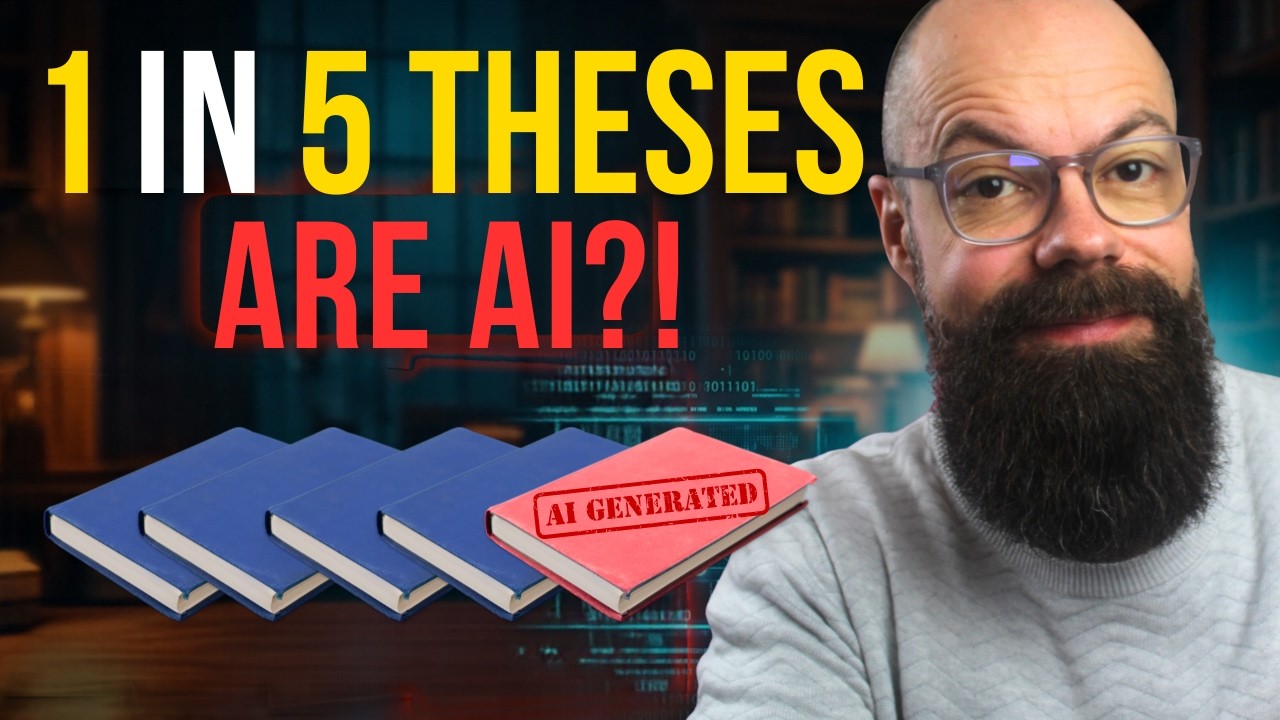
The use of AI in academic theses has become a contentious political issue, particularly in the Netherlands, where a report claimed that AI contributed more than students themselves in about 20% of theses. Universities caution against over-reliance on AI detection tools due to their limitations, emphasizing that the core issue should be the validity and quality of ideas rather than the mere presence of AI-generated text. This debate underscores the need for nuanced discussions about AI’s role in academic work rather than blanket accusations of fraud.
Finally, Google has introduced Deep Review, an AI-powered system designed to provide expert-level feedback and technical verification on complex academic documents across various fields. This tool aims to assist researchers by offering rigorous analysis and secure handling of documents, with a free tier allowing two reviews per week. Deep Review represents a promising step toward integrating AI into the peer review process, potentially improving the quality and efficiency of academic publishing while raising new questions about the role of AI in scholarly evaluation.