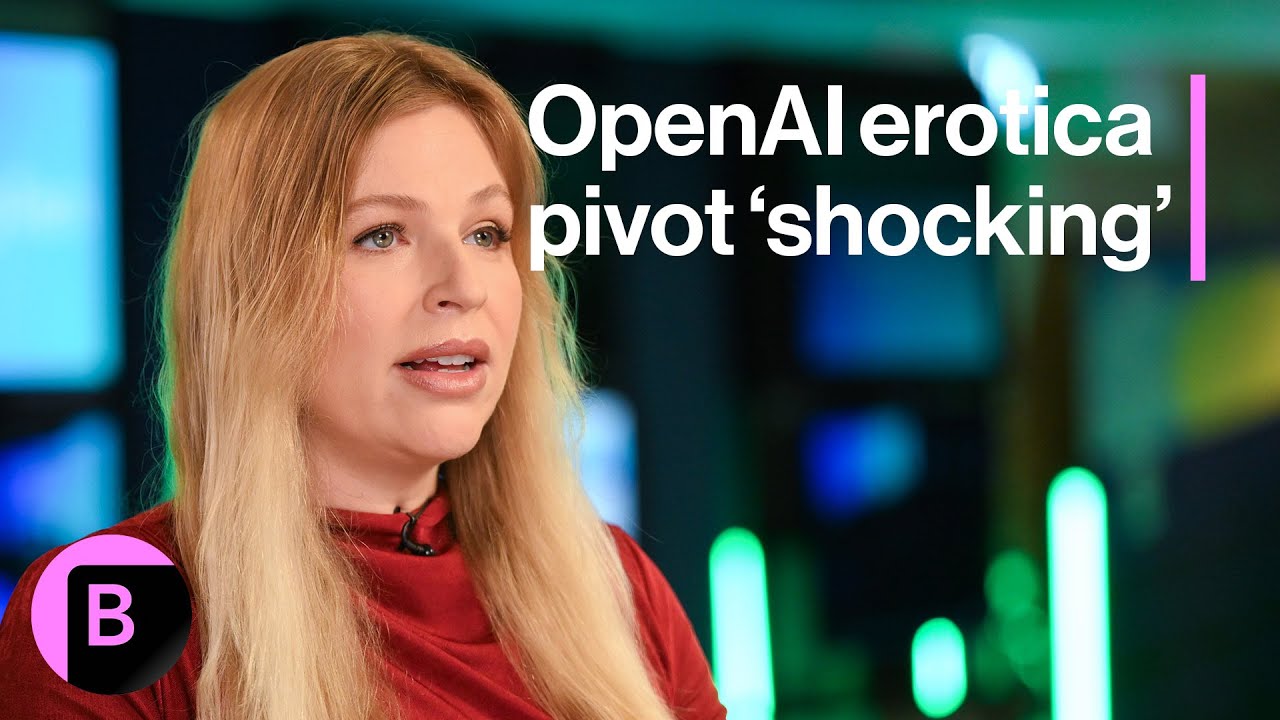
The CEO of Pandorabox, a company with two decades of experience in AI-driven conversational technology, discusses the evolution and impact of AI chatbots, particularly focusing on their use in romantic and sexual contexts. Drawing inspiration from the Spike Jonze movie “Her,” the company has processed over 100 billion interactions and observed overwhelming user demand for romantic use cases. However, they believe that sexualized AI companions will have a net negative effect on society and are not a viable business strategy for partnering with reputable brands. Instead, they see tremendous potential for AI companions in sectors requiring personalized listening, tutoring, and expert conversations, emphasizing the positive opportunities beyond sexualized applications.
The CEO highlights the transformative potential of AI in education and other fields, comparing its impact to that of the internet. While AI for coding and other applications is already revolutionary, challenges remain, particularly regarding accuracy. For use cases where precision is critical, such as safety-related applications, current generative AI models still face significant hurdles. The company advocates for a blended approach that combines rule-based AI with generative systems, supported by human experts, to create reliable and scalable enterprise solutions.
Addressing the possibility of achieving unbiased and accurate AI, the CEO acknowledges the limitations of simply increasing computational power and data. Instead, they emphasize the importance of integrating rule-based methods and expert training to enhance AI performance in specialized domains. This hybrid approach is seen as essential for developing trustworthy AI applications that can interact effectively with consumers on a large scale.
One of the most shocking revelations for the CEO was the shift toward erotic and pornographic uses of AI chatbots. Despite initial resistance, the industry has seen a surge in demand for sexualized AI, driven by a significant revenue gap that companies feel compelled to bridge. The CEO expresses deep concern about the negative societal impacts, including the reinforcement of harmful fantasies and the high engagement of children and young teens with such content. They warn that sexualized AI could exacerbate mental health issues and antisocial behavior, posing serious risks beyond those associated with traditional pornography and social media.
Regarding regulation, the CEO argues that creators bear the primary responsibility for ensuring AI safety, as regulatory processes tend to be slow. They call for frameworks similar to those governing addictive products like tobacco and gambling, including warning labels and liability measures that require creators to prove their products are safe before release. The CEO stresses that AI manipulation affects not only vulnerable individuals but also intelligent and stable people, making it a widespread societal issue. Finally, they acknowledge that monetization pressures drive the proliferation of sexualized AI, as user demand in this area is substantial and financially lucrative, despite the ethical concerns.