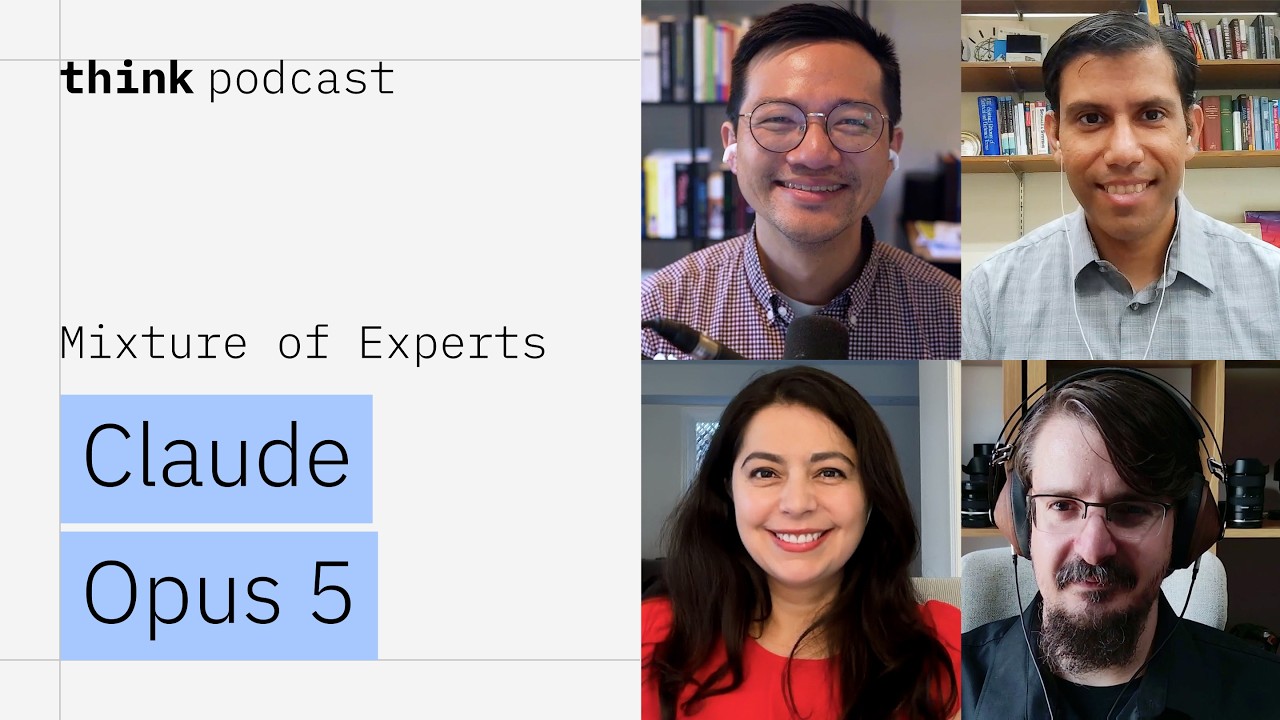
The episode of Mixture of Experts begins with a discussion on the rising costs and evolving nature of AI-related security threats, anchored by insights from the latest IBM Cost of a Data Breach Report. Natalie Baracalo highlights how AI is now a dominant factor in cybersecurity, with organizations increasingly investing in threat hunting but still lagging in prevention measures. The report identifies model inversion and prompt injection as significant AI vulnerabilities, emphasizing the economic asymmetry where attackers benefit from cheaper, less regulated AI tools, while defenders face higher costs and stricter guardrails. The panelists express concern about whether investments in security can keep pace with the rapidly changing threat landscape.
The conversation then shifts to the release of Claude Opus 5, Anthropic’s latest AI model. Mihi Crevetti shares his mixed experience, noting that while the previous model, Fable, was powerful but expensive, Opus 5 currently underperforms in following instructions and handling tasks effectively. Kush Varsani and others discuss the challenges of balancing security guardrails with usability, suggesting that personalized policies and better harnessing of models could improve user experience without compromising safety. They also debate the future of model selection, predicting a move towards automated orchestration that optimizes performance and cost, potentially reducing user control but increasing efficiency.
Next, the panel explores a thoughtful IBM blog post by David Sachs titled “What Does AI Look Like?” which aims to demystify AI by explaining its inner workings in relatable terms. Natalie and Kush commend the article for making complex AI concepts accessible through analogies like spreadsheets and pattern recognition, while acknowledging the inherent complexity and emergent behaviors that remain challenging to fully interpret. They discuss how future generations will likely embrace higher-level abstractions in programming and AI interaction, outsourcing much of the complexity to AI systems themselves, which could transform how humans engage with technology.
The final story covers Midjourney’s surprising acquisition of Co-Star, an astrology app, and the appointment of its CEO as Midjourney’s chief design officer. The panelists speculate on the strategic rationale behind this move, with Natalie suggesting the value of an existing user base, Mihi highlighting the tolerance of astrology users for AI-generated hallucinations, and Kush proposing that integrating AI into daily rituals like astrology could help make AI a more seamless and persistent part of users’ lives. They also touch on the potential risks of AI becoming an “extended mind” that deeply integrates with human cognition.
The episode concludes with a heartfelt farewell to the show’s longtime producer, Alex, who is moving to a new role within IBM. The hosts and guests express their gratitude and well wishes, marking the end of a significant chapter for the podcast. Overall, the episode offers a rich blend of technical insights, industry trends, and thoughtful reflections on AI’s evolving role in security, usability, and everyday life.