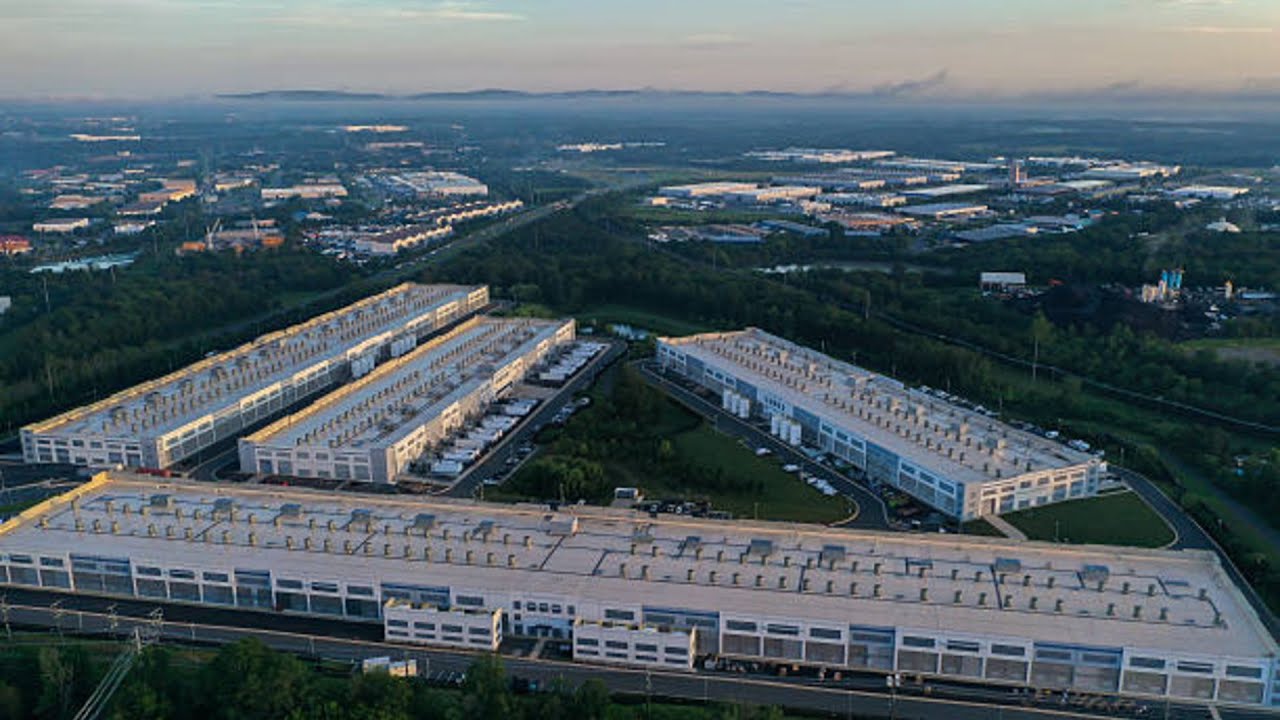
Amazon operates a vast network of around 900 data centers but lags behind competitors like Google in GPU capacity and AI revenue, prompting a strategic focus on expanding globally with edge data centers to reduce latency for large-scale AI models. Meanwhile, intense competition for high-capacity data center real estate and technological advancements like Google’s efficient TPUs and integrated search capabilities are reshaping the AI landscape, with OpenAI pivoting towards product-focused applications in e-commerce to challenge Google’s dominance.
The discussion begins with an analysis of Amazon’s data center footprint in comparison to other major players like Google and Microsoft. While Amazon operates around 900 data centers, its GPU capacity and revenue run rate are significantly lower than those of Google, which has about 32 to 35 data centers with over 100,000 GPUs and a $5 billion revenue run rate. Amazon’s GPU capacity lags behind, resulting in a backlog that trails competitors, prompting Amazon to adopt a more strategic approach to its data center expansion.
The conversation then addresses the importance of having multiple data centers globally rather than concentrating compute power in a single location. For large language models with trillions of parameters serving billions of users worldwide, regional accessibility is crucial to minimize latency. Edge data centers near major population centers like New York or Los Angeles help cache data and ensure users experience fast and reliable AI services, which is essential given the massive computational demands of these models.
There is also a discussion about the competitive landscape regarding data center real estate. Amazon’s aggressive acquisition of land and facilities with the necessary power infrastructure for GPU-heavy data centers is part of a broader “land grab” as multiple cloud providers and emerging “neo clouds” compete for limited high-capacity data center space. This scarcity of suitable facilities is a significant factor shaping the industry’s infrastructure development.
The conversation shifts to technological advancements, particularly Google’s vertical integration strategy with its Tensor Processing Units (TPUs). Google’s seventh-generation TPUs are designed to deliver better performance and energy efficiency (tokens per watt) compared to NVIDIA’s GPUs, which dominate the market. Additionally, Google’s access to its vast search index gives its AI models, like Gemini 3, an advantage in reducing hallucinations and grounding responses more effectively than competitors, including OpenAI.
Finally, the discussion touches on the strategic implications for OpenAI in response to Google’s advancements with Gemini. OpenAI is expected to become more product-centric and focus on specific applications, particularly in e-commerce, where it can challenge Google’s dominance. By integrating AI with e-commerce platforms and advertising, OpenAI aims to leverage this sector’s significant revenue potential, potentially disrupting Google’s core search ad business and reshaping the competitive dynamics in AI-driven commerce.