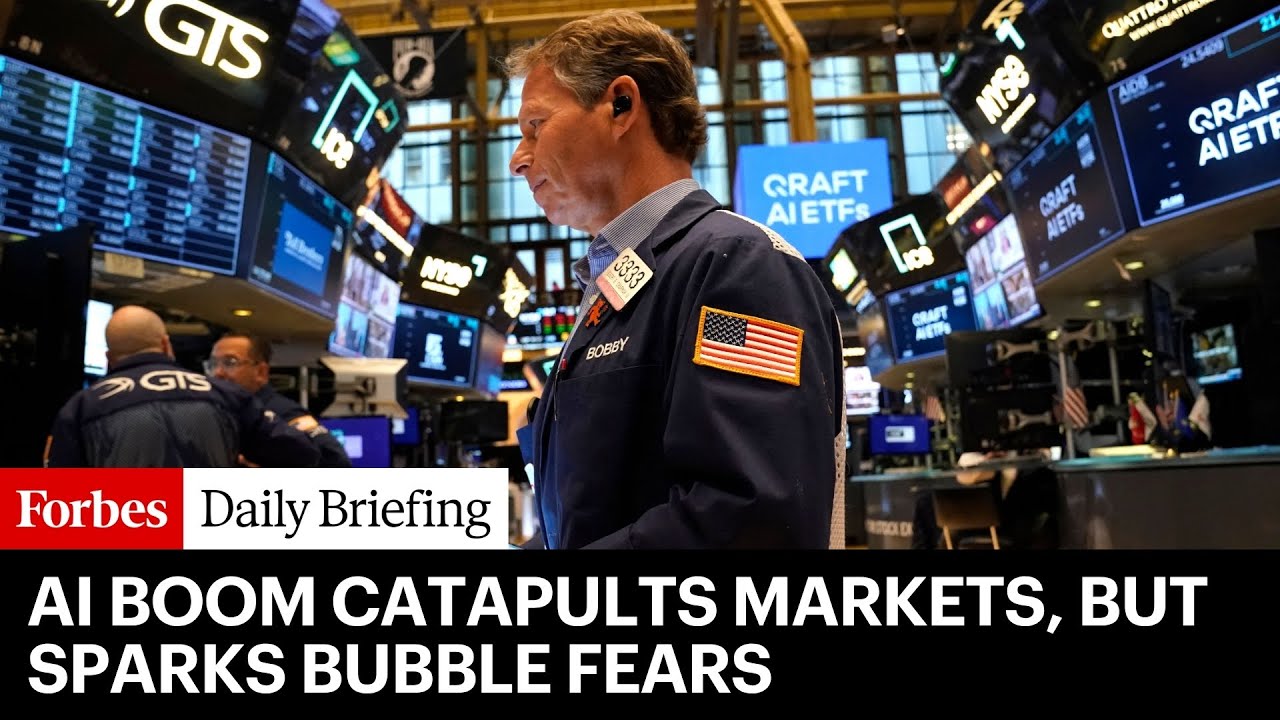
The current AI boom is dramatically propelling markets and raising concerns about a potential bubble. Markets are soaring with valuations swelling as enthusiasm for artificial intelligence drives hundreds of billions of dollars into what is considered one of the most transformational technologies of the modern era. John Markman, a Forbes contributor specializing in tech stocks, emphasizes that AI represents a structural transformation, rebuilding every layer of the tech stack from power generation to semiconductors and enterprise software. The key question remains whether this growth is sustainable or if it risks becoming another bubble that could wipe out trillions of dollars in market value.
Forbes experts have been closely monitoring the AI bubble for months, identifying signs of stability while also warning about vulnerabilities reminiscent of the dot-com crash. Peter Cohan, a senior markets contributor, outlines three possible scenarios: continued booming growth, a soft landing with some valuation declines, or a sudden collapse triggered by a major player like OpenAI facing financial difficulties. OpenAI, as the most recognizable AI brand, has become both a symbol and a driver of the boom, with its numerous billion-dollar deals with companies like AMD, Broadcom, Nvidia, Oracle, and Walmart either solidifying the AI foundation or inflating the bubble further.
Industry veterans like Soul Rashidi highlight OpenAI’s ambitions to vertically integrate compute, data, and model training at an unprecedented scale. Rashidi praises CEO Sam Altman and his team for quietly building a strategic playbook focused on ecosystem control, upstream equity leverage, and large-scale industrial deployment, setting the stage for the next phase of AI development. John Markman adds that unlike past speculative manias, today’s AI wave is grounded in real demand, tangible products, and enormous computing needs, which require hundreds of billions of dollars in new infrastructure investments.
The partnership between OpenAI and Nvidia is particularly vital, with Nvidia being the most valuable publicly traded tech company and a key bellwether for the industry. These deals are seen as sponsors of innovation, which remains the engine of growth for the U.S. economy. However, some experts caution that the current market environment echoes the dot-com era, with concerns about overconcentration in a few major tech stocks. Forbes contributor Courtney Harding and Harvard senior fellow Paulo Carvalho warn that the dominance of the so-called Magnificent 7 AI leaders, which now make up more than a third of the S&P 500, heightens the risk of a sharp market correction.
Carvalho stresses that the real concern is not AI’s long-term potential but the inflated expectations that could lead to a sudden downturn. He advocates for more nuanced analysis rather than binary thinking that swings between hype and fear of a bubble. As the AI boom continues to unfold, investors and analysts alike are urged to carefully assess the market dynamics to understand the true sustainability of this transformative technological wave. For more detailed insights, Forbes encourages readers to explore Jeffrey Marcus’ comprehensive coverage on Forbes.com.