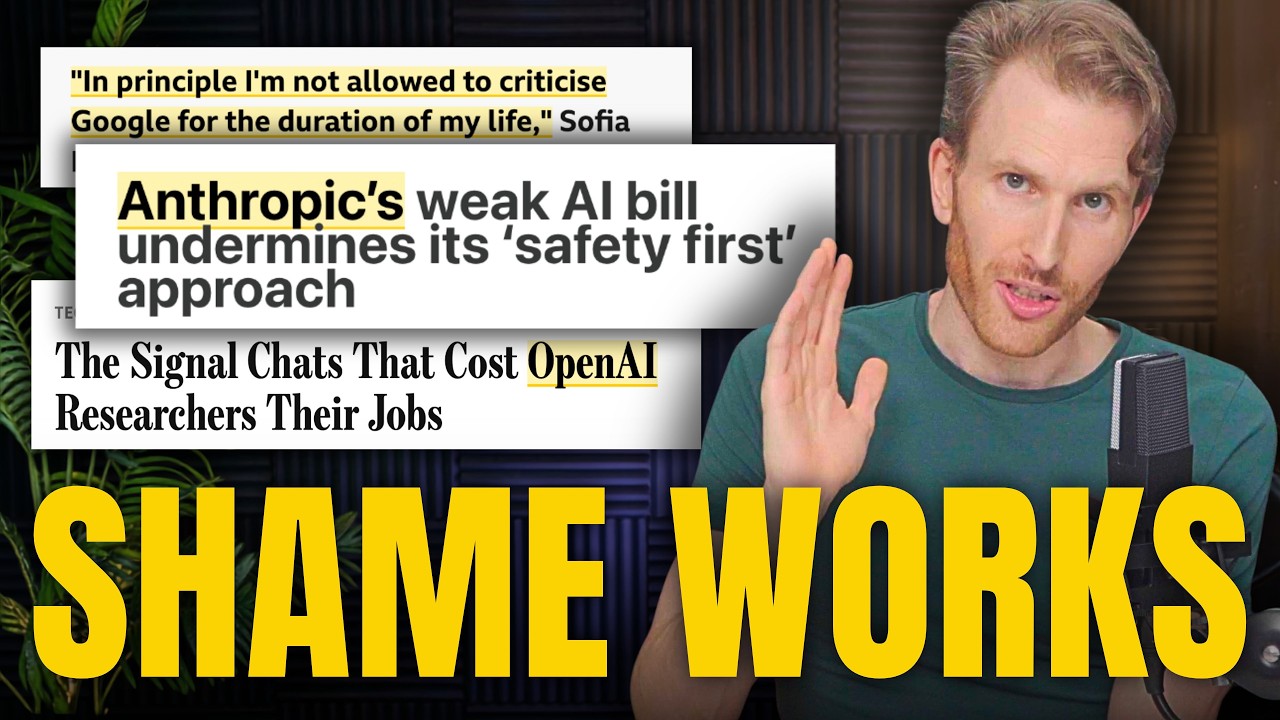
The video emphasizes the critical need for increased accountability of AI companies, highlighting the roles of internal whistleblowers, investigative journalists, informed experts, and public advocates in exposing and challenging harmful practices. Recent controversies involving major AI firms—Anthropic, OpenAI, and Google DeepMind—illustrate the urgency of this oversight. For instance, Anthropic quietly promoted a draft federal AI bill that would severely limit government and state powers to halt dangerous AI developments, effectively centralizing control and raising concerns about inadequate safeguards against catastrophic risks. This approach contradicts their public stance on AI safety and raises questions about the balance of regulatory power.
OpenAI recently faced backlash after firing three safety researchers under dubious circumstances linked to a leak investigation about a controversial technique called “looped transformers,” which complicates monitoring AI behavior. The firings appeared pretextual and have damaged trust within the company, potentially discouraging staff from raising safety concerns. The video argues that these dismissals were likely a mistake, undermining OpenAI’s safety culture and possibly allowing the real leaker to remain unidentified. This incident underscores the tension between corporate secrecy and the need for transparency in AI safety research.
Google DeepMind’s employment contracts reportedly include lifetime clauses preventing former employees from publicly criticizing the company, a practice that stifles free expression and contrasts with past controversies at OpenAI and Anthropic over similar gag orders. While less severe than OpenAI’s previous equity-confiscation threats, these clauses still pose significant barriers to accountability and whistleblowing. The video calls on DeepMind staff to advocate for the removal or revision of these restrictive terms to ensure that former employees can freely share their insights and concerns about AI development.
Despite these challenges, the video acknowledges positive actions by these companies, such as substantial compute credits donated to AI biosecurity research and transparency efforts like red-teaming safety monitors. It stresses the importance of internal company staff using their unique influence to speak up about problematic decisions, whether by engaging constructively within the company or by resigning and publicly explaining their concerns. For those outside AI firms, the video highlights the value of specialized investigative work, legal support for whistleblowers, expert analysis for policymakers, and broad public outreach to generate informed outrage and pressure for better practices.
Ultimately, the video argues that holding AI companies accountable requires a coordinated effort from insiders and outsiders alike. While AI firms often promote themselves as responsible, their mixed track record demands vigilant scrutiny. The successes of past advocacy campaigns demonstrate that well-informed, strategic pressure can lead to meaningful change. As AI development accelerates, building and scaling these accountability mechanisms is essential to ensure that AI technologies are developed safely and ethically, protecting society from potentially catastrophic risks.
Useful Links