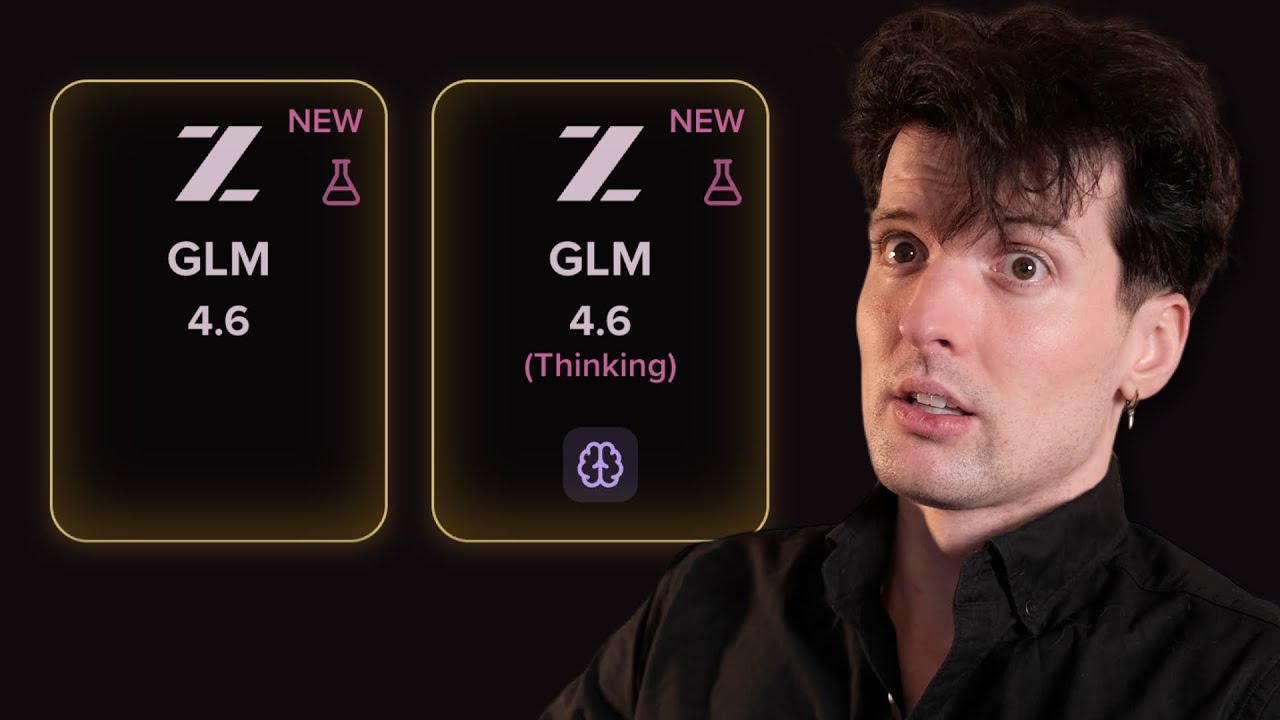
The video discusses the impressive advancements of the GLM-4.6 model, highlighting it as a significant open-weight AI model that rivals more established models like Claude and Sonnet 4, but at a fraction of the cost. The speaker notes that while major labs with vast resources have dominated the AI landscape, smaller labs like ZI are pushing boundaries by delivering high-performing models that also prioritize product usability. Unlike some research-focused labs that struggle with software development, ZI offers a well-rounded experience with accessible APIs and affordable subscription plans, making GLM-4.6 a compelling alternative for developers.
GLM-4.6 brings several key improvements over its predecessor, GLM-4.5, including longer context windows of up to 200,000 tokens, superior coding performance, and enhanced reasoning capabilities. The model excels in benchmarks related to coding and reasoning, outperforming Sonnet 4.5 in many tests and maintaining a nearly even win rate against Sonnet 4. The model also supports tool use during inference, making it more effective as an agent in complex workflows. Its token efficiency is notable, using fewer tokens per request compared to competitors, which contributes to its cost-effectiveness.
The speaker demonstrates GLM-4.6’s practical coding abilities using Kilo Code, showing how the model handles real-world coding tasks such as implementing new APIs and fixing bugs. Despite some minor hiccups like occasional invalid JSX output or UI quirks, the model performs impressively well, maintaining coherence across multi-file operations and generating functional code quickly. The speaker envisions a future where high-level planning is done by more expensive, powerful models, while routine coding tasks are delegated to efficient, cheaper models like GLM-4.6, dramatically reducing costs without sacrificing quality.
A significant point raised is the lack of current tooling that effectively leverages multiple models for different parts of a coding workflow. While some platforms like Claude Code use cheaper models for auxiliary tasks, most tools still rely on a single model for all operations. The speaker advocates for more sophisticated orchestration where expensive models handle planning and cheaper models execute implementation, mirroring a traditional engineering team structure. This approach could optimize both cost and performance, but existing tools have yet to fully embrace this multi-model strategy.
In conclusion, GLM-4.6 represents a major step forward in making advanced AI coding models accessible and affordable. While it may not yet replace premium models for every use case, it offers a practical and cost-effective solution for many coding tasks. The transparency and collaboration from ZI, including publishing test data and agent trajectories, add credibility to their claims. The speaker is excited about the potential of GLM-4.6 and similar models to reshape AI development economics and looks forward to future innovations in tooling that better integrate multiple models to maximize efficiency and reduce costs.