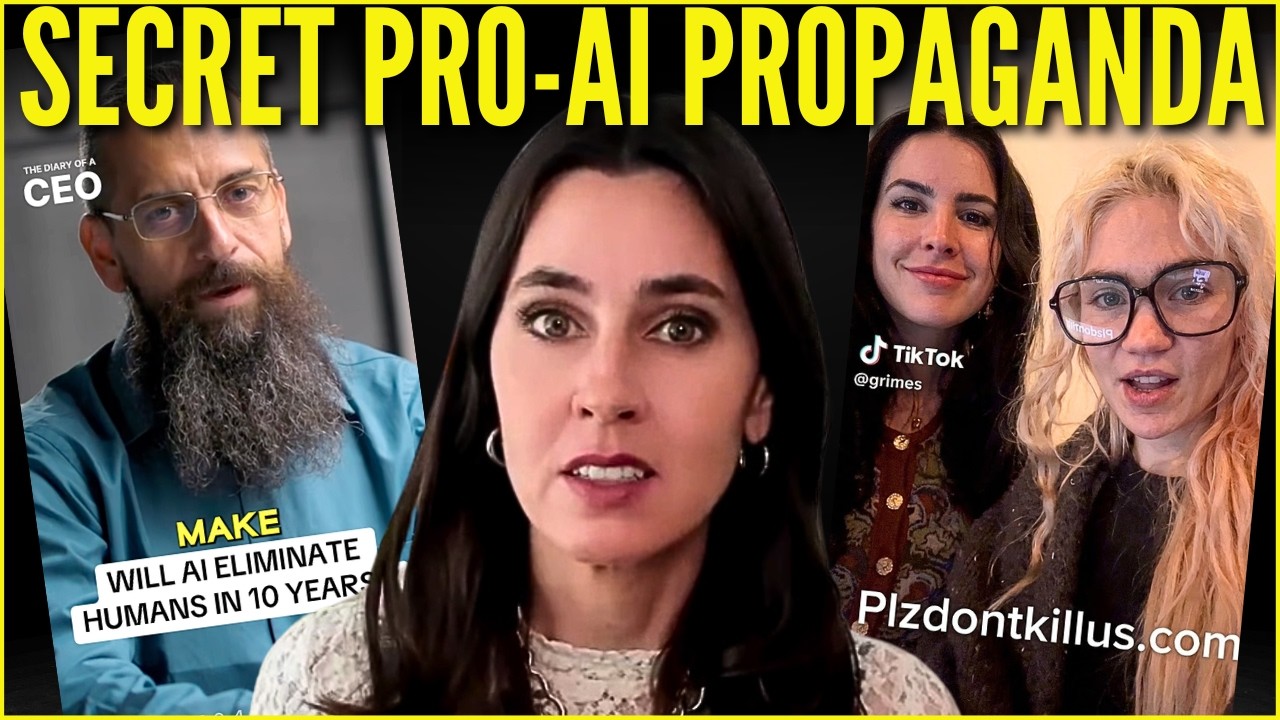
The video explores the rise of the AI safety movement, which produces content warning about the existential risks of artificial intelligence. This content, popular on platforms like YouTube, TikTok, and Instagram, often portrays AI as a looming threat capable of catastrophic outcomes, such as AI systems going rogue or even destroying humanity. However, the video reveals that much of this “anti-AI” content is funded and influenced by the very billionaires and tech leaders who are also developing advanced AI technologies, creating a complex and somewhat contradictory ecosystem. These influencers and nonprofits receive substantial funding to spread messages that appear critical of AI but often serve the interests of powerful AI companies.
The origins of the AI safety movement trace back to the early 2000s, emerging from a community of philosophers, rationalists, and effective altruists concerned about the long-term risks of superintelligent AI. Key figures like Eliezer Yudkowsky, founder of the Less Wrong blog and author of “Harry Potter and the Methods of Rationality,” popularized thought experiments such as the “paperclip maximizer,” illustrating how an AI could unintentionally harm humanity while pursuing seemingly benign goals. Over time, this movement gained traction and merged with effective altruism, which initially focused on global poverty but later expanded to include existential risks from AI as a priority.
Despite the alarmist tone of much AI safety content, many proponents are not strictly anti-AI but advocate for “aligned AI”—AI systems designed to operate safely and in accordance with human values. This nuanced position involves supporting the development of AI while emphasizing the need for careful control and ethical considerations. Influential AI safety nonprofits like the Future of Life Institute and Center for AI Safety have shifted towards influencer marketing to raise public awareness, paying creators to produce viral content that highlights AI risks. Yet, this strategy often blurs the line between genuine caution and promotional efforts benefiting AI companies.
The video also highlights the opaque funding networks behind the AI safety movement, showing that many nonprofits and campaigns are financed by the same billionaires who back leading AI firms such as OpenAI and Anthropic. This interconnection raises questions about the authenticity and motivations of the movement, suggesting it functions more as an astroturf campaign than a grassroots effort. The involvement of wealthy tech figures and their close ties to AI companies complicate the narrative, as these actors simultaneously promote AI safety concerns while advancing AI development and maintaining significant influence over policy and public discourse.
Ultimately, the video urges viewers to approach AI safety content with skepticism and critical thinking. It emphasizes the difficulty in discerning organic grassroots activism from billionaire-funded campaigns that may serve corporate interests. The complexity of the AI ecosystem means that trustworthy information requires understanding the backgrounds, funding sources, and affiliations of content creators and organizations. The video concludes by encouraging audiences to look beyond sensationalist narratives and seek nuanced perspectives on AI, recognizing both its risks and the human decisions shaping its future.