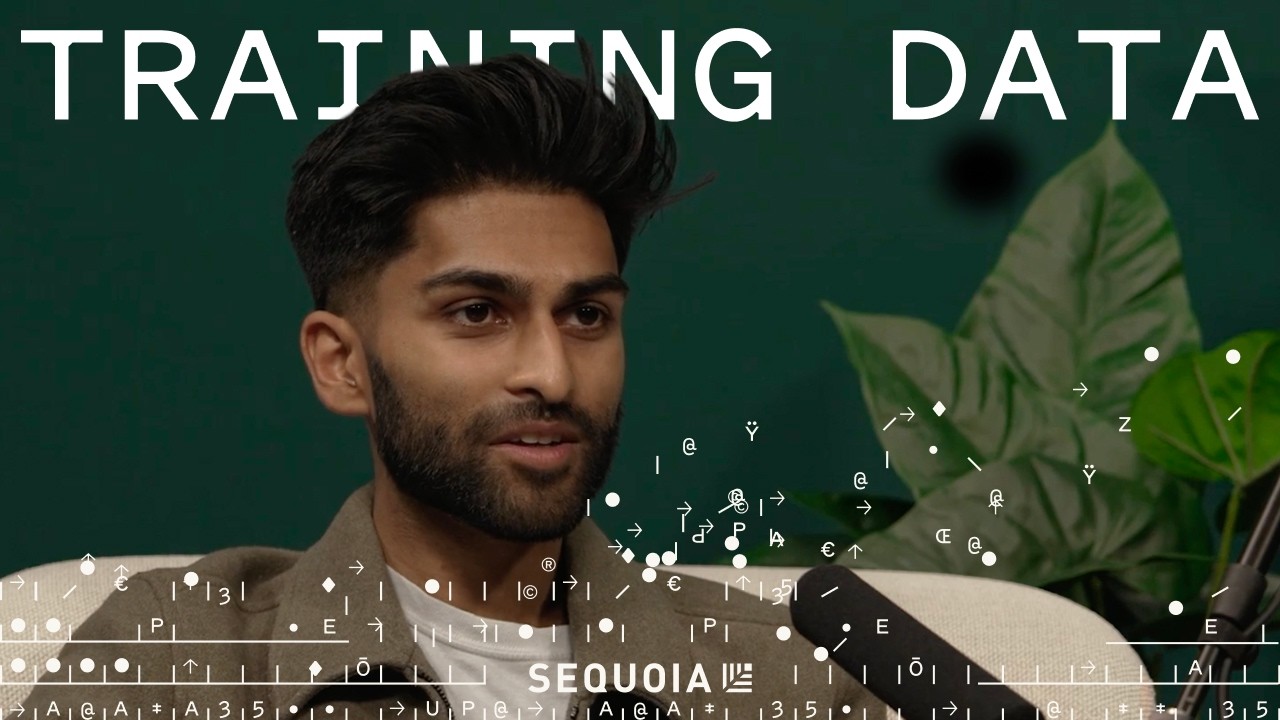
Ronak Malde, co-founder of Trajectory, discusses the vision and challenges of bringing continual learning to companies through AI. Drawing inspiration from Apple’s revolutionary integration of internet and phone technology, Trajectory aims to unify training, assessment, and deployment of AI models into a seamless, user-friendly platform. This approach enables companies to continuously improve their AI agents by closing the feedback loop, making model updates more accessible and efficient, much like how Google Maps constantly updates routes based on real-time data.
Malde defines true lifelong learning by comparing it to human learning, which is continuous, adaptive, and iterative. He contrasts this with the current state of AI, which he terms “pseudo-continuous learning,” where models require costly and time-consuming batch updates rather than real-time adaptation. Trajectory’s goal is to democratize continuous learning, allowing companies to train and customize models efficiently, turning real-world feedback into tangible model improvements without the need for massive research teams or infrastructure.
The product philosophy at Trajectory focuses on simplifying the complex process of continuous learning. Companies need to track and reproduce real-world agent interactions (trajectories), define what constitutes a successful outcome, and then use this data to improve models. Trajectory abstracts much of this complexity, providing an intuitive interface that allows users to train models with minimal effort. The platform has already demonstrated success with clients like Harvey and Rogo, enabling them to create more efficient, specialized AI agents that better meet their unique needs at a fraction of the cost of traditional approaches.
Looking ahead, Malde emphasizes the importance of curiosity and autonomous learning in AI agents. Unlike humans, current models lack the ability to explore and learn from their environment independently. Trajectory’s research is focused on developing algorithms that allow agents to learn from single experiences and reduce reliance on repetitive training environments. This includes innovations in reward estimation and environment simulation, aiming to create agents that can continuously improve by interacting with the world and users in a meaningful way.
Finally, Malde highlights the unique interdisciplinary team at Trajectory, combining cutting-edge research with strong product design and scalable infrastructure. He envisions a future where continuous learning becomes the norm across industries, enabling widespread AI adoption beyond the current 1% of companies. By bridging the gap between foundational AI research and practical application, Trajectory aims to empower businesses to customize and optimize AI agents, fostering a new era of specialization and abundance in AI-driven workflows.
Useful Links