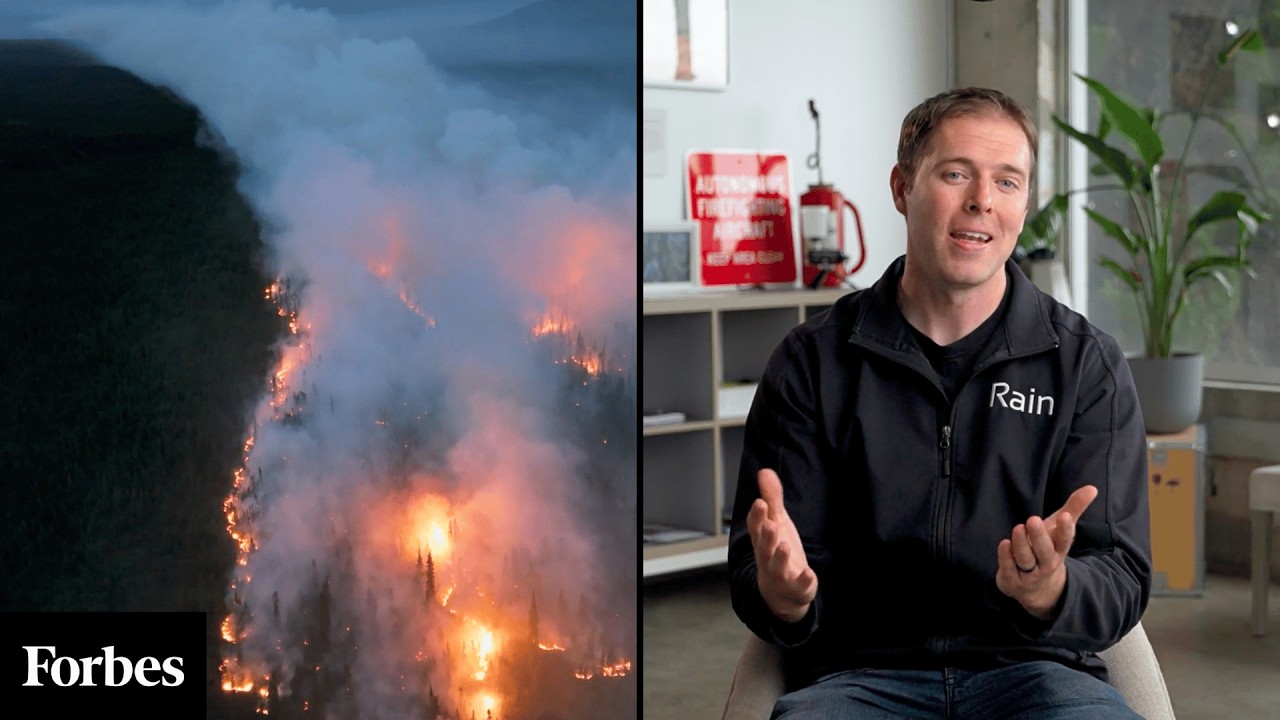
The video highlights RAIN’s development of AI-powered autonomous aircraft designed to extend firefighting capabilities, enabling rapid and continuous wildfire response, including nighttime operations, to prevent small ignitions from becoming catastrophic. It emphasizes managing fire intensity through technology-enhanced interventions and collaboration between fire agencies and innovators to create safer, more effective wildfire management strategies.
The video discusses the critical challenge of catastrophic wildfires, highlighting that a small percentage of ignitions cause the majority of structural damage. The speaker shares a personal experience of witnessing a devastating firestorm in childhood, which inspired a lifelong commitment to improving wildfire response. The mission of RAIN, the organization featured, is to prevent wildfires from escalating by leveraging AI technology to enhance firefighting capabilities, particularly through autonomous aircraft.
RAIN is developing an AI-powered firefighting system that upgrades existing aircraft to autonomously combat wildfires. This technology aims to extend the firefighting response window from the current typical 8 hours to 24 hours, including nighttime when conditions are often more favorable for fire suppression. The long-term vision involves prepositioning these autonomous aircraft in remote areas prone to ignitions, enabling rapid intervention before fires grow out of control.
The operational process begins with early detection alerts from sources like smoke detection cameras or satellites. Once an ignition is verified by a remote operator, the autonomous aircraft is dispatched to collect water and then respond to the fire. The aircraft continuously surveys the fire, adjusting its flight path based on wind conditions to maximize the effectiveness of water drops. This approach represents a significant technological advancement in wildfire management, addressing the rapid and unpredictable nature of fire spread.
The video emphasizes the importance of managing fire intensity rather than pursuing total suppression, recognizing fire as a natural and necessary part of ecosystems. Controlled or “good” fires help reduce fuel buildup that can lead to catastrophic events. However, the window for safely conducting controlled burns is very limited due to the risk of fires growing uncontrollably. The AI firefighting system could enable safer and more frequent beneficial burns by ensuring sufficient water resources are available to manage fire intensity dynamically.
Finally, the speaker expresses optimism about the future of wildfire management through collaboration between fire agencies and technology innovators. There is growing acceptance of integrating new tools like AI and autonomous systems to enhance firefighter safety and effectiveness. By combining expertise from various fields, the goal is to create a more proactive and adaptive wildfire response strategy that can better protect communities and ecosystems from increasingly severe fire events.
Useful Links