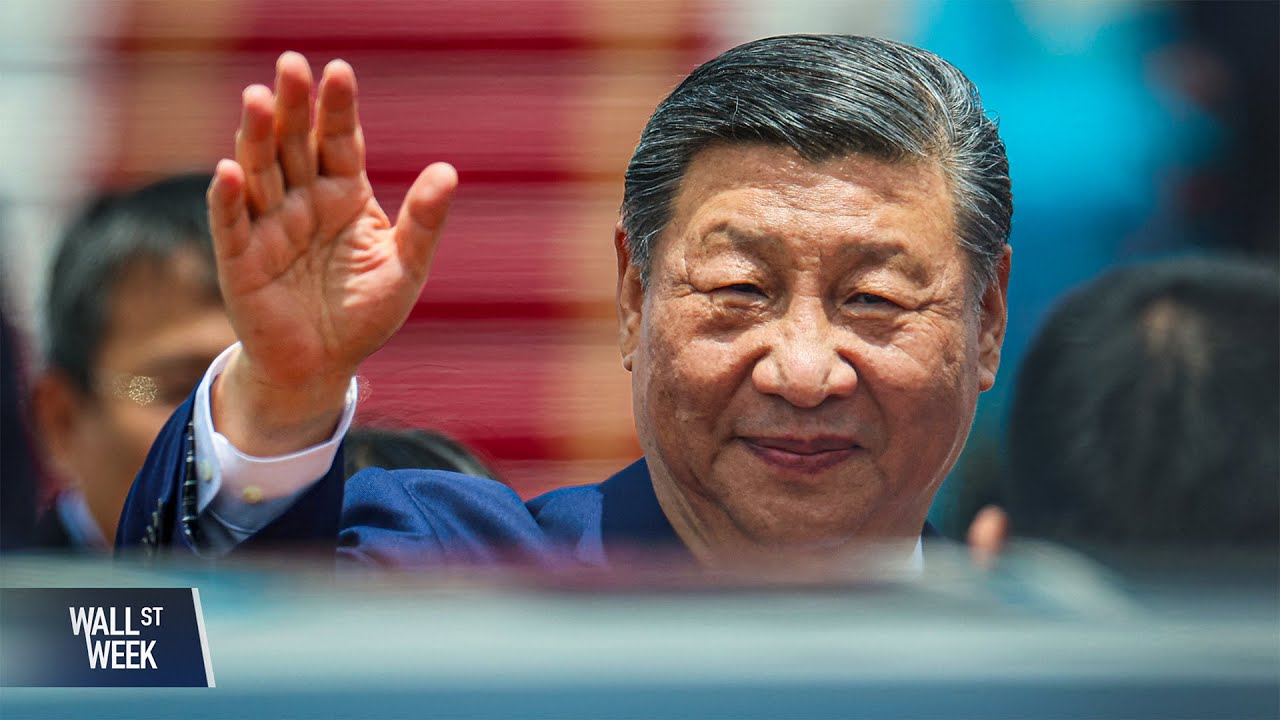
The video discusses the competitive dynamic between the United States and China, particularly focusing on artificial intelligence (AI) and energy production. Since President Trump’s first term, the U.S. has been concerned about economic and national security risks posed by China, with AI and the semiconductor chips that power it becoming a central area of competition. While the U.S. aims to maintain its lead in AI technology, there is a growing concern that America may be losing ground in the energy sector, which is critical to powering AI data centers.
China has made massive investments in energy infrastructure, especially in renewables like solar and wind, surpassing the combined capacity of Europe, the U.K., and the U.S. China’s energy capacity expansion is staggering, with plans to add more than 3.4 terawatts of generation capacity in the next five years—nearly six times that of the U.S. This extensive development supports China’s growing dominance in electric vehicles, lithium batteries, solar panels, and wind power, positioning it as a global leader in clean energy technology and production.
Experts highlight that China’s renewable energy push is not solely about environmental concerns but also a strategic economic move. By 2035, the global clean energy market is expected to be worth $7 trillion, and China aims to command a significant share of this market. The country has invested over $1 trillion in clean energy, resulting in skyrocketing exports of electric vehicles, batteries, and solar panels. This long-term strategy, which began decades ago, contrasts with the U.S., where electricity demand is rising but supply is constrained, and renewable energy development faces political and regulatory challenges.
The U.S. has attempted to revive its clean energy sector through policies like the Inflation Reduction Act, which offers subsidies and tax incentives to attract investment. However, previous administrations have rolled back many of these efforts, limiting progress. Experts argue that government intervention is crucial to overcoming the hurdles of new technology adoption and competing with China’s comprehensive approach, which includes innovation, manufacturing, and export strategies supported by strong government backing.
Despite the intense competition, there is recognition of the need for cooperation between the U.S. and China, especially regarding AI safety. Both countries face risks related to AI development, and collaboration on establishing safety rules could be beneficial. While geopolitical tensions remain, there is hope that future dialogues and summits could help bridge the trust deficit, enabling both nations to compete responsibly while working together to ensure global stability and prosperity.