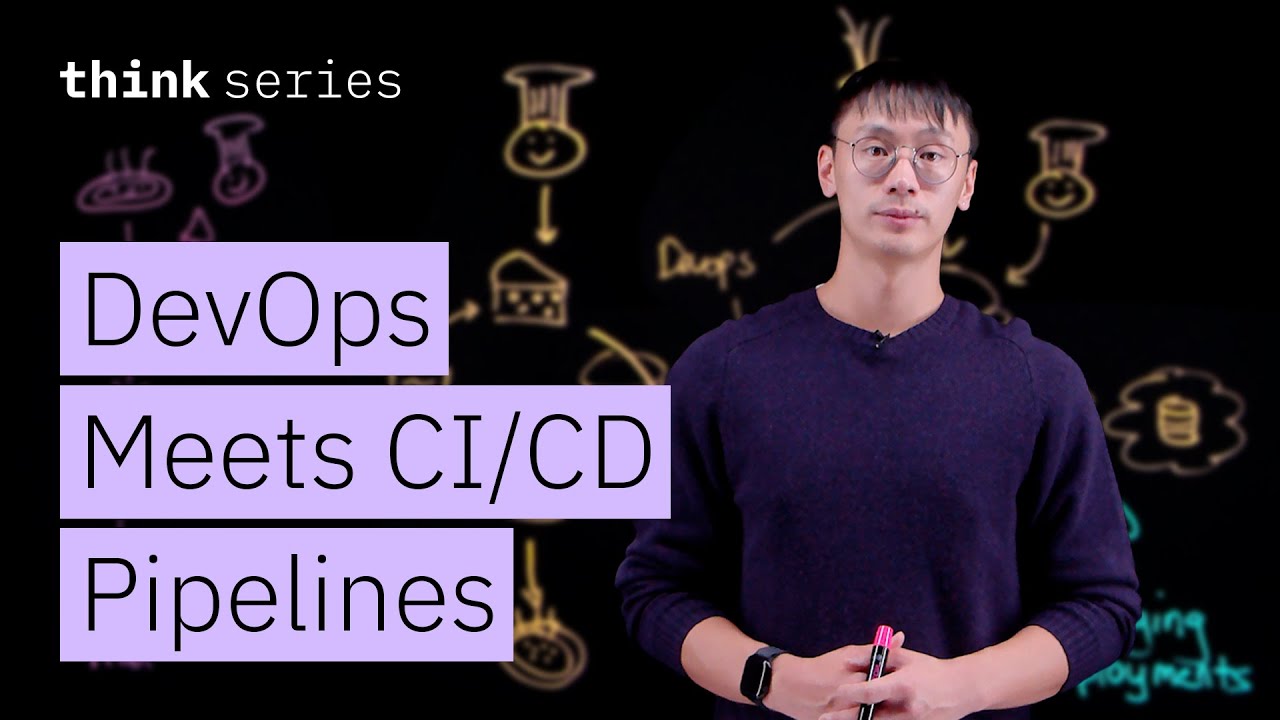
The video compares the data engineering development lifecycle to a Michelin-starred restaurant kitchen, illustrating how DevOps principles streamline the continuous integration and continuous delivery (CI/CD) processes for AI and data pipelines. In this analogy, developers are chefs writing recipes and preparing dishes, while the kitchen represents the CI/CD pipeline where code is tested, plated, and delivered to customers. Continuous integration (CI) is likened to the food preparation and taste testing stage, where code changes are immediately tested and integrated to ensure quality. Continuous delivery (CD) corresponds to moving plated dishes through kitchen stations and eventually serving them to diners, representing the deployment of code through various environments until it reaches production.
Continuous integration involves rigorous checks similar to a prep line in a kitchen. Each code change undergoes unit testing to verify individual components, compliance testing to meet regulatory standards, and source code management to document and control changes. These automated and standardized processes ensure that the output is validated, secure, and of high quality before moving to the next stage. This approach reduces manual effort and errors, streamlining development and improving reliability, much like a well-organized kitchen reduces mistakes and saves time.
Continuous delivery focuses on the plating and delivery of dishes, where only those that pass all quality checks are promoted to the next stage or served to customers. This selective promotion ensures that only thoroughly tested and approved code reaches production, akin to a head chef deciding which dishes go to VIP tables. Deployments are automated, tracked, and tied back to the developers responsible, minimizing manual intervention and enhancing accountability. This process ensures smooth transitions across development, testing, staging, and production environments.
Applying CI/CD to batch data integration tools is compared to preparing complex recipes that pull ingredients from various sources and serve them to cloud data warehouses or lake houses. Automated tests verify schema compatibility, join correctness, and output validity before changes move downstream. CI/CD also manages environment-specific configurations like database credentials, enabling seamless promotion of validated assets to higher environments. Version control and Git integration further automate and secure the development lifecycle, ensuring consistency and quality akin to a dish passing the head chef’s final taste test.
The video emphasizes the importance of CI/CD in reducing risks and improving quality in data engineering. Without these practices, teams risk delivering inconsistent or faulty data pipelines, similar to serving dishes without proper quality checks. CI/CD and selective promotion catch errors early, reduce manual errors, and accelerate delivery, allowing teams to build and deploy data pipelines with confidence and speed. This approach ultimately leads to more reliable systems and better outcomes for downstream data and AI applications.