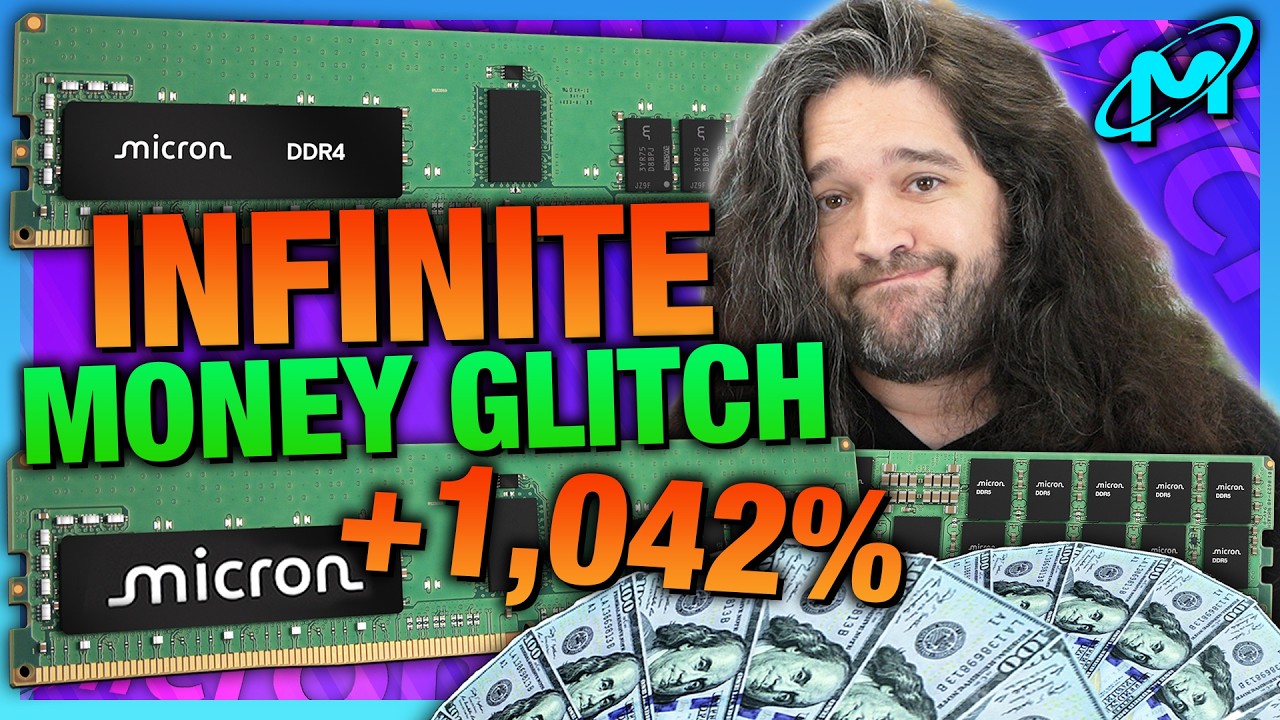
The video discusses the staggering profitability and market dominance of Micron, a major U.S.-based memory manufacturer, highlighting its reliance on substantial government subsidies and tax breaks. Despite being a trillion-dollar company, Micron’s data center business has exploded, growing over 1,000% year-over-year, with gross margins in its consumer segment reaching an astonishing 90%. This shift towards high-margin data center products has come at the expense of consumer offerings, contributing to soaring memory prices that have made building and upgrading personal computers prohibitively expensive for many hobbyists and consumers.
Micron’s financial performance is extraordinary, with quarterly revenues surpassing $54 billion and fiscal year revenues exceeding $133 billion, nearly matching the combined revenues of major semiconductor companies like AMD, Intel, and Broadcom. The company’s data center divisions, including core data center and cloud memory businesses, have seen revenue growth of over nine times in just two years, fueled largely by the booming AI industry and partnerships with companies like Nvidia. Nvidia’s massive demand for high-bandwidth memory (HBM) has further tightened supply, exacerbating the global memory shortage and driving prices even higher.
The video also highlights the strategic long-term agreements (SCAs) Micron has secured with numerous large customers, locking in supply and pricing through 2030 and beyond. These agreements provide Micron with predictable revenue streams and supply visibility but also contribute to a constrained market where consumer access to affordable memory is severely limited. Micron’s CEO acknowledges that supply will remain tight for years, with demand outstripping supply through at least 2028, ensuring that high prices and margins will persist.
The impact of these market dynamics is felt acutely by consumers and PC enthusiasts, who face inflated prices and scarcity of memory products. The video laments how this situation has eroded the PC DIY hobby, making it difficult for individuals to build or upgrade computers affordably. It also criticizes the close ties between memory companies and government, suggesting that lobbying and political contributions have helped entrench this profitable but consumer-unfriendly status quo. The video calls for awareness and potential policy interventions but expresses skepticism about meaningful change in the near term.
In conclusion, the video paints a picture of an industry dominated by a few powerful players like Micron, Samsung, and SK Hynix, who are capitalizing on the AI-driven demand surge to maintain exorbitant margins and restrict consumer access. While this benefits shareholders and large enterprise customers, it has created a prolonged memory shortage that inflates prices across consumer electronics, from PCs to phones and consoles. The video urges viewers to recognize the scale of this issue and hints at a need for collective action, especially in light of upcoming political events, to challenge the entrenched interests driving these market conditions.
Useful Links