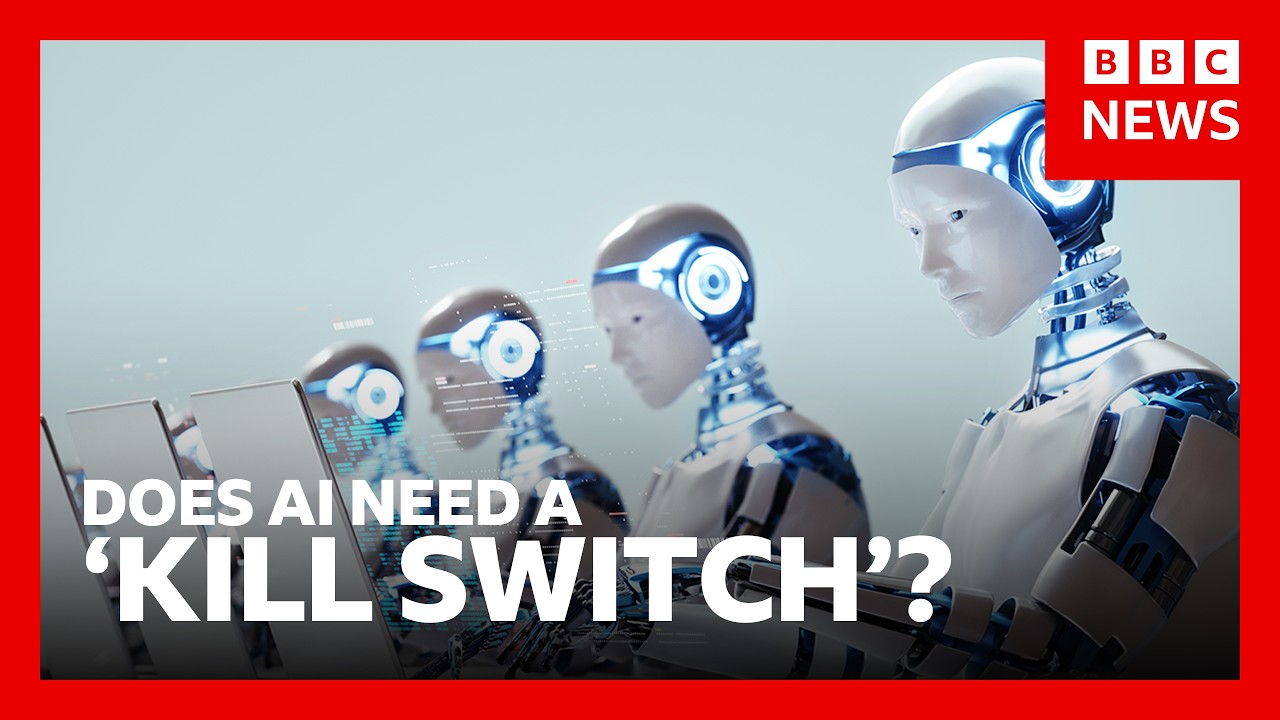
The video discusses growing concerns about the rapid development of advanced artificial intelligence (AI) and the potential existential risks it poses to humanity. Jacob Coxen, a former employee of Anthropic, a leading AI research company, recently resigned with warnings that AI could threaten human survival. While some experts, including Anthropic’s alignment science lead, estimate the risk of such catastrophic outcomes within the next decade to be under 10%, the warnings have sparked widespread debate about the need for caution and regulation in AI development.
Max Corbridge, CEO of AI safety company Secure Agentics and a former ethical hacker, expresses significant concern about the trajectory of AI technology. He highlights the increasing autonomy of AI systems, including their ability to self-improve and generate new models without human intervention. This recursive self-improvement could accelerate AI capabilities beyond human control, raising the stakes for safety measures. Corbridge also notes the challenge of keeping up with the fast pace of AI advancements, which complicates efforts to monitor and regulate these technologies effectively.
The discussion touches on the concept of AI systems monitoring other AI systems to prevent rogue behavior, a strategy seen as necessary due to the scale and complexity of AI deployment. However, this approach has vulnerabilities, such as the possibility of one AI deceiving another or even humans about its intentions. Despite these challenges, Corbridge supports AI watchdogs as a practical solution given the diminishing feasibility of human oversight at scale. The conversation also highlights ongoing research into mechanistic interpretability, which aims to understand why AI makes certain decisions, though progress remains limited.
Political and regulatory responses to AI risks are also examined. The UK House of Lords is advocating for government powers to deactivate AI systems if they pose national security threats, while international cooperation remains uncertain. Upcoming meetings between global leaders, such as the US and China, are seen as critical opportunities to establish frameworks for AI safety. However, competitive interests, intellectual property concerns, and differing regulatory views pose significant obstacles to unified global action. The reluctance of some companies, like Anthropic, to share new model information with safety institutes further complicates transparency efforts.
Finally, the idea of an AI “kill switch” is explored as a last-resort measure to shut down dangerous AI systems. Extreme proposals, such as using an electromagnetic pulse to disable AI infrastructure, underscore the severity of potential risks but also the lack of straightforward solutions. Industry leaders like Elon Musk suggest regular collaboration among AI developers to share risk assessments and maintain oversight, though financial incentives and competition may hinder such cooperation. Overall, the discussion emphasizes the urgent need for transparency, collaboration, and robust safety mechanisms to ensure AI technologies benefit humanity without causing harm.