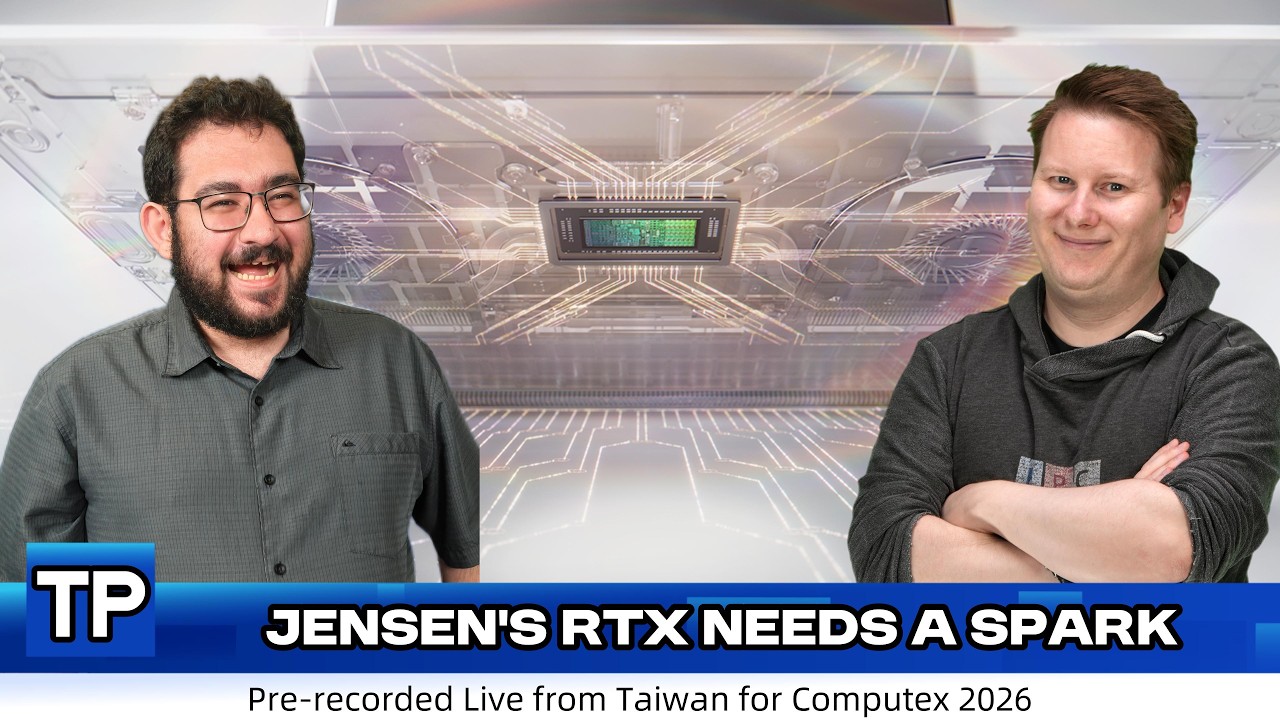
The Tech Poutine episode, recorded just before the final day of Computex 2026 in Taiwan, features hosts Ian Cutras, George Kosma, and guest Tobias Man discussing the latest developments in the tech industry, particularly focusing on chips and data center technologies. A major highlight is Intel’s new Xeon 6 Plus “Clearwater” CPU platform, which has garnered attention for its high core count and advanced packaging technology. This product marks a significant shift for Intel, positioning it as a competitive option in the AI and agentic computing space, especially as AI workloads increasingly demand dense, multi-core CPU solutions rather than relying solely on GPUs.
The conversation also covers Gigabyte’s innovative server design featuring 40 Lunar Lake chips, emphasizing the trend toward achieving density through multiple smaller chips rather than a single large one. This approach targets micro-container and agentic AI workloads, reflecting the evolving needs of data centers. Additionally, the hosts discuss the new Dell XPS 13 laptop powered by Intel’s Wildcat Lake processors, highlighting its balance of performance and affordability, which could appeal to mainstream users despite some limitations like base memory configurations.
A significant portion of the discussion revolves around emerging technologies such as Intel’s Crescent Island data center GPU and the growing importance of CXL (Compute Express Link) for memory pooling and sharing across data center nodes. The panelists explain how CXL is transforming memory architecture by enabling disaggregated memory systems that can be shared dynamically, which is crucial given current memory supply constraints and the increasing demands of AI workloads. They also touch on the challenges of latency and security in these systems, as well as the potential future role of optical interconnects to overcome copper limitations.
The episode delves into the broader industry context, noting the shift of Computex from a primarily consumer-focused event to a more B2B and data center-centric show. This reflects the growing importance of AI and data center technologies in the tech ecosystem. The hosts also discuss the booming memory market, including recent employee profit-sharing settlements at major memory vendors, and the ongoing supply challenges affecting the availability of AI GPUs and memory. They highlight the evolving pricing models for AI services, with companies experimenting with usage-based pricing as hardware costs and token consumption continue to rise.
Finally, the hosts reflect on the overall atmosphere at Computex 2026, noting the dense show floors and the value of face-to-face interactions in the industry despite fewer major product launches compared to previous years. They emphasize the gradual integration of AI into everyday technology, often operating transparently in the background, and the mixed feelings around AI fatigue among consumers. The episode closes with anticipation for upcoming events and interviews, underscoring the ongoing rapid evolution of the tech landscape driven by AI and data center innovations.