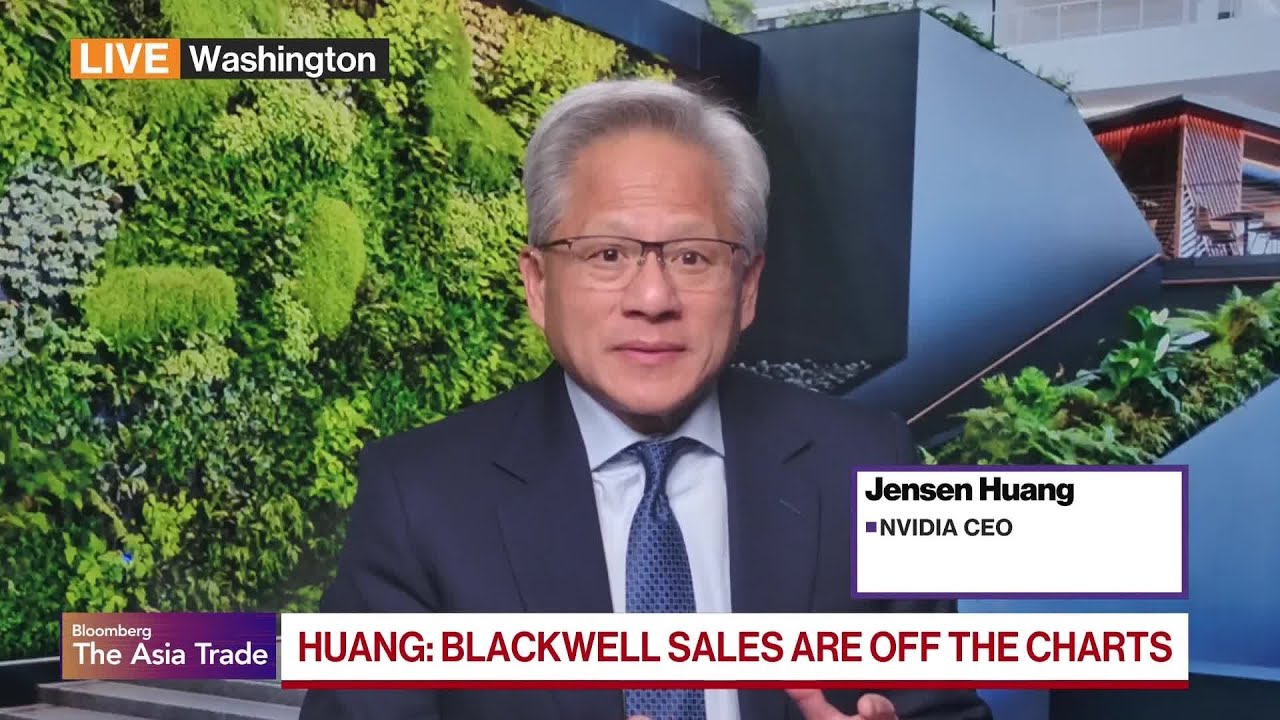
In an exclusive interview, Nvidia CEO Jensen Huang discussed the company’s strong sales performance, particularly highlighting the demand for their Blackwell GPUs. Despite the high demand and the cloud GPUs being sold out, Huang assured that Nvidia has ample supply of Blackwell chips and is preparing for the upcoming Vera Rubin generation. He emphasized the company’s robust supply chain, involving key partners like TSMC, SK Hynix, Micron, Samsung, Foxconn, Quanta, and Wistron, which is well-prepared to support a very strong year ahead.
Huang provided insights into the Vera Rubin GPU, explaining that the silicon for seven different chips is currently undergoing testing and development by a large engineering team. The launch is on track for the third quarter of the next year, continuing Nvidia’s annual product cycle. He also highlighted the revolutionary rack-scale architecture, including the fifth-generation NVLink 72 scale-up switch, which will be used seamlessly across Grace Blackwell and Vera Rubin systems, ensuring smooth transitions and efficient performance.
Regarding Nvidia’s business in China, Huang clarified that the company’s current forecast for sales in China is zero due to regulatory restrictions. However, he stressed the importance of the Chinese market both for Nvidia and the global technology ecosystem. Nvidia is actively engaging with both the U.S. and Chinese governments to seek permission to re-enter the Chinese market with competitive products, but until then, the company is assuming no sales in China in its forecasts.
On the topic of U.S. export controls, Huang explained that Nvidia has been granted permission to export up to 35,000 Blackwell chips each to Saudi Arabia and the UAE through G42, with strict measures in place to prevent technology diversion to China. Nvidia has a rigorous compliance program to ensure no unauthorized transfer of technology occurs, including working with American cloud providers and implementing technological and procedural safeguards.
Finally, Huang addressed concerns about energy constraints amid Nvidia’s rapid growth, noting that power availability is a significant challenge but manageable due to Nvidia’s extensive global network of cloud providers and partners. He emphasized the company’s disciplined approach to scaling investments and infrastructure, particularly in supporting major AI companies like Anthropic and OpenAI, whose demand for compute power is growing exponentially. Huang expressed confidence in Nvidia’s ability to meet this demand and continue enabling the expansion of AI applications worldwide.