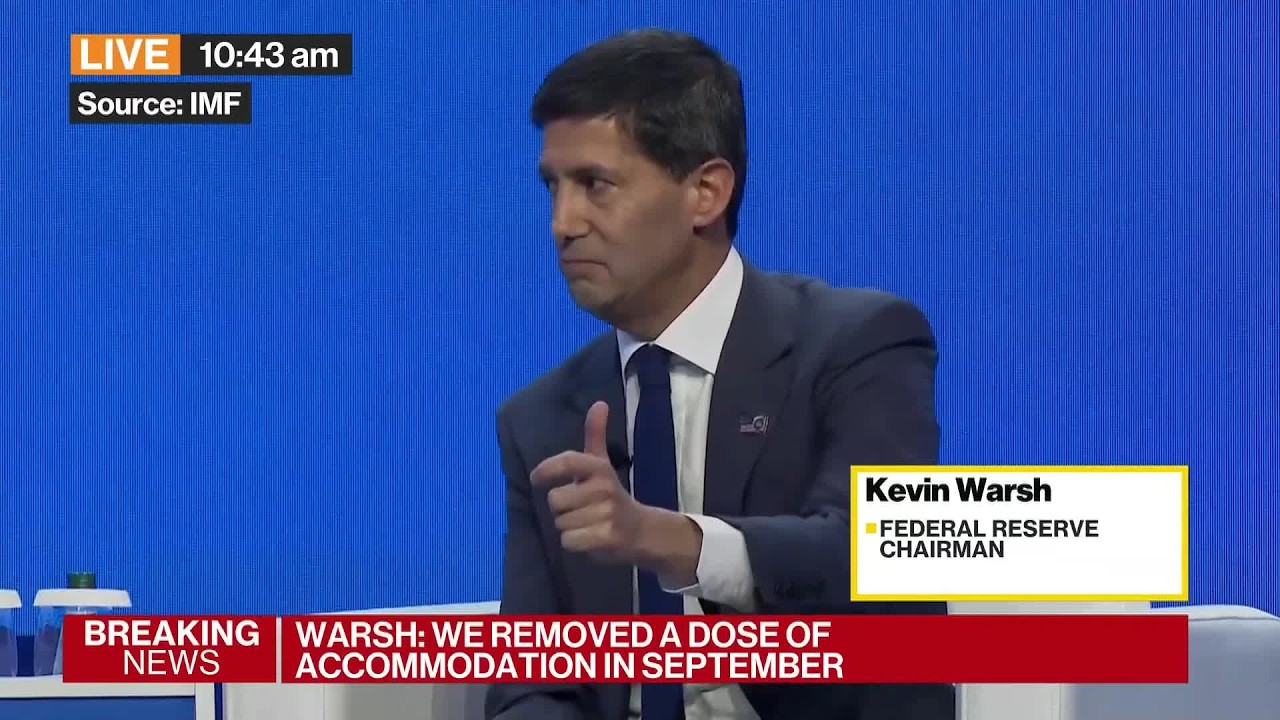
Fed’s Warsh highlights that AI will profoundly transform the economy and monetary policy by initially boosting demand and later enhancing supply, enabling central banks to make more timely and accurate decisions through advanced data analysis. While optimistic about AI-driven productivity and wealth gains, he cautions that the transition will be complex, urging policymakers to balance enthusiasm with careful consideration and proactive efforts to address emerging challenges.
In the discussion, Fed’s Warsh highlights the transformative impact of artificial intelligence (AI) on the US and global economy, describing it as the most consequential technological change in his lifetime. He notes that AI will initially affect the demand side of the economy before influencing supply, presenting a unique economic shock that differs from traditional shocks like war or conflict. While AI is expected to create a positive supply shock in the medium term, it currently drives increased aggregate demand, which central bankers must carefully consider in their efforts to maintain stable prices and full employment.
Warsh emphasizes that AI will significantly alter the conduct of monetary policy. Central banks traditionally rely on official statistics and models to interpret economic data, often struggling with noisy and lagging information. However, with AI and advanced analytical tools, central banks will soon have immediate access to vast amounts of data, enabling them to make more confident and timely decisions. This technological advancement promises to improve the accuracy and responsiveness of monetary policy in ways not previously possible.
The real economy will also experience profound changes due to AI, though the short-term effects on employment remain uncertain. Warsh expresses optimism that countries effectively leveraging AI will see increased productivity and wealth creation. However, he acknowledges that the transition will be complex and potentially turbulent, with uncertainties surrounding market structures, the distribution of economic gains, and the fate of those who may not benefit from the new technology. This cautious optimism underscores the need for careful policy consideration.
Warsh stresses the importance of central banks approaching AI with both enthusiasm and seriousness. He believes that in hindsight, AI will be recognized as a pivotal innovation with lasting economic consequences. Policymakers must therefore engage deeply with the challenges and opportunities AI presents, balancing optimism about its potential with a sober understanding of the complexities involved. This balanced approach is crucial for navigating the evolving economic landscape shaped by AI.
Finally, Warsh mentions ongoing efforts at the Federal Reserve to prepare for the future policy environment shaped by AI. He has initiated external task forces focused on productivity and jobs, with plans for field hearings to explore these issues further. These initiatives aim to gather insights from experts and the broader community to better understand AI’s implications and to develop informed policy responses. This proactive stance reflects the Fed’s commitment to adapting its strategies in light of technological advancements.
Useful Links