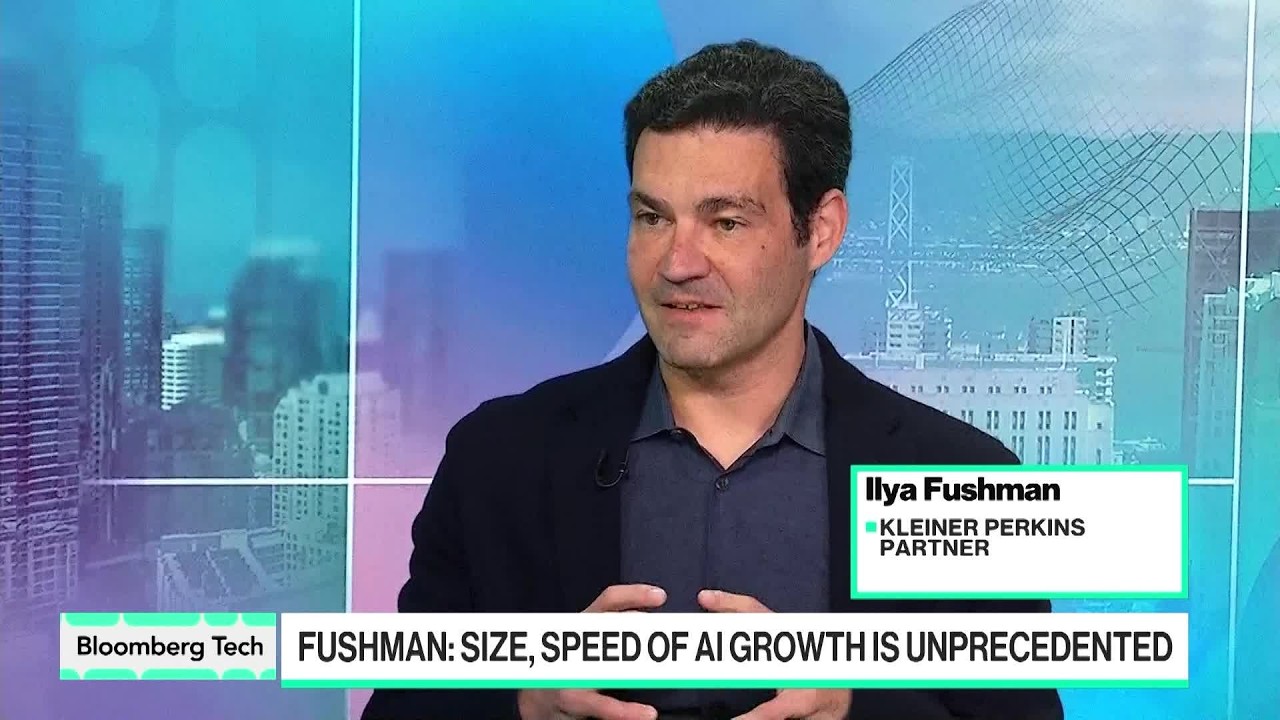
The discussion highlights Kleiner Perkins’ investment focus on AI’s transformative impact across industries, emphasizing rapid growth in companies like Anthropic, OpenAI, and Waymo, and the emergence of AI-driven applications in areas such as autonomous driving, legal services, and advanced manufacturing. It underscores a long-term vision where AI, combined with robotics and hardware, revolutionizes productivity and quality of life, with optimism about future IPOs, acquisitions, and innovations still to come.
The discussion centers on the transformative impact of AI companies like Anthropic, OpenAI, Waymo, and Databricks, emphasizing their unprecedented scale and rapid revenue growth. The speaker highlights that while traditional metrics like annual recurring revenue (ARR) matter for predictability, the real significance lies in how quickly these companies are expanding and reshaping technology landscapes. Differences in accounting methods between companies like OpenAI and Anthropic have caused some confusion, but the overarching theme is the foundational nature of the problems these companies are solving and the early yet palpable impact of AI across various sectors.
Kleiner Perkins’ investment thesis focuses on the broad and early-stage impact of AI, particularly how intelligence is becoming more accessible and affordable across industries. The firm sees AI not just as a technological advancement but as a fundamental shift that is permeating enterprise applications, consumer products, and developer tools. Examples include specialized AI applications like Harvey for legal services and general-purpose agents like Muse and Instinct that are beginning to reach consumers, marking a new phase beyond the initial ChatGPT moment where AI agents can perform meaningful tasks autonomously.
Waymo serves as a key case study illustrating the patience and long-term vision required for frontier technologies to mature and generate real-world impact. Despite being in relatively early stages with limited geographic reach, Waymo’s autonomous driving technology is likened to a form of teleportation and is beginning to generate revenue through rides in select cities. This example underscores the broader trend of foundational autonomy technologies, including robotics and supply chain automation, becoming viable and commercially relevant due to advances in AI models and hardware.
The conversation also touches on the broader venture capital landscape, noting that a significant portion of investment dollars is concentrated in late-stage deals involving companies that are scaling rapidly. Kleiner Perkins raised $3.5 billion in new funds to stay competitive in backing these transformative companies. The firm is particularly excited about the convergence of AI with robotics, science, and hardware, highlighting investments in areas like drug discovery, cellular rejuvenation, and advanced manufacturing. These sectors represent the next wave of innovation enabled by AI’s growing capabilities.
Finally, the discussion addresses the evolving IPO and M&A markets, with optimism about upcoming public offerings and strategic acquisitions that help traditional software companies transform into AI-driven organizations. The speaker envisions a future where AI tools become ubiquitous, effectively cloning individuals to perform work and free up time for more meaningful activities. This vision encapsulates the broader societal potential of AI to enhance productivity and quality of life, signaling that while much is already being built, the most exciting innovations are still on the horizon.
Useful Links