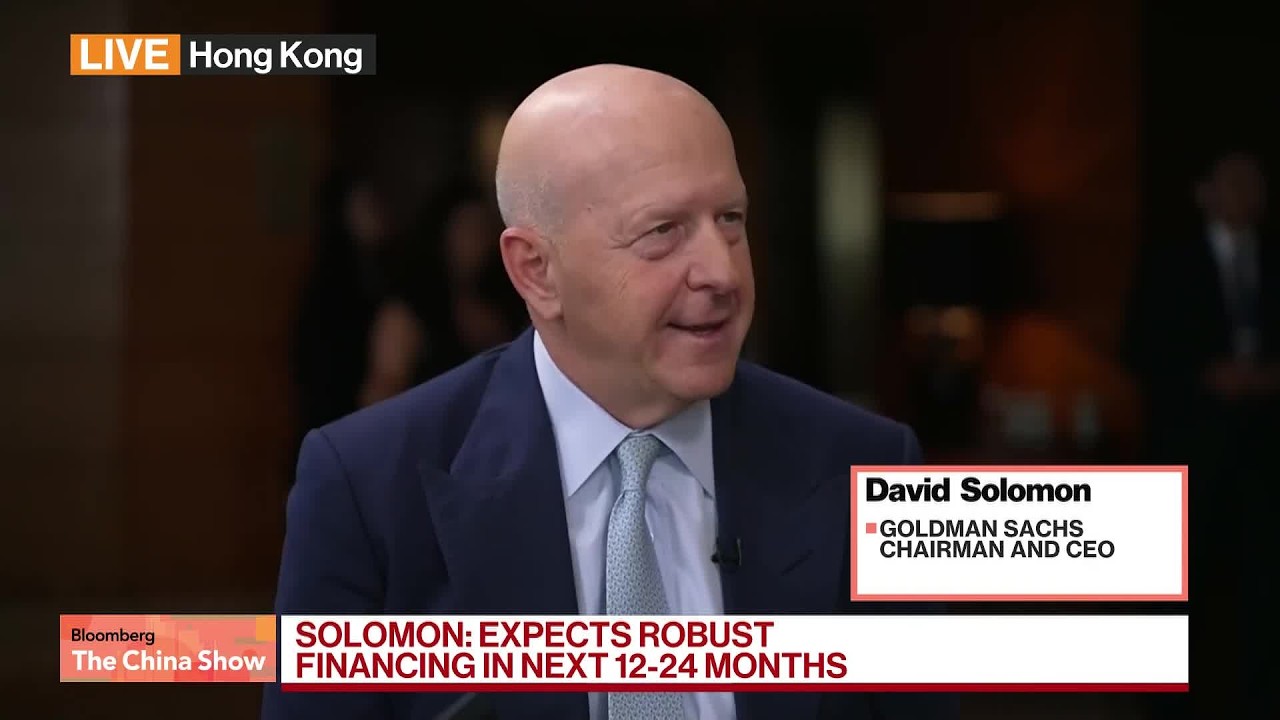
Goldman Sachs Chairman and CEO David Solomon discussed the current momentum and robust demand in capital markets, particularly driven by the AI technology supercycle. He highlighted recent significant financings for companies like SpaceX and Meta, as well as the upcoming Anthropic IPO, emphasizing that despite short-term market volatility, investor interest remains strong due to the high demand for compute infrastructure. Solomon noted that while the investment cycle for AI infrastructure is still in its early stages, it is expected to continue with some fluctuations over the next several years, driven by evolving technologies and increasing compute needs.
Solomon addressed the growth in deal sizes, explaining that the availability of capital globally supports these large transactions. He pointed out that public equity market capitalization has expanded significantly, enabling bigger deals, although rising interest rates and increased government debt issuance may impact financing costs rather than capital availability. He also remarked on Goldman Sachs’ strong presence in Asia, which now contributes around 20% of the firm’s revenue, reflecting the region’s importance in the global economy and the firm’s commitment to maintaining a significant footprint there.
Regarding business verticals, Solomon emphasized that technology continues to dominate capital markets and financing activity worldwide, with mergers and acquisitions gaining momentum due to regulatory environments that favor scale. He also highlighted Goldman Sachs’ growth in asset and wealth management, noting the firm supervises over $4 trillion in assets and has successfully expanded its ultra-high-net-worth client base, contributing significantly to revenue and earnings growth over the past several years.
On the topic of AI governance and safety, Solomon stressed the need for a balanced approach involving government regulation, responsible technology development by creators, and accountable deployment by enterprises. Drawing parallels to the financial industry’s post-crisis regulatory framework, he advocated for clear rules of the road and strong governance to manage risks associated with AI. He also underscored the importance of maintaining human accountability in the use of AI technologies, cautioning against relinquishing too much human agency to autonomous systems.
Finally, Solomon clarified Goldman Sachs’ approach to AI adoption within the firm, countering reports that suggested restrictions on AI tools. He explained that the firm is rapidly expanding access to AI and coding tools for its 45,000 employees while implementing rigorous governance and controls. He acknowledged partnerships with major AI companies and expressed interest in open-weight models, though with a cautious stance to ensure compliance with high standards. Overall, Solomon portrayed Goldman Sachs as being at the forefront of enterprise AI adoption, balancing innovation with responsibility.
Useful Links