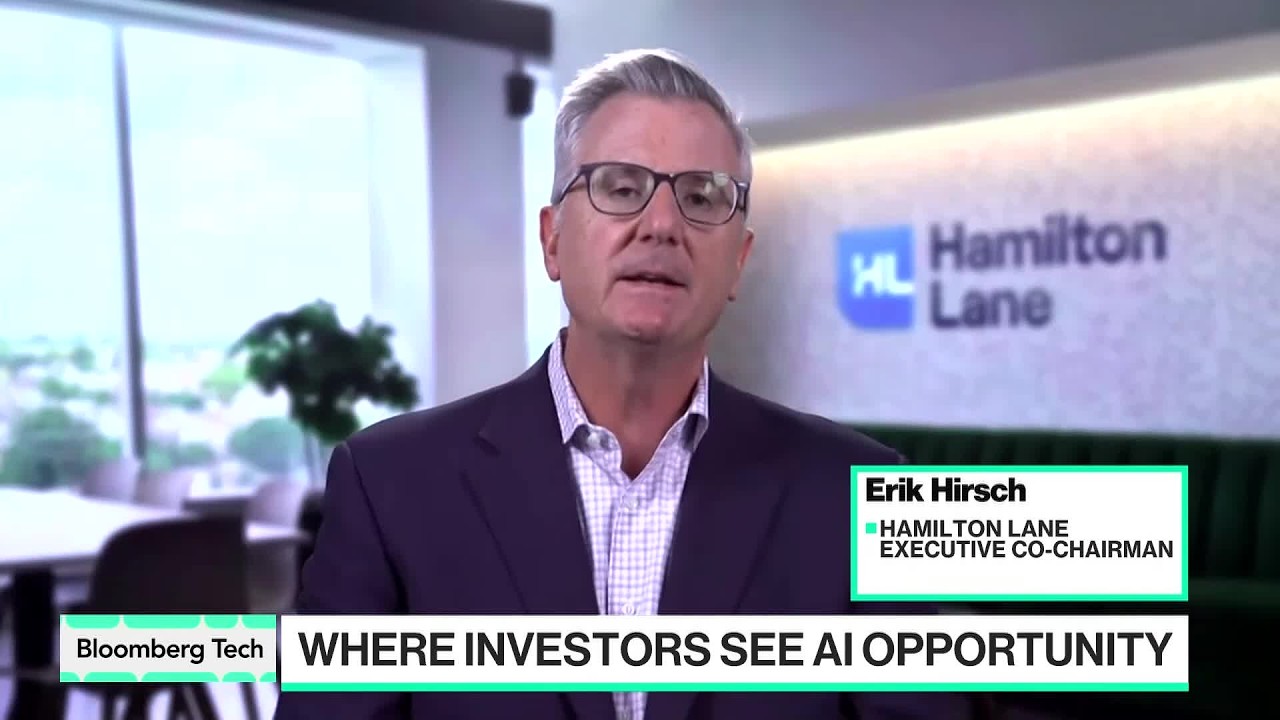
Hamilton Lane, managing over $1 trillion in private market assets, highlights the significant role private markets have played in generating returns in the AI sector. While companies like OpenAI and Anthropic are moving toward IPOs, the majority of value creation has occurred in the private phase. Hamilton Lane provides investors access to these private opportunities through various mechanisms, catering to both institutional and retail investors. Institutional investors have long accessed private markets via traditional venture capital funds or through firms like Hamilton Lane, while retail investors are increasingly participating through evergreen funds that offer broader access across strategies and geographies.
Erik Hirsch, Hamilton Lane’s executive co-chairman, explains that their investment approach mirrors public market analysis but with a focus on private companies, which are less transparent and more relationship-driven. The firm evaluates business plans and future earning potential relative to entry valuations, leveraging its scale and data advantages. Access to private AI companies is achieved through multiple channels: primary fund investments, secondary purchases of existing LP stakes, continuation funds, and direct co-investments alongside leading fund managers. Each method offers different entry points, pricing, and investment durations, allowing tailored portfolio construction.
The relationship between Hamilton Lane and general partners (GPs) is symbiotic, with capital providers (LPs) and deal flow providers (GPs) mutually benefiting. Sometimes Hamilton Lane initiates capital offers, while other times GPs approach them with investment opportunities. A key trend is that companies are staying private longer, supported by a large and diverse private capital ecosystem, contrasting with the late 1990s when companies quickly went public. This extended private phase creates more opportunities for various private market transactions and reduces the urgency for IPO exits.
Looking beyond headline-grabbing AI firms like OpenAI, Hirsch notes that the number of publicly traded companies is shrinking, with public markets dominated by very large enterprises. Most AI-related and thematic companies remain private and are likely to stay that way indefinitely. For investors seeking comprehensive exposure to AI and broader economic opportunities, a balanced portfolio combining both public and private equity is essential. The private markets offer access to a wider array of companies and growth potential that public markets cannot match.
Hamilton Lane’s investment activity spans the full spectrum of private markets, from early-stage venture to large buyouts, as well as credit, infrastructure, and real estate. While they do not lead deals directly, they participate as co-investors, secondary investors, and primary investors, leveraging their scale and client demand for diversified private market exposure. This multi-faceted approach allows Hamilton Lane to capture different risk-return profiles and provide comprehensive access to private market opportunities across sectors and stages.
Useful Links