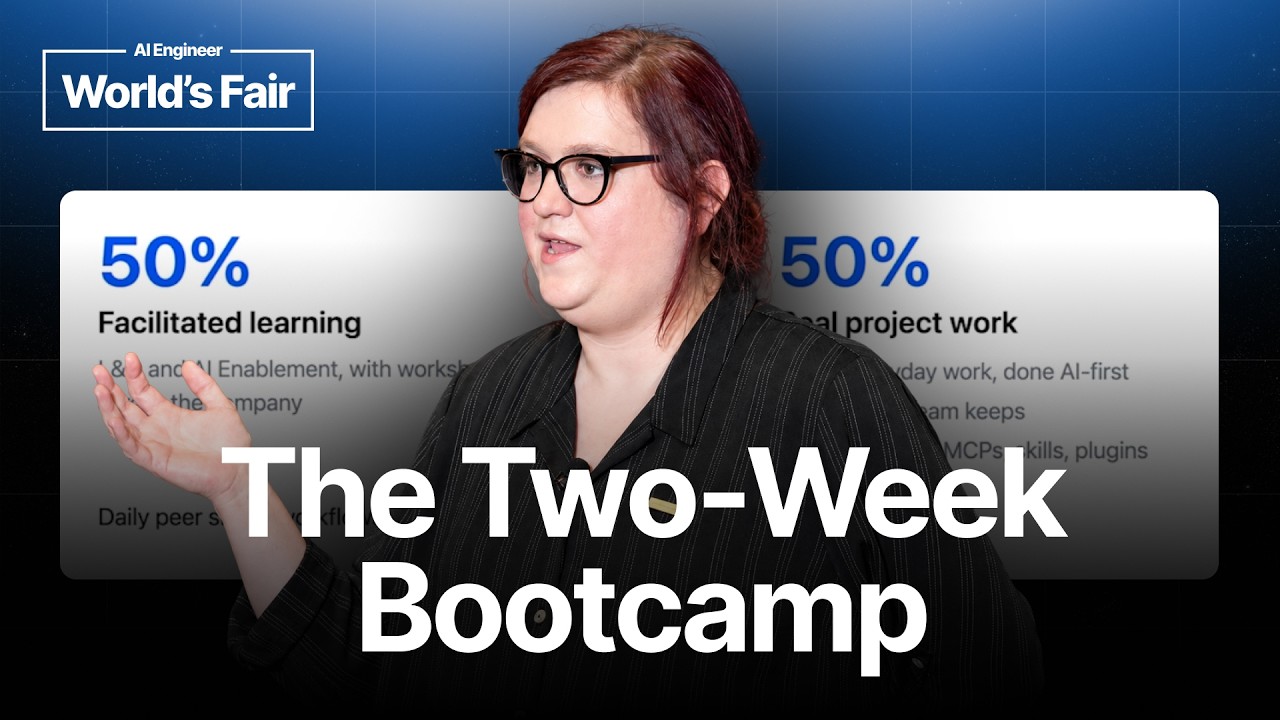
Em Shreve from Automattic, the fully distributed company behind WordPress.com and Tumblr, presented on how the company builds AI fluency across its global workforce. Automattic employs over 1,400 people in 82 countries and focuses on AI enablement and upskilling through immersive, two-week enablement programs. These programs combine 50% facilitated learning—led by internal workshop hosts and the learning and AI enablement teams—with 50% real project work, allowing participants to apply AI tools to their actual tasks or develop new skills and tools that enhance their workflows.
The company has tailored these programs for different groups, including engineers, cross-functional teams (product, engineering, design), and non-technical departments such as finance and executive leadership. The engineering curriculum starts with foundational AI skills, responsible AI use, and progresses to advanced topics like creating custom AI skills (MCPs), integrating with tools like codecs and Claude, and developing autonomous agents. Automattic continuously updates the curriculum to keep pace with the rapidly evolving AI landscape, ensuring participants learn the most current and relevant techniques.
A key part of Automattic’s approach is fostering a multiplier effect within the company. Participants who complete the program become AI champions, spreading knowledge through local AI meetups, workshops, and an always-on Slack channel for ongoing support. The company also encourages peer learning through “AI ride alongs,” where employees demonstrate how they use AI tools in their specific roles, making the learning more relatable and practical. Additionally, Automattic has developed an internal MCP server called Context Automattic to build and share custom AI skills and tools across teams.
The impact of these programs is measured through various metrics, including intentionality in AI use, integration of AI into workflows, and knowledge sharing. Surveys conducted up to 90 days post-program show continued growth in confidence and skill application. Participants have built innovative projects such as an agentic analytics system for WooCommerce, a Zendesk connector for support teams, a cross-tool skills directory, and guided admin support tools that help users navigate dashboards during help sessions. These projects demonstrate the practical benefits and creativity sparked by the enablement programs.
Em’s key takeaway is that successful AI adoption requires more than just providing tools; it demands dedicated time and space for experimentation and learning. Automattic’s model emphasizes immersive education and peer collaboration to foster meaningful changes in how employees work with AI. Em invited attendees to visit the Automattic booth for further discussion and to learn more about how WordPress.com and WooCommerce are integrating AI through official connections and custom skills.
Useful Links