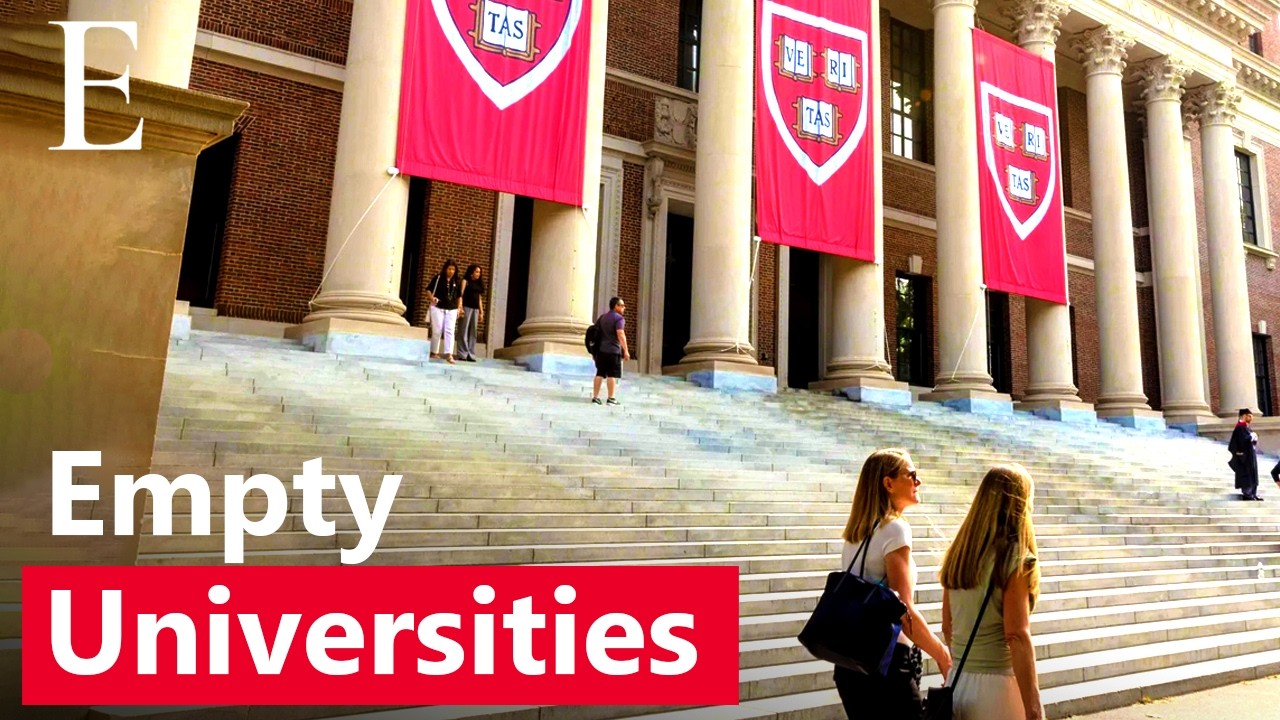
The video explores how artificial intelligence (AI) is diminishing the value of a bachelor’s degree in the job market. Historically, a college degree was seen as a reliable path to stable, high-paying employment, with college graduates enjoying significantly lower unemployment rates than their peers without degrees. However, over the past decade, this advantage has eroded dramatically. The unemployment gap between young college graduates and those with only a high school diploma has shrunk from six percentage points in 2010 to just one point in 2024, signaling a major shift in the labor market.
One of the main drivers of this change is the rapid adoption of AI and automation, particularly in sectors that traditionally hired large numbers of graduates, such as finance, insurance, investment banking, and law. These industries have reduced their hiring of young talent, as many entry-level tasks can now be performed more efficiently and cheaply by algorithms. As a result, recent graduates are now less likely to find employment than the average worker, a reversal of previous trends. This shift has also contributed to a decline in college enrollment, as more young people question the return on investment of a four-year degree, especially given rising tuition costs and student debt.
The video highlights that employers are increasingly prioritizing skills over formal degrees. Technical certifications, boot camps, and online learning platforms offer alternative pathways to acquiring in-demand skills, weakening the university’s monopoly on applied knowledge. Many companies have dropped degree requirements for certain roles, focusing instead on practical abilities and relevant experience. This trend is reinforced by the fact that nearly 40% of employers now prioritize skills over degrees, and 45% have eliminated degree requirements for some positions in the past year.
In this evolving landscape, continuous learning and adaptability have become essential. The rapid pace of technological change means that up to 44% of job skills will need to be updated or replaced within the next five years. A bachelor’s degree is no longer a long-term guarantee of job security; instead, its value depends on how it is complemented by real-world experience, ongoing education, and human skills such as communication, critical thinking, problem-solving, empathy, and adaptability. Internships and practical experience now play a crucial role in differentiating candidates and improving employment prospects.
Ultimately, the video concludes that while the bachelor’s degree is not obsolete, it has lost its automatic privilege as a ticket to career success. Its function has shifted from being a shield against unemployment to serving as a starting point that must be supplemented by continuous skill development and human competencies that AI cannot replicate. The future of employability will depend on a combination of formal education, practical experience, and the ability to adapt to a rapidly changing technological environment.