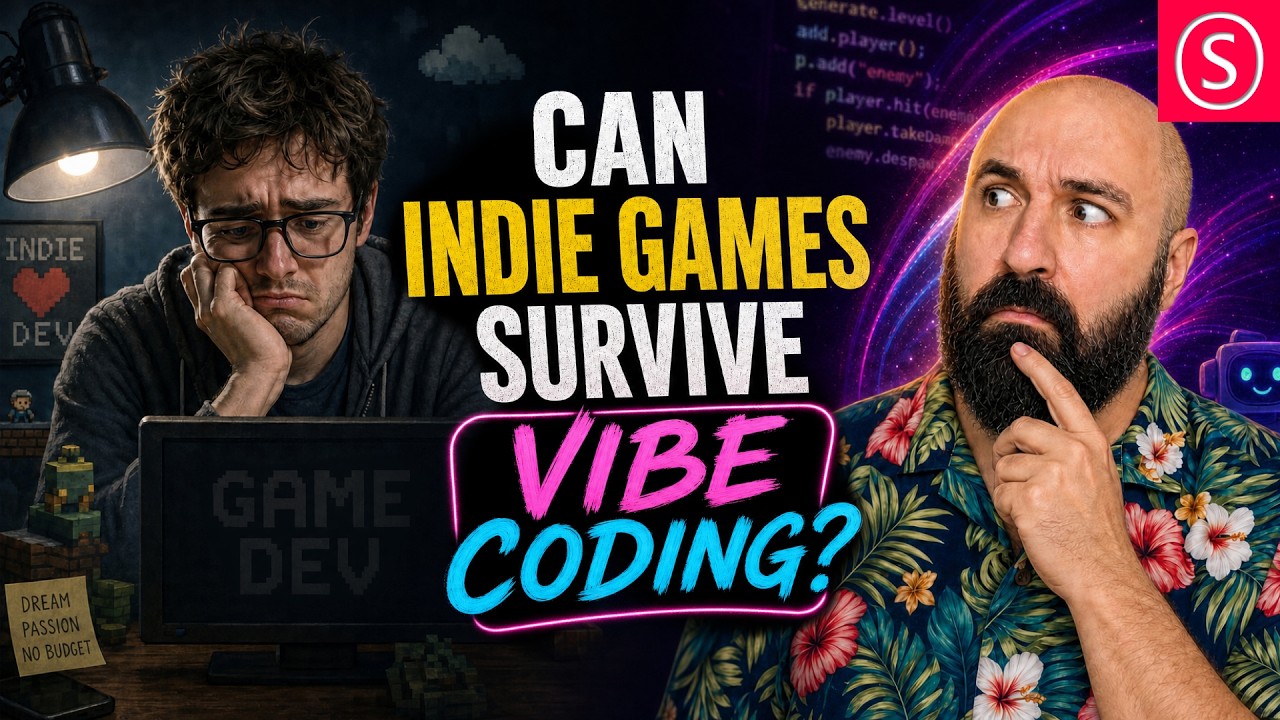
The video discusses the controversial impact of AI, particularly “wipe coding,” on indie game development. The creator, a lifelong gamer who appreciates indie games for their mechanics and storytelling, highlights how small developers are vulnerable to having their games quickly reverse-engineered and copied by AI tools. An example given is the Japanese indie game “Drunken Goddess Reflux,” whose developers decided against releasing a demo on Steam due to fears of their game being instantly recreated and distributed illegally. The process involves AI analyzing executable files to understand game mechanics and then generating new code, which, while legally ambiguous, poses a significant threat to indie developers who lack the resources to combat such practices.
Despite these challenges, the video also emphasizes the positive role AI is playing in game development. The use of AI in games has surged dramatically, with nearly half of new Steam games in 2024 incorporating AI in some form. Often, AI is used not for coding but for creating concept art, music, animations, and voice acting, which helps reduce costs and lowers barriers for smaller developers who cannot afford large teams. The creator supports this use of AI, especially for enhancing game quality and accessibility, such as advocating for fully voiced games to replace lengthy text dialogues.
The video further explores how AI is fostering innovation by enabling people without traditional game development backgrounds to experiment with new ideas and mechanics. Tools like Claude and Unity 3D’s AI plugins facilitate this creative process, although some AI models restrict cloning existing games to prevent outright copying. The creator supports fan projects that use AI responsibly and for free community sharing, seeing them as vital to fandom culture and a source of inspiration and community engagement.
However, the darker side of AI in gaming is also addressed. Platforms like itch.io have had to remove large amounts of “AI spam,” referring to low-quality, automatically generated games that flood the market and degrade user experience. These are often minimal-effort projects created to make quick money, lacking originality or meaningful content. New rules on such platforms aim to curb this by requiring clear disclosure of AI use and ensuring that AI-generated content adds substantial value to the gaming community.
In conclusion, the video advocates for a balanced approach to AI in gaming. It encourages the use of AI as a tool to lower development costs, inspire creativity, and bring fresh ideas to life, while condemning unethical practices like copying and spamming the market with low-quality games. The creator calls for respect for original ideas and sustainable, creative use of AI that enriches the gaming community rather than exploiting it. Viewers are invited to share their opinions on this complex issue, highlighting the ongoing debate about AI’s role in the future of indie game development.
Useful Links