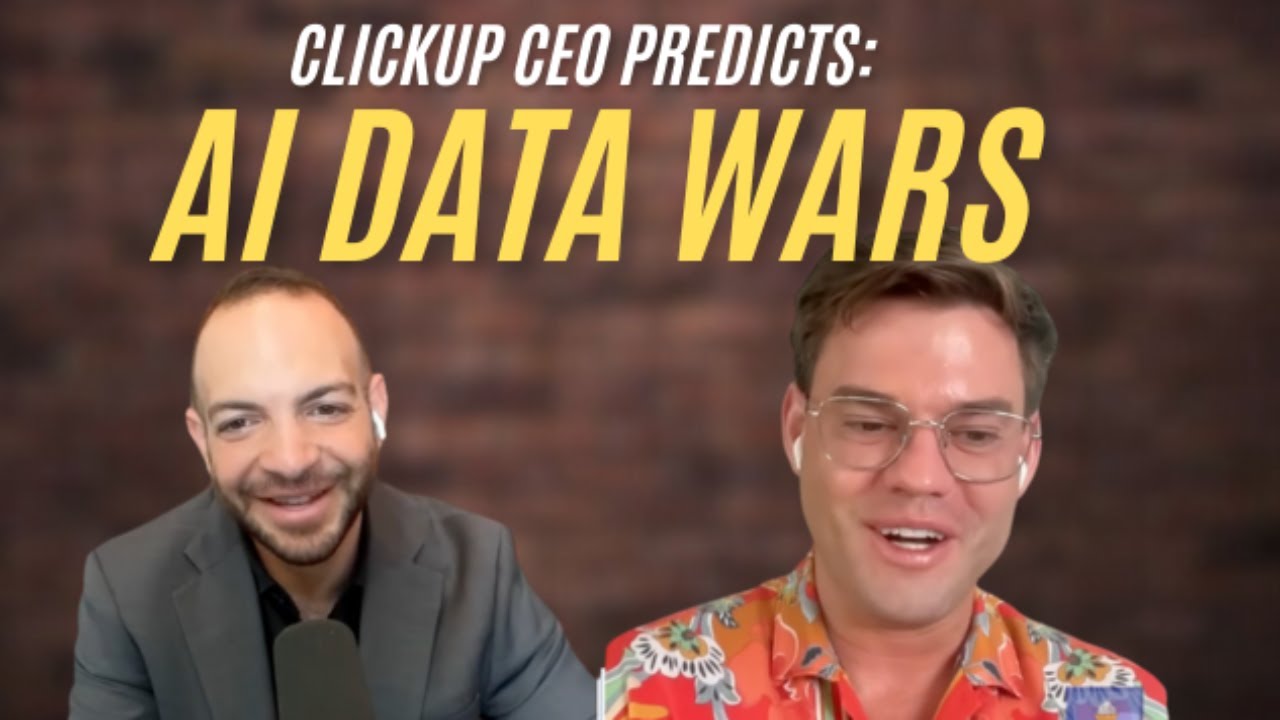
In this insightful conversation with Zeb Evans, founder and CEO of ClickUp, the discussion centers on how AI is poised to transform the core of business software. Zeb emphasizes that while AI will significantly change software interaction, he does not believe that a single AI chat interface will replace all traditional user interfaces. Instead, AI chat experiences will need to be supported by core software primitives such as documents, slides, spreadsheets, and databases. He highlights ClickUp’s strategy of software convergence, where previously separate niche applications merge into one flexible platform, personalized to each user’s role, team, and priorities, enabling a more efficient and tailored user experience.
Zeb explains that personalized software will allow users to “vibe code” their interfaces, customizing how they interact with their inboxes, dashboards, and other software components using natural language. This approach offers users unprecedented creativity and control over their workflows, moving beyond traditional rigid interfaces. He also notes that while AI can enhance these experiences, it is not yet advanced enough to fully replace the need for structured application layers and consistent user interfaces, especially in complex B2B environments.
The conversation also touches on the challenges and future of data integration in business software. Zeb stresses the importance of unifying data into a single, consistent database rather than relying on fragmented APIs across multiple platforms. This unified data model is crucial for AI to effectively retrieve and synthesize relevant context, enabling smarter automation and insights. He critiques moves by companies like Salesforce and Figma to restrict data access, suggesting that such strategies may backfire as customers increasingly demand open ecosystems that allow seamless data integration and AI-driven collaboration.
Zeb envisions a future where a few major software providers offer comprehensive platforms that include ERP, CRM, marketing, HR, project management, and communication tools all unified under one system. However, he acknowledges that this convergence will not happen overnight and that the AI labs currently face significant challenges in delivering collaborative and context-aware AI experiences. He also highlights the rise of bespoke software, where small businesses can afford customized solutions powered by AI, though these will likely be built by agencies or platforms rather than by the businesses themselves.
Finally, Zeb addresses the question of ROI on enterprise AI investments, emphasizing that time saved and efficiency gains are the key metrics to focus on. He advocates for “ambient AI,” where AI proactively assists users by answering questions and providing insights without requiring explicit prompts. This proactive approach, combined with deep integration of AI into unified software platforms, is where he sees the greatest potential for AI to deliver real value in business software. For those interested in exploring these innovations, Zeb directs viewers to ClickUp.com, where they can learn more about the company’s vision and products.