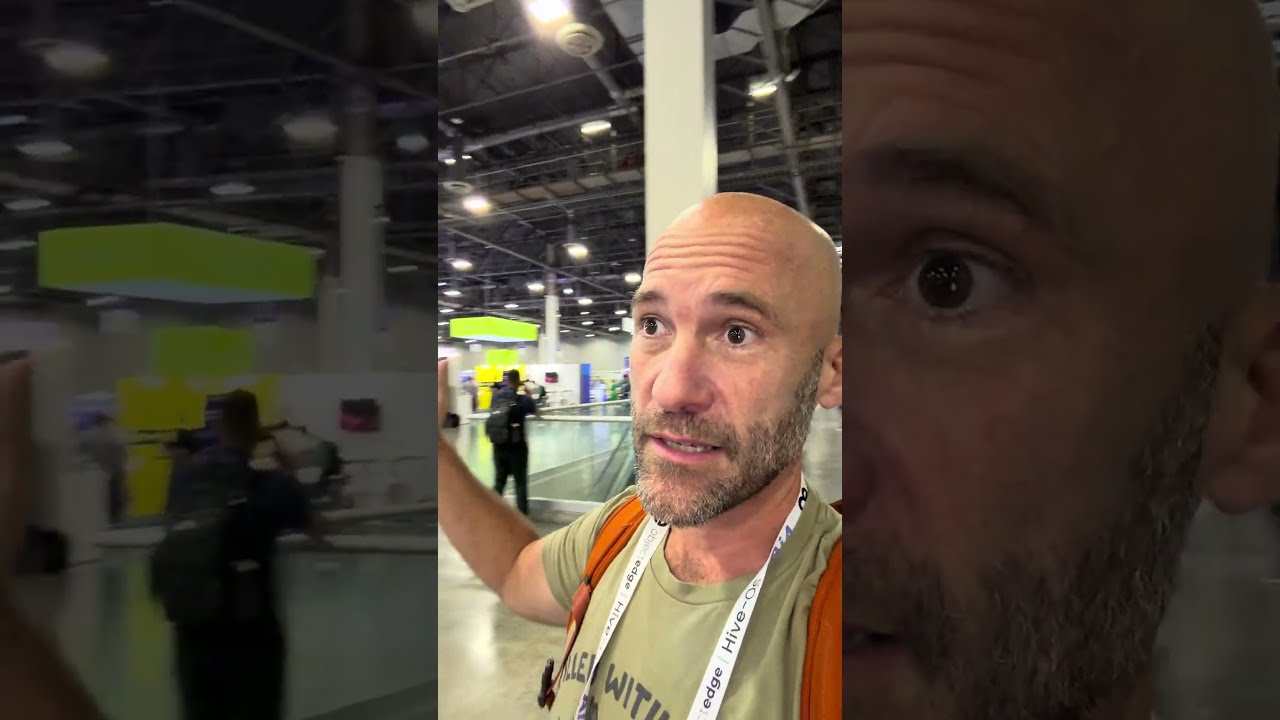
The speaker expresses the challenge of explaining AI architecture to a general audience, or “normies,” who often have a basic understanding of artificial intelligence from popular culture but lack knowledge of the underlying technologies. While people recognize AI from movies like Terminator or 2001, they struggle to grasp technical concepts such as distributed databases, SQL versus NoSQL, vector databases, orchestration, and data layers. This gap makes it difficult for the speaker, who is an educator and communicator, to convey the complexities of AI architecture in an accessible way.
At an AI expo, the speaker encounters many interesting companies and technologies related to AI architecture but finds it hard to explain their significance to a non-technical audience. For example, they mention CockroachDB, a highly distributed SQL database system useful for AI projects, but admit uncertainty about how to simplify this concept for others. Similarly, they reference companies working on text-to-SQL technologies and orchestration tools, highlighting the importance of data management, latency, and searchability in AI systems.
The speaker emphasizes that while artificial intelligence as a concept is widely recognized, the detailed architecture that supports AI applications remains obscure to most people. This disconnect poses a communication challenge, especially when trying to explain these ideas to bosses, clients, or customers who may not have a technical background. The speaker is actively trying to find ways to bridge this understanding gap but has not yet found a definitive solution.
Data management and orchestration emerge as key themes in the discussion of AI architecture. The speaker notes that managing data storage, ensuring low latency, and enabling efficient searchability are critical components that many companies are innovating around. These technical aspects are foundational to building effective AI systems but are often overlooked or misunderstood by those outside the tech industry.
In conclusion, the speaker reflects on the difficulty of translating complex AI architecture concepts into relatable stories for a broader audience. Despite the exciting advancements and the presence of many innovative companies at the expo, the challenge remains in making these technical details comprehensible. The speaker remains hopeful about finding better ways to communicate these ideas in the future and encourages others to consider how they might explain AI architecture to non-experts.