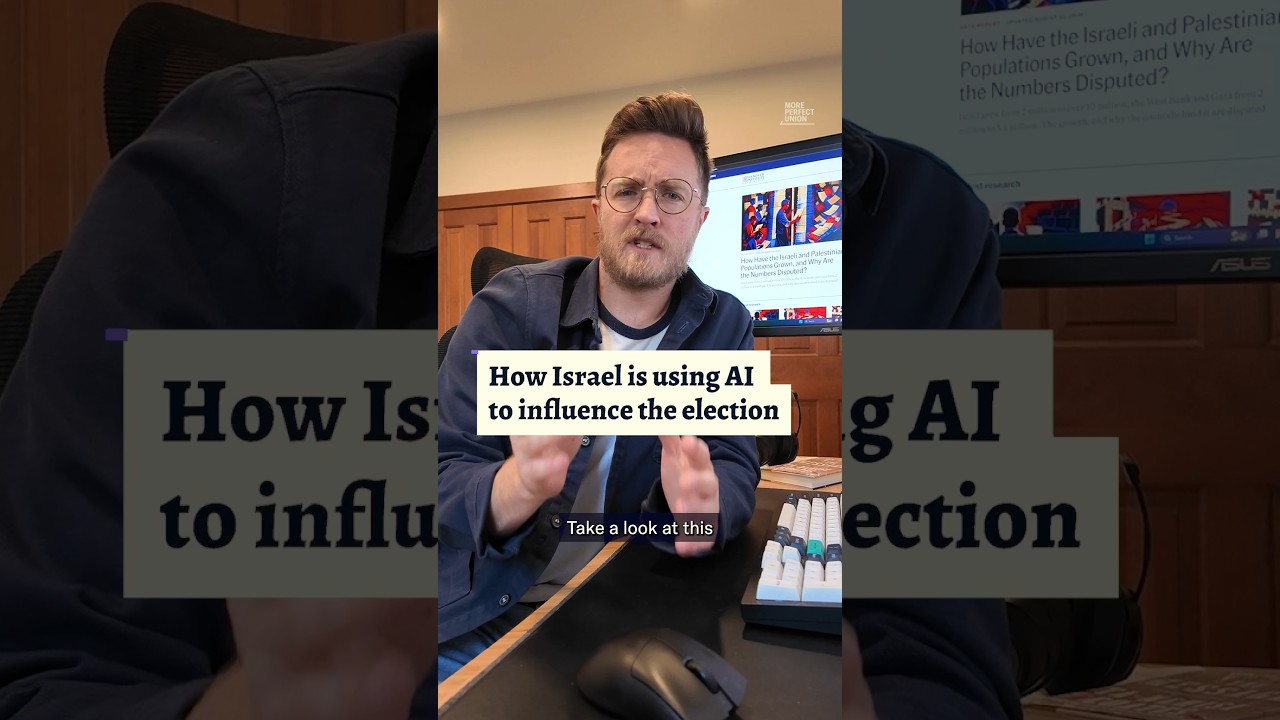
Israel is investing over $100 million in digital campaigns and foreign lobbying, including paying firms like Brad Parcale’s Clock Tower X to create targeted pro-Israel content and influence younger voters in the US. A controversial tactic involves producing neutral-toned articles through fake think tanks to shape AI chatbot responses, subtly embedding pro-Israel perspectives to sway public opinion ahead of the US midterm elections.
The video discusses a unique political ad currently running in Iowa that promotes support for Israel by emphasizing its role in confronting Iran and its proxies. This ad is part of a broader Israeli government strategy aimed at reinforcing the historically strong US-Israel relationship, which is increasingly being questioned by many Americans. To address this shift in public opinion, Israel is investing heavily—spending over $100 million under the Foreign Agents Registration Act—on foreign lobbyists and campaigns designed to bolster support in the United States.
One key figure in this effort is Brad Parcale, a former Trump campaign manager whose firm, Clock Tower X, has been paid by Israel to produce targeted online content, especially aimed at younger audiences like Gen Z. Beyond traditional advertising, the strategy includes paying influencers and content creators to generate pro-Israel videos and posts on social media platforms. This approach reflects Israel’s recognition that modern political battles are fought on digital and social media fronts, requiring new tactics to engage and persuade voters.
A particularly notable and controversial aspect of Israel’s campaign involves attempts to influence artificial intelligence chatbots such as ChatGPT and Claude. Brad Parcale and his firm have created multiple websites—at least 11 identified—that publish neutral-toned articles and papers designed to shape AI responses in favor of Israel. This tactic aims to subtly embed pro-Israel perspectives into the data these AI systems use, thereby influencing the information they provide to users.
One example highlighted is the creation of a fake think tank called the Hanover Institute for Public Policy by a company named Piro, which was paid $900,000 by the Israeli government. This entity produces content that AI chatbots cite as credible sources, effectively steering AI-generated answers to reflect Israel’s viewpoints. The video demonstrates this by showing how the AI model Gemini references one of these websites when asked about the benefits of US military cooperation with Israel.
Overall, this billion-dollar initiative marks a significant shift in Israel’s approach to maintaining influence in the US political landscape. With traditional allies like AIPAC and some US politicians becoming less reliable due to changing voter attitudes, Israel is adopting more direct and technologically sophisticated methods to sway public opinion and impact the upcoming US midterm elections. This strategy underscores the growing importance of digital influence and AI in modern political campaigns.
Useful Links