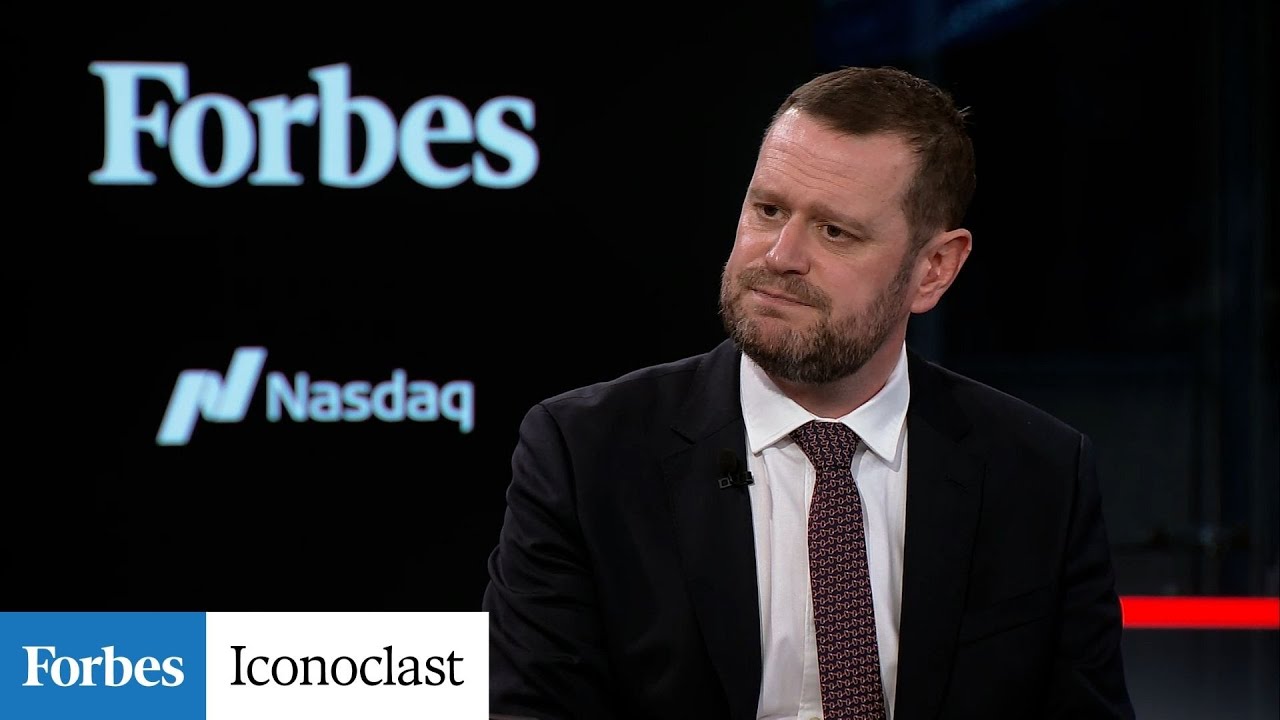
In this insightful discussion at the NASDAQ market site, Colin Perie, Global Chief Investment Officer for Public Markets at Manulife Investment Management, shares how Manulife has been proactively investing in AI capabilities for nearly a decade, well before AI became a mainstream focus. The firm recently launched a new AI research assistant platform designed to enhance their global investment strategies by efficiently sourcing, understanding, and packaging vast amounts of data. Importantly, Manulife emphasizes that AI serves as a tool to augment human expertise rather than replace it, allowing analysts to focus on higher-value investment decisions while AI handles repetitive data tasks.
Manulife’s approach to integrating AI has been highly collaborative and demand-driven. Instead of developing AI tools in isolation, their AI teams work closely with investment teams to co-create solutions that address real-world challenges faced by analysts. This bottom-up strategy has led to faster adoption and greater acceptance across the firm, even converting initial skeptics into enthusiastic users. The firm currently reports that about 65% of its public markets investment team actively uses the AI research assistant, with adoption continuing to grow across other departments.
Addressing concerns around AI implementation, Perie highlights two key considerations: whether to build or buy AI technology, and ensuring that AI tools complement rather than disrupt Manulife’s established investment processes. The firm has adopted a hybrid approach, rapidly prototyping and scaling only those tools that demonstrate clear benefits. They also maintain rigorous oversight through a model risk committee to ensure ethical standards, compliance, and ongoing monitoring of AI models to detect biases or deviations, thereby fulfilling their fiduciary responsibilities to clients and regulators.
From a workforce perspective, Manulife is mindful of the common fear that AI might replace jobs. Instead, they position AI as a means to relieve employees from repetitive tasks, enabling them to focus on value-added activities. The firm invests in upskilling and training to help employees adapt to AI-driven workflows, recognizing that adaptability and soft skills will be crucial for success in the evolving investment landscape. Perie stresses that while AI is a powerful tool, human judgment, emotional intelligence, and resilience remain indispensable in navigating volatile markets.
Looking ahead, Perie is closely watching the broader AI investment landscape, noting that while massive capital is being poured into AI infrastructure and enablers, the market has yet to fully realize the return on investment. Over the next six to twelve months, he expects increased market scrutiny on where tangible benefits will emerge. Ultimately, Manulife aims to leverage AI to deliver enhanced value and better investment outcomes for clients over the next three to five years. His advice to executives hesitant about AI adoption is to embrace uncertainty, move quickly, and be willing to experiment, as the risk of being left behind in this fast-evolving space is significant.