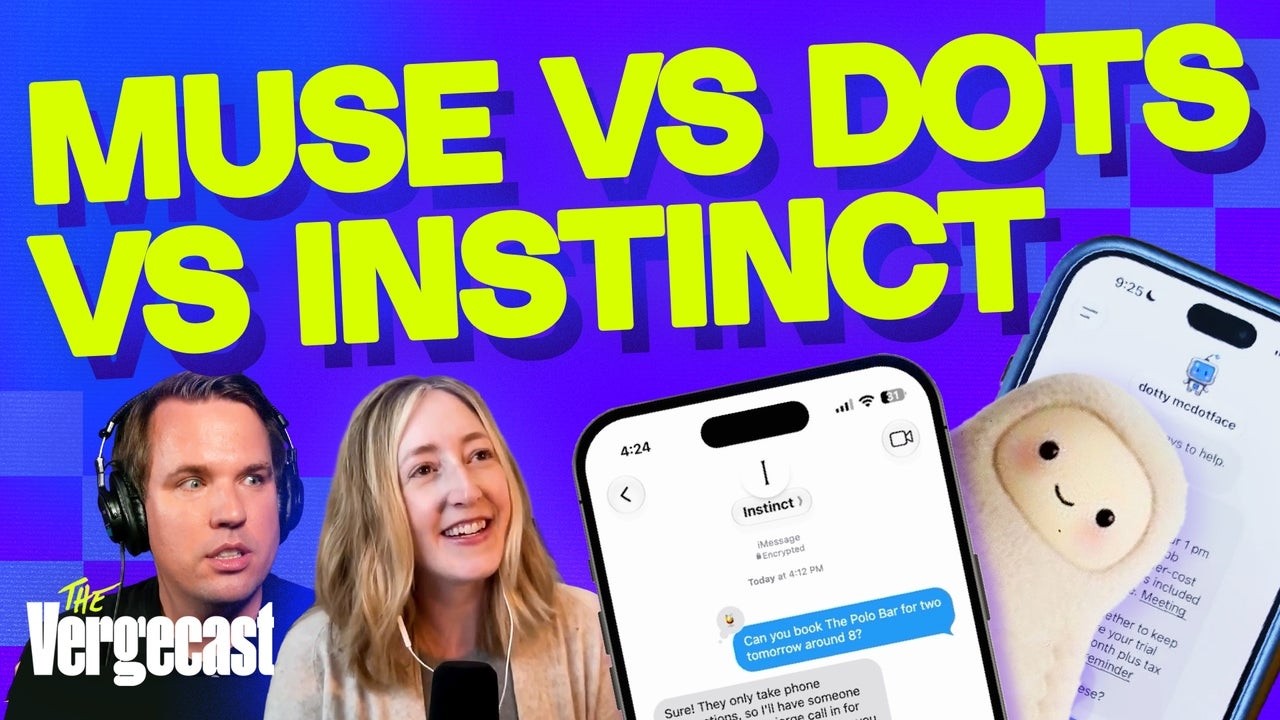
The Vergecast episode explores the emerging landscape of agentic AI messaging systems, focusing on products like Meta’s Muse, OpenAI’s Dots, and the startup Instinct. These AI assistants are designed to perform tasks on users’ behalf through messaging interfaces, each with distinct approaches: Muse and Instinct operate as standalone or integrated messaging apps, while Dots functions within a broader AI ecosystem like ChatGPT. Allison Johnson, who has extensively tested these tools, shares insights into their usability, strengths, and limitations, highlighting how they cater to different user needs and contexts.
Allison discusses the initial challenge of figuring out practical uses for these AI agents, noting that while it can feel like a “blank page” problem, having a backlog of tasks makes the tools more immediately useful. She emphasizes that these assistants are particularly appealing to busy individuals juggling numerous small tasks, such as working parents. Among the three, Instinct stands out for its seamless integration into existing messaging apps, making it less intrusive and more convenient for quick, straightforward tasks. Muse, on the other hand, offers a richer interface with more capabilities but feels more suited to desktop use, while Dots is positioned more as a work-focused tool.
A significant part of the conversation revolves around the ethical and practical considerations of granting these AI systems access to personal data and permissions. Allison recounts a striking experience where Muse nearly purchased a car on her behalf, underscoring the risks of over-permissioning. Both hosts express caution about sharing sensitive information like passwords and credit card details, advocating for careful management and monitoring of such access. They acknowledge the tension between the convenience these tools offer and the potential privacy and security concerns they raise, especially given the companies behind them.
The hosts also reflect on the broader societal implications of AI automation, particularly the trade-off between convenience and human interaction. They discuss how technology increasingly replaces everyday personal interactions, such as ordering coffee or shopping, raising questions about what it means to be human in a highly automated world. Despite these concerns, they recognize that for many people, especially those with demanding lives, the efficiency gains from AI assistants are valuable and sometimes necessary, even if it means sacrificing some traditional experiences.
In conclusion, while none of the AI assistants have become a comprehensive personal assistant for the hosts, they find specific, recurring uses for them, such as managing emails or finding professional development opportunities. The episode underscores that these AI tools are evolving and that their optimal integration into daily life and work remains an open question. The hosts invite listeners to share their experiences and thoughts on using AI assistants, highlighting the ongoing dialogue about balancing utility, privacy, and the human element in the age of AI.
Useful Links