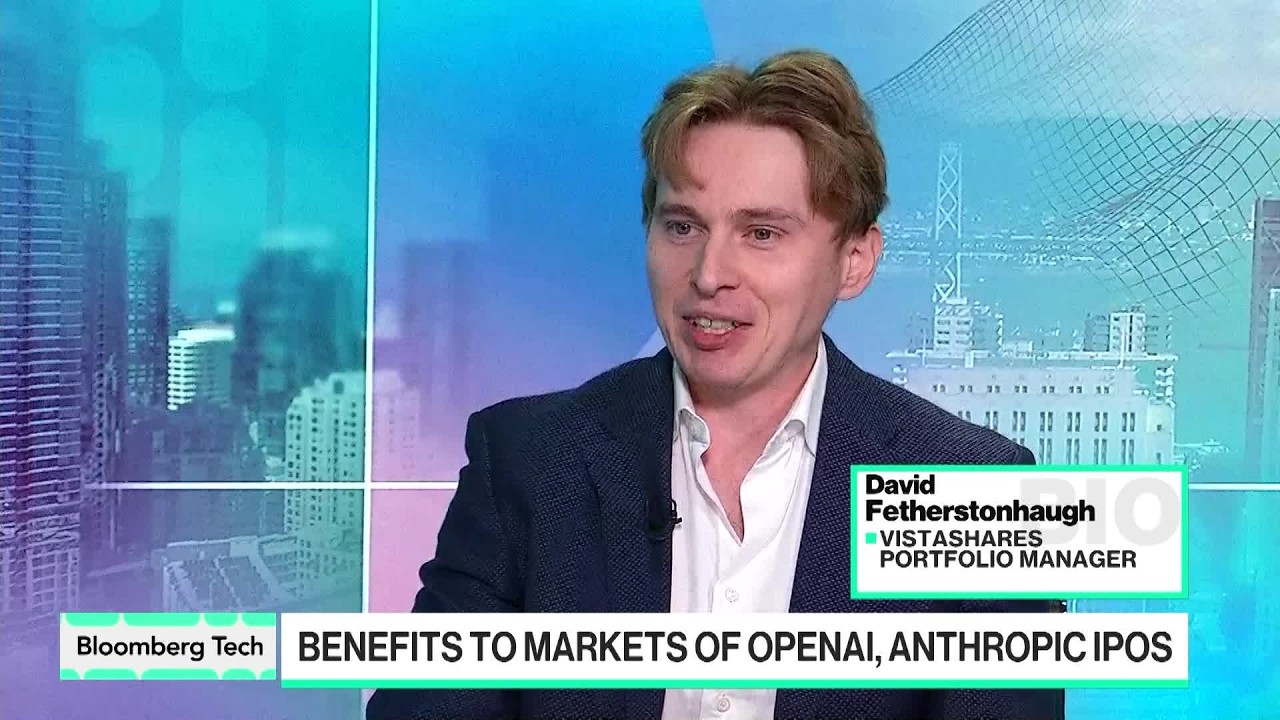
The potential IPOs of OpenAI and Anthropic could bring much-needed transparency to the opaque AI market, helping investors better understand the economics across foundational AI labs, hyperscalers, and application layers. Additionally, a global perspective on AI infrastructure, especially in regions like Taiwan and South Korea, is crucial for capturing value and navigating the complex investment landscape shaped by supply chains and evolving technology demands.
The discussion begins with the Broadcom CEO’s observation that investors lack a clear understanding of what they are investing in within the AI sector. This highlights a broader issue of opacity in the AI market, particularly at the foundational or “layer one” level, which includes AI labs and infrastructure. The market is fragmented into three layers: the growth of AI labs, the monetization by hyperscalers, and the application layer where enterprises realize ROI. However, since the foundational layer is not publicly visible, investors often struggle to assess the true value and progress of AI companies.
The recent OpenAI accounting announcement exemplifies this opacity, revealing discrepancies in revenue reporting and calendar alignment. The speakers view the potential IPOs of OpenAI and Anthropic as positive developments that could bring much-needed transparency to the AI ecosystem. Public listings would allow clearer valuation metrics and reduce reliance on private investment perspectives, helping stakeholders better understand the economics of AI across its various layers—from labs to hyperscalers to application monetization.
The conversation also touches on the challenges investors face in evaluating ROI across these layers. While hyperscalers are beginning to demonstrate multi-quarter growth and monetization, the foundational AI labs require more time to mature and show returns. This creates tension as investors seek immediate ROI, but the development of AI infrastructure and applications is inherently a longer-term process. The analogy to Nvidia CEO Jensen Huang’s “five-layer cake” of AI underscores the complexity and interdependence of these layers, where investment decisions must consider the entire ecosystem rather than isolated segments.
Investment strategies are influenced by where capital expenditures are concentrated within the AI industry. The speakers emphasize the importance of following the flow of investment dollars to identify net earners and sustainable growth areas. They note that while the physical infrastructure—such as chips, networking, and cooling—remains essential, the composition of investments shifts depending on whether the focus is on frontier AI labs, hyperscalers, or application monetization. This reinforcing loop between demand and delivery mechanisms shapes the evolving AI market landscape.
Finally, the discussion broadens to a global perspective, noting that much of the critical AI infrastructure and innovation resides outside the US, particularly in Taiwan and South Korea. The fund mentioned prioritizes international holdings to capture exposure to these “crown jewels” of the AI trade. The speakers highlight the importance of understanding global supply chains and pricing dynamics, such as memory bottlenecks, which significantly impact margins and profitability. This international focus complements the layered approach to AI investment, providing a comprehensive view of where value is created and how it might evolve.
Useful Links