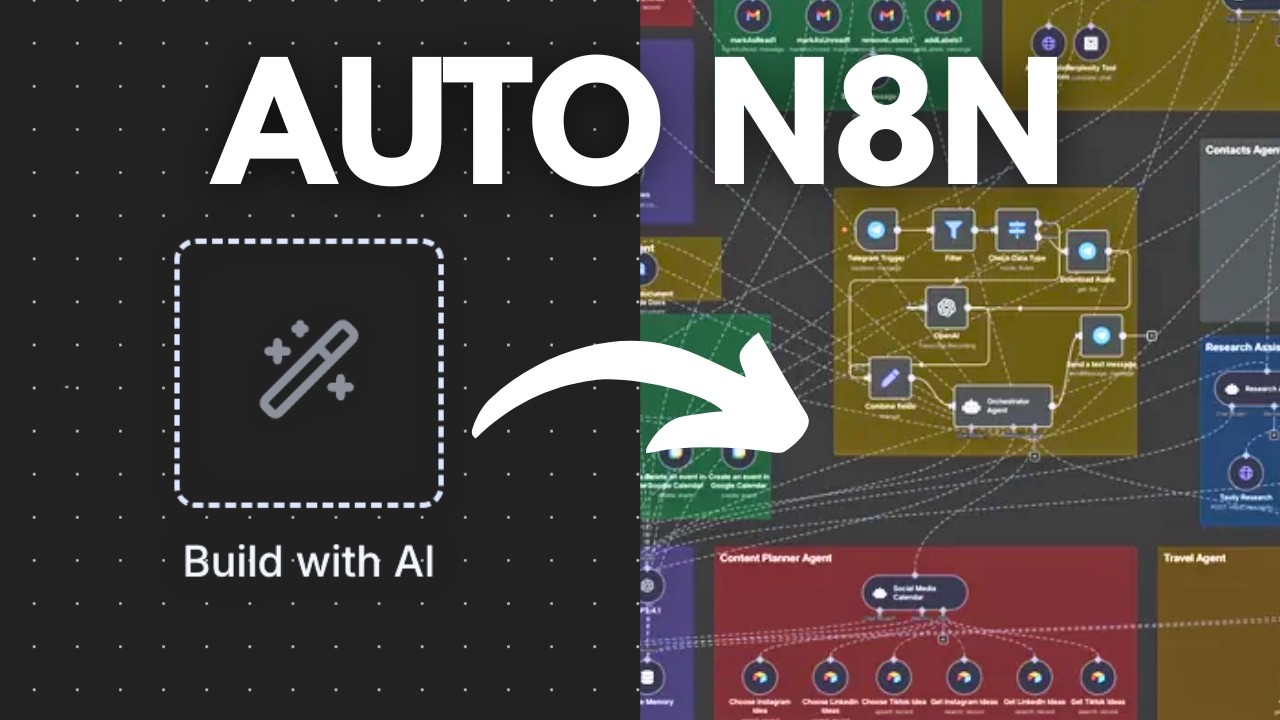
The video introduces NA10’s AI Workflow Builder, a new feature in beta that allows users to create automation workflows simply by describing them in natural language. NA10 is an AI automation platform known for its extensive community templates, with over 6,000 available for various use cases like IT operations, security, DevOps, and sales. The presenter explores the AI Workflow Builder to see if it is genuinely useful or just a demo, highlighting that the tool is integrated into the AI workflow canvas and can chat with users to help build workflows.
The presenter tests the AI Workflow Builder by asking it to create a workflow that automatically generates YouTube video chapters. However, this example runs into issues because the workflow tries to access YouTube captions, which are often unavailable through the official API. This limitation causes the workflow to fail, demonstrating that while the AI builder can generate workflows, it may struggle with real-world data access or complex integrations that require external APIs not fully supported by NA10.
Next, the presenter tries a simpler workflow to chat with emails, which works more successfully. The AI builder creates a workflow that reads emails from Gmail and drafts replies, showing promise in handling straightforward automation tasks. The presenter even attempts to enhance the workflow to automatically draft replies and integrate calendar invites, turning it into a more functional personal assistant. Despite some minor errors, such as undefined email addresses during testing, the AI builder demonstrates practical potential for automating email-related tasks.
The video also discusses some limitations and frustrations with the AI Workflow Builder, such as the limited number of AI credits (50 per month) and the lack of an option to plug in custom API keys. The presenter notes that while the tool is a step in the right direction, it is not yet perfect, especially for more complex workflows requiring detailed context or external data sources. Additionally, the AI builder is currently only available in the cloud version of NA10, which has caused some community concern, especially given the recent $180 million investment NA10 received.
In conclusion, the presenter finds NA10’s AI Workflow Builder to be an interesting and promising tool that can simplify workflow creation for basic tasks but still faces challenges with more complex or real-world scenarios. The video ends with reflections on the broader implications of AI-driven “vibe coding” tools, questioning whether they will lead to a utopian ecosystem of easy automation or a saturated market of low-quality workflows. The presenter invites viewers to share their thoughts and looks forward to exploring the future of AI automation in upcoming videos.