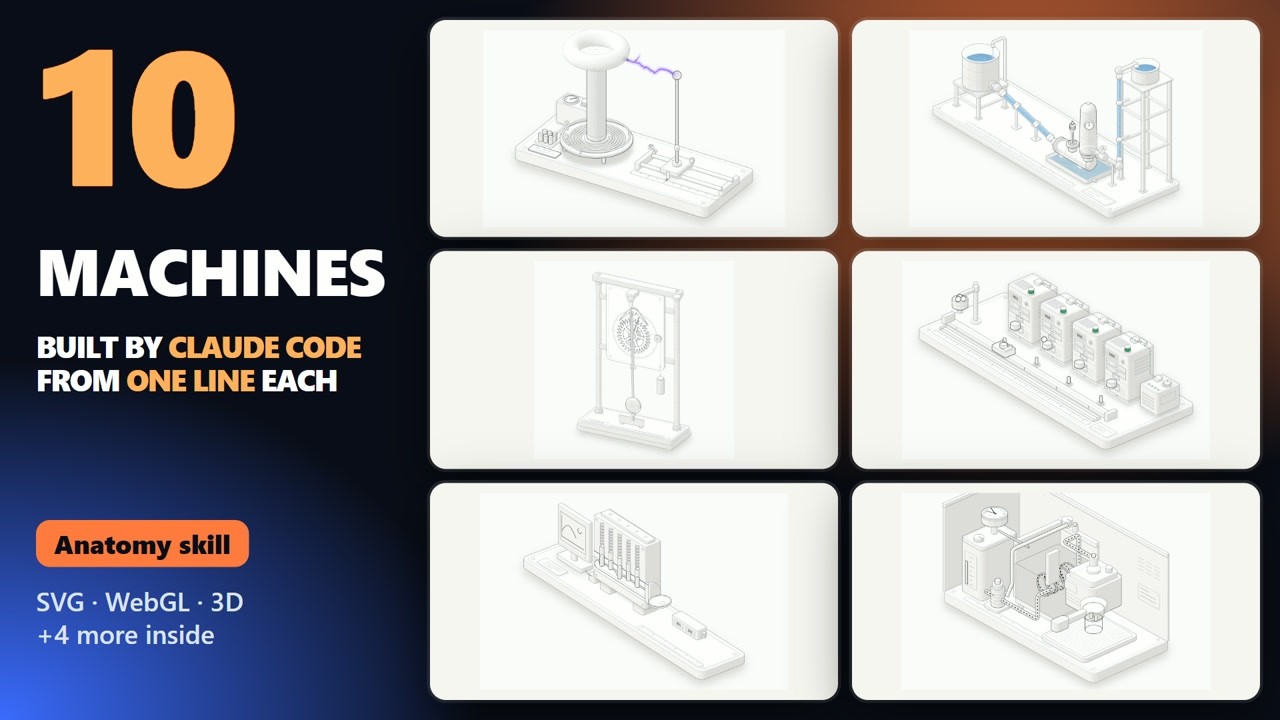
In this video, the creator demonstrates how Claude Code, using a single line of code on their PC, can generate complex machines through an open-source skill called Anatomy. The skill, hosted in the Shrine22/Anatomy repository, is very new and licensed under MIT. It allows users to describe an idea or machine, and Claude invents a physical object that embodies the concept, rendering it as an interactive card with live readouts. Anatomy supports three figure types: plain SVG isometric parts, SVG combined with WebGL for effects like fire and water, and a beta 3D mode where parts can move in three dimensions.
The installation process is straightforward, requiring just one command, and the skill runs securely using only Node’s built-in modules. The creator runs Claude Code headlessly with restricted permissions, demonstrating the creation of a Bunsen burner flame that changes color based on air flow. Although the initial output was a first working pass with fewer parts than the skill’s target and no WebGL effects, it showcased the potential of the system. The creator then simultaneously generated four more machines: a token bucket rate limiter, a database connection pool, a CDN edge cache, and an espresso machine, each taking between two and six minutes to complete.
Next, the creator ran five additional machines using the Opus model with extra instructions to run and fix skill checks. These included a pin tumbler lock cash key, a round-robin load balancer, a hydraulic ram pump with WebGL water effects, an anchor escapement clock mechanism, and a Tesla coil with a plasma arc. These models took longer to generate, between 6 and 17 minutes, but passed thorough line checks with no errors. The machines featured realistic animations and interactive elements, such as moving pins, swinging pendulums, and adjustable Tesla coil arcs.
The video also highlights that while the skill is powerful, it is intentionally slow to ensure accuracy and quality. The 3D mode is still in beta and requires specific software versions for full functionality. None of the creator’s models completed the full geometry audit, so they are considered good first drafts rather than final products. The creator shares tips from the Anatomy readme for better results, such as naming the idea rather than the drawing, providing real numbers, specifying moving parts, and defining the output format and theme.
In conclusion, the video showcases how Anatomy can transform a single line of code into interactive, detailed machines that can be explored and manipulated. The creator encourages viewers to try the skill themselves and credits Ryan for building Anatomy. The video serves as both a tutorial and a demonstration of the impressive capabilities of Claude Code combined with the Anatomy skill, inviting further experimentation and development in this innovative space.