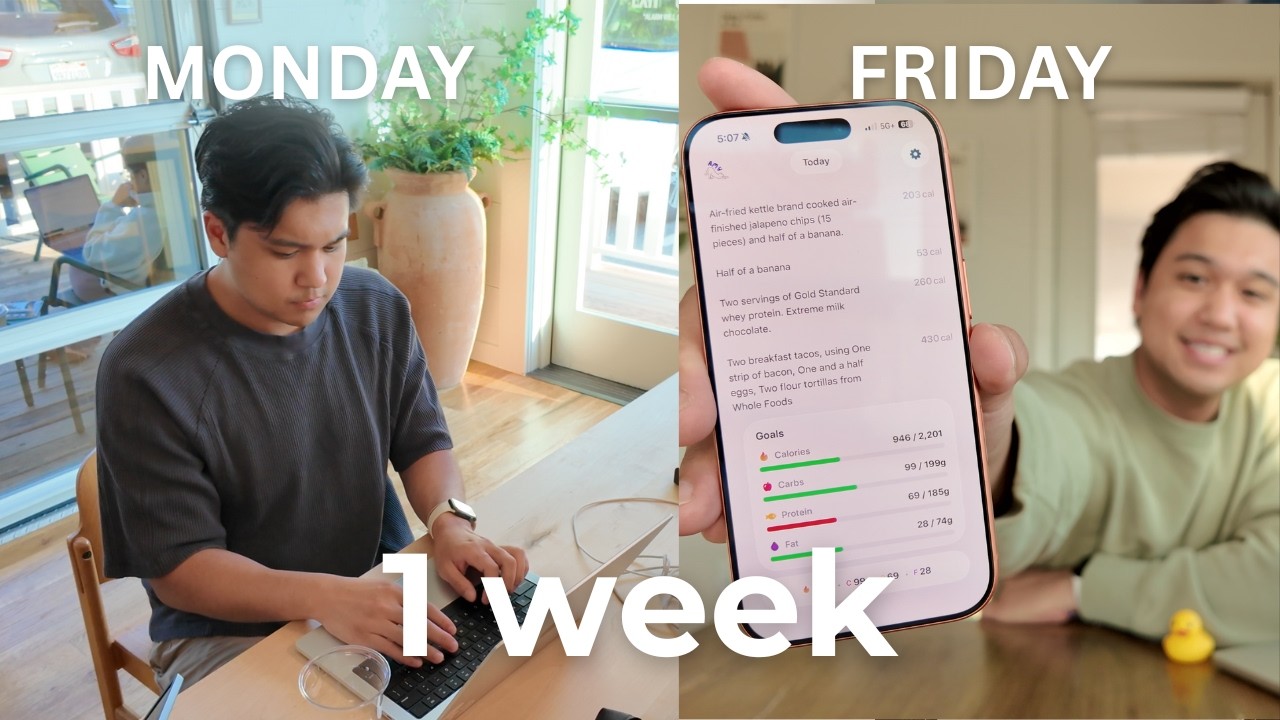
In this video, Chris challenges himself to transform a simple prototype of a calorie tracking app called Amy into a fully functioning app within one week. The prototype, built in just 12 hours, allows users to type the food they ate on the left side while the app searches and displays calorie information on the right. After sharing the prototype online, Chris received an overwhelming response with hundreds of comments and over 500 people joining the waitlist, motivating him to develop the app properly and onboard initial users for feedback.
Chris began by stabilizing the core user interface and experience, focusing on syncing two scroll views—one for text input and one for calorie results—which proved more complex than it appeared. He spent the first day perfecting this interaction, handling edge cases like multi-line text, offline scenarios, and server delays. The AI component, powered by Perplexity Sonar, was already reliable, so the main challenge was ensuring a smooth and trustworthy user experience with polished animations and interactions.
On days two and three, Chris developed a nutrition detail page, a secondary screen that shows a detailed breakdown of nutrients when users tap on calorie counts. Collaborating with his fiancée Cecilia, they iterated extensively on the design to build user trust by including sources for the data and a unique “Amy’s thought process” section explaining how calorie calculations were made. Although he initially planned to add an AI-powered calorie editing feature, it was postponed to keep the beta release on schedule.
The following days were spent adding important features like goal setting, notifications, location-based calorie estimation, and dictation. Chris introduced a goals page where users can set calorie and macronutrient targets, with AI assistance to generate personalized goals. Notifications were implemented to encourage habit formation, while location data improved calorie accuracy by contextualizing food entries. He also integrated a custom animated dictation feature, inspired by the Whisper Flow app, to allow users to input food items by voice, enhancing usability.
In the final days, Chris connected the app to a backend and database using Supabase and a simple Node Express server, enabling data persistence and secure AI calls through the backend rather than directly from the app. He also implemented AI abuse protections, including usage limits and a kill switch to prevent excessive costs. After completing these steps, the app was submitted to TestFlight, approved by Apple, and onboarded with five beta testers. Chris plans to gather feedback, expand the beta user base, and continue iterating toward a polished, monetized product.