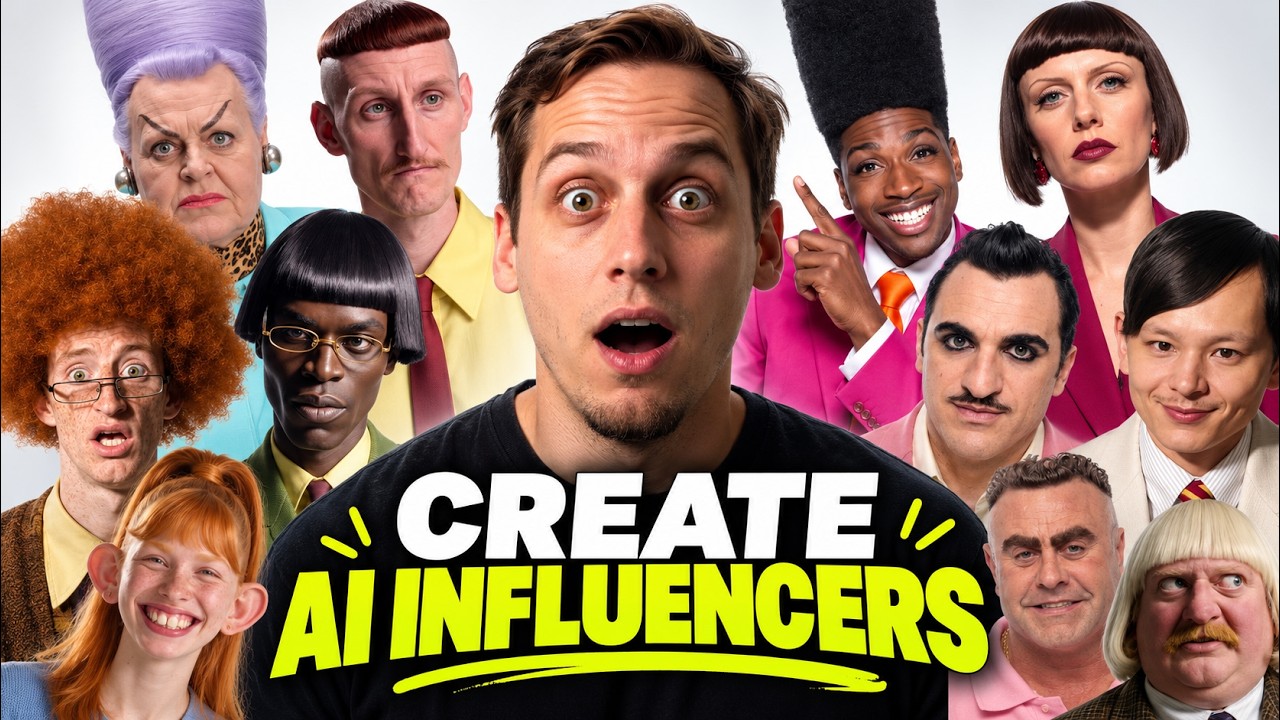
In this video, the creator introduces Captain Pip, an AI character developed using the Higgsfield website and Claude Code. Captain Pip is designed as an elderly ship captain with distinctive features like a curled gray mustache, a sailor cap, and a navy coat. The creator demonstrates how to build and animate the character from scratch, emphasizing the importance of maintaining consistent facial features and accessories across different outfit and setting variations to ensure recognizability. The character is animated using motion transfer technology, applying movements from reference videos to bring Captain Pip to life.
The video explores practical applications of creating consistent AI characters, such as developing brand mascots, recurring personalities for social media accounts, or producing multiple versions of product videos. The creator highlights the potential for agencies to offer these services, citing an example of a Barcelona-based agency that generates significant revenue by producing virtual model advertisements. Additionally, the video touches on the possibility of creating diverse content variations for clients, including different outfits and settings, to suit various campaign needs.
Next, the creator showcases the process of editing Captain Pip’s outfit and background on the Higgsfield platform. Starting with a navy coat and sailor cap, the outfit is changed to a bright yellow raincoat, and the setting is shifted to an evening harbor scene. These changes demonstrate how the character’s identity remains consistent despite variations in clothing and environment. The creator carefully compares the animations to ensure that key features like the face, hat, and movements stay recognizable and coherent throughout different versions.
The video then transitions to using Claude Code in conjunction with the Higgsfield MCP (Multi-Character Prompt) to combine multiple image references—such as the character’s face, shirt, and hat—into a single cohesive look. This advanced workflow allows for more precise control over the character’s appearance and facilitates the generation of new video performances using different motion reference clips. The creator explains how this method supports creating multiple outfit and setting variations efficiently while maintaining character consistency.
Finally, the creator summarizes the benefits of using Higgsfield and Claude Code for AI character creation, emphasizing the ease of generating consistent, high-quality content that can be adapted for various uses. The integration of chat-based MCPs helps retain context, improving future generations and streamlining the creative process. Viewers are encouraged to try out Higgsfield themselves, with links provided for further learning, and the creator expresses enthusiasm for the platform’s potential in content creation and app development.
Useful Links