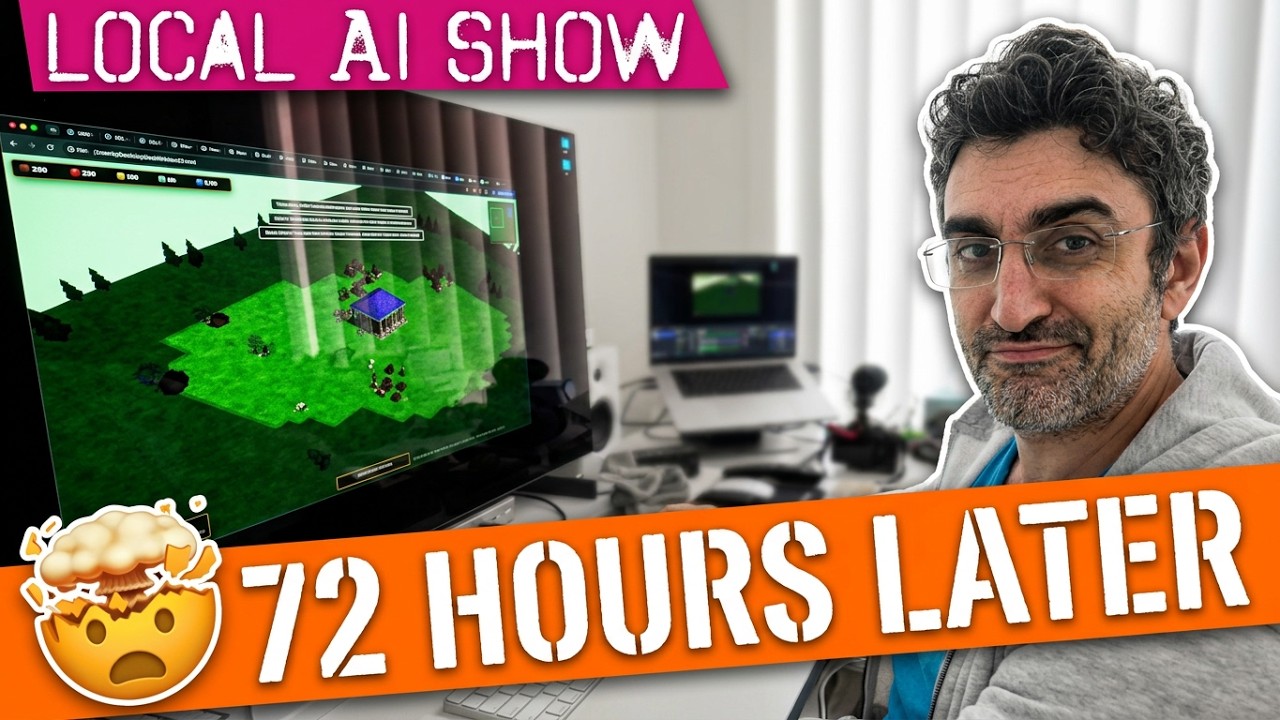
The video explores Atria Dawn, a new AI model developed by the Shanghai AI Laboratory, a state-backed premier research institution in China. The presenter highlights the model’s impressive benchmark performance, surpassing other leading models like Qwen 3.8 and GLM 5.3, and notes that it is built on GLM 5.2’s engine with a mix of training data from both Qwen and GLM. Despite being in preview with some bugs and runtime errors, the model shows promise, especially when run with higher bit quantization for better quality, though fully unquantized versions require massive computational resources.
Throughout the video, the presenter tests Atria Dawn on various complex tasks, primarily focusing on 3D graphics, game development, and interactive applications. The AI generates code for solar systems, spaceships, nuclear explosions, and realistic human faces, often producing impressive visuals but sometimes encountering shader errors and runtime issues. The model demonstrates the ability to create procedural faces with adjustable features and can generate extensive code for simulations and games, though some outputs suffer from bugs like incorrect camera angles or missing elements.
The AI’s capabilities extend to recreating popular games and software, including Call of Duty, Grand Theft Auto, Red Dead Redemption, Street Fighter 2, Tomb Raider, Age of Empires 2, Microsoft Word, PowerPoint, Photoshop, iMovie, Logic Pro, and Blender. While many of these generations have runtime errors or incomplete features, some, like Age of Empires 2 and Tomb Raider, produce playable and engaging experiences with functional gameplay elements. The presenter notes that the model excels in building interactive applications and games, aligning with its intended forte.
Despite the impressive scope and potential of Atria Dawn, the video emphasizes that the model is still in a preview phase, with frequent runtime errors, bugs, and performance issues, especially when using quantized versions. The presenter often has to manually fix errors and adjust lighting or camera settings to improve the output. However, the open-source nature of the model under an MIT license and the active community discussions in English suggest a collaborative effort to refine and enhance the AI’s capabilities.
In conclusion, Atria Dawn represents a significant step forward in local AI development in China, showcasing strong benchmark results and versatility in generating complex code and interactive 3D applications. While it currently faces challenges typical of early-stage models, its state-backed development and open licensing position it as a promising contender in the AI landscape. The video encourages viewers to follow its progress and reflects on the broader implications of state-funded AI research globally.
Useful Links