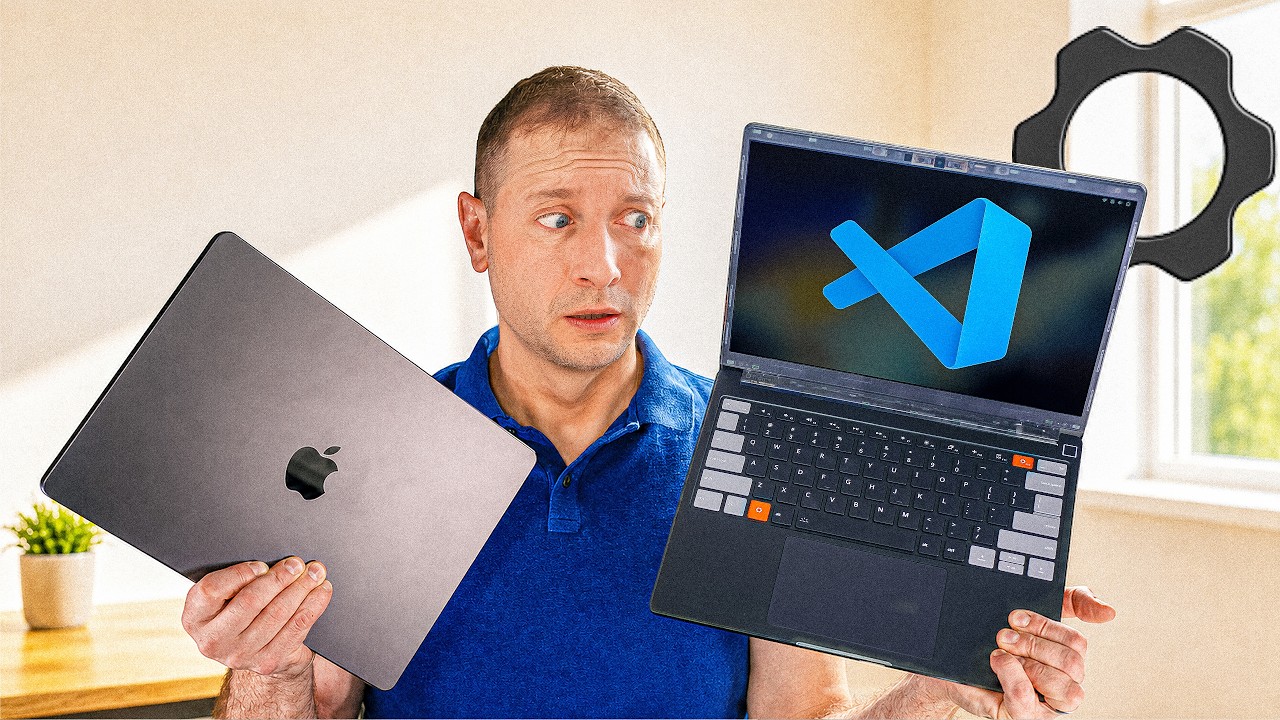
The video reviews the Framework Laptop 13 Pro, a modular Linux-compatible laptop designed as an alternative to MacBook Pros for developers. The presenter, a long-time MacBook Pro user, was intrigued by Framework’s promise of a customizable, repairable laptop that supports Linux and ordered one immediately. Upon receiving it, he highlights its thin design, modular components like USB-A, HDMI, Ethernet, and microSD modules, and the ability to upgrade parts such as memory and storage. He installed Fedora Linux and noted some initial compatibility issues with the Intel chip, which were resolved by updating to the recommended Fedora 44 version.
Performance comparisons between the Framework Laptop and the Apple M5 MacBook Pro reveal mixed results. The MacBook excels in single-core tasks and JavaScript-based benchmarks, reflecting its powerful M5 chip. However, the Framework Laptop, equipped with an Intel Ultra X7 processor and more cores (16 vs. 10), outperforms the MacBook in multi-core workloads such as Python-based tests and large .NET compilations. The Framework also offers superior SSD random read/write speeds, which are critical for development tasks involving frequent file operations.
Pricing-wise, the Framework Laptop starts cheaper than the MacBook Pro but can reach similar or higher prices once memory, storage, and expansion modules are added. The Framework’s modularity allows users to customize and upgrade components like memory up to 64 or even 96 GB, surpassing the MacBook’s maximum of 32 GB on the M5 chip. This flexibility is a significant advantage for developers needing more RAM for demanding workloads, although the MacBook offers a more integrated and polished out-of-the-box experience.
The video also explores AI and machine learning workloads, focusing on memory bandwidth and GPU utilization. While the MacBook has higher memory bandwidth and faster token generation speeds in AI models, the Framework’s upgradeable LPDDR5X memory and larger capacity provide potential benefits for running larger models. However, software support for the Framework’s newer Intel architecture is still catching up, affecting performance in some AI applications. Using optimized builds like Llama CPP with Intel’s oneAPI (Sickle) improves performance but still lags behind the MacBook in some cases.
In conclusion, the Framework Laptop 13 Pro is a solid, premium-feeling device that offers excellent modularity and multi-core performance, making it a viable Linux development machine. While it doesn’t fully replace the MacBook Pro for the presenter, especially the high-end M5 Max model, it presents a compelling alternative for developers seeking customization, repairability, and Linux compatibility. The presenter plans to continue testing and reviewing the Framework Laptop and invites viewers to ask questions or request Windows testing in future videos.