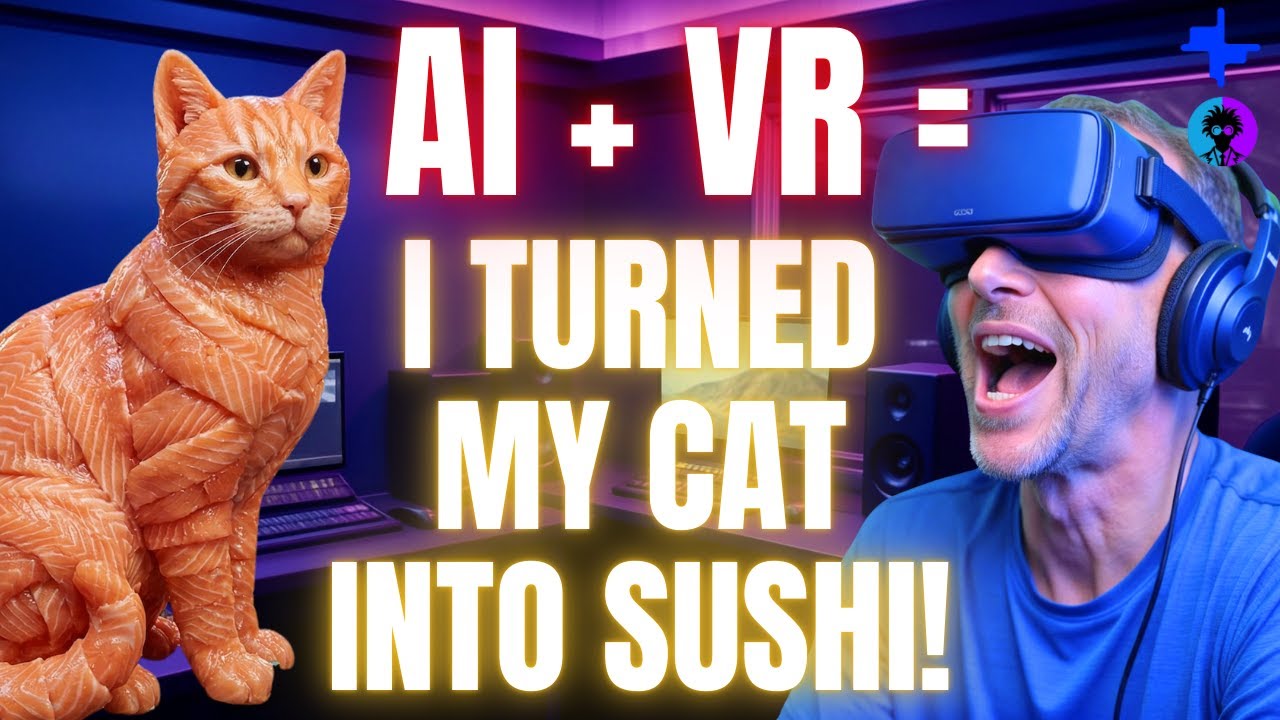
The video showcases Decart.ai, an AI technology that enables real-time transformation of video streams based on text prompts, demonstrated by turning the creator’s cat into sushi and later applied in VR on the Quest 3 headset through the Deart XR app. The creator highlights the technology’s potential for immersive, customizable visual experiences in AR and VR, exploring various artistic styles and material effects while envisioning future applications in gaming, personalization, and everyday life.
In this video, the creator demonstrates an innovative AI technology called Decart.ai that allows real-time transformation of video streams based on text prompts. The video begins with a playful example where the creator turns their cat into sushi using this AI. While it may seem like a fun gadget now, the creator emphasizes the profound implications of this technology for the future, especially as it evolves to work seamlessly with augmented reality (AR) lenses and virtual reality (VR) headsets. The ability to edit video content on the fly with minimal delay opens up new possibilities for how we perceive and interact with the world around us.
The creator then introduces Deart XR, a project that brings this AI-powered real-time video transformation into VR, specifically on the Quest 3 headset. Users can sideload the app via SideQuest and experience immersive environments where they can warp their surroundings or swap out elements with simple button presses. The creator showcases their own studio space as seen through the headset, highlighting how the AI applies different visual styles and effects based on preset themes or custom text prompts. The transformations happen quickly, with a delay of about 200 milliseconds, creating a dynamic and engaging experience.
Various presets and custom prompts are explored, ranging from cartoonish American comic styles to embroidery textures, zombie themes, and even cosmic space visuals. The AI adapts the environment and sometimes the creator’s hands to match the selected style, though the transformations are not persistent—meaning the visuals can change slightly when looking away and back again. Despite this, the creator appreciates the exploratory nature of the experience and notes that future improvements could include persistent effects, which would be essential for practical applications in gaming or real-world use.
The video also demonstrates how the AI can change the material appearance of objects and people in the environment, turning them into glass, clay, or wax, among others. This capability hints at future possibilities where users could customize their surroundings or even how others appear to them through AR or VR lenses. The creator imagines scenarios where simple homes could be visually transformed into wood cabins or other styles, and where people’s appearances could be altered on demand, highlighting the potential for personalization and creative expression in everyday life.
In closing, the creator expresses enthusiasm for the technology and its potential, sharing that they have spent many hours experimenting with it. They also mention the possibility of doing a live stream to take viewer requests for transformations, inviting audience engagement. The video encourages viewers interested in cutting-edge tech to subscribe for more content, blending humor with a genuine excitement for the future of AI-driven visual experiences in virtual and augmented reality.