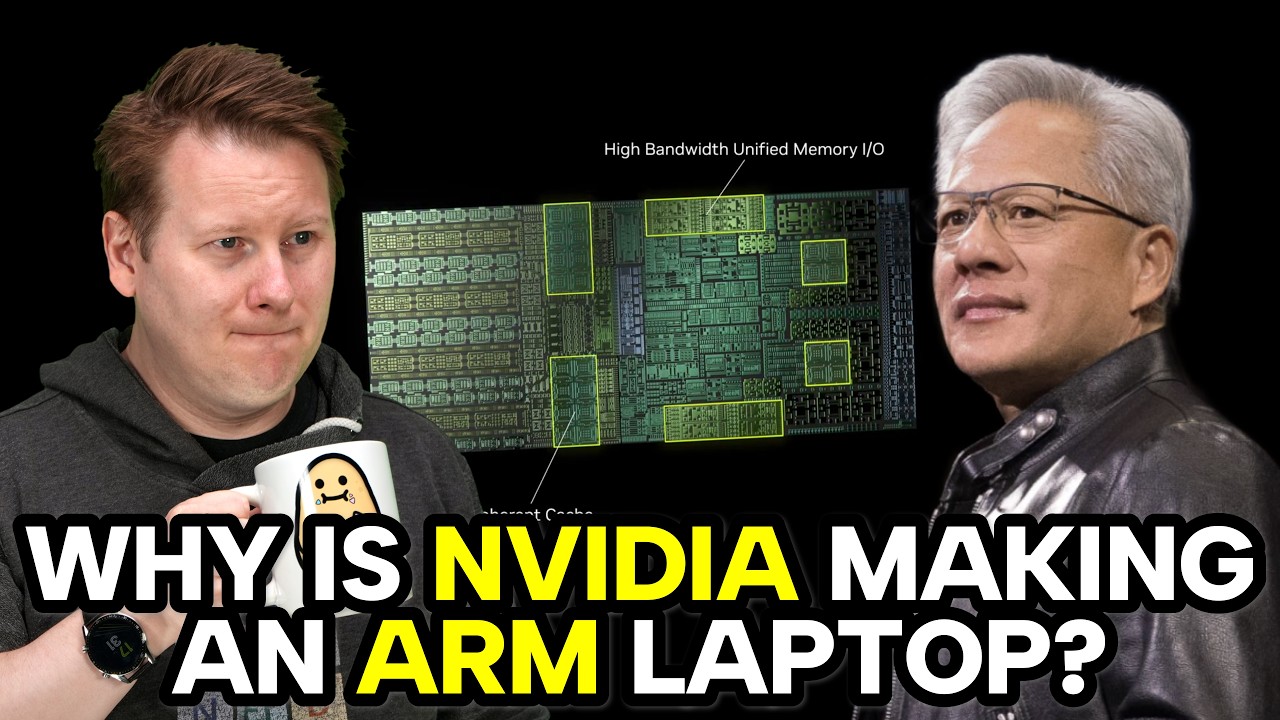
The video analyzes Nvidia’s upcoming N1X ARM-based chip, highlighting its powerful AI capabilities and innovative design but also noting significant challenges with power consumption, software compatibility, and high cost that limit its appeal to a niche market. While the chip shows promise for AI workstation users, the analyst remains cautiously skeptical about its broader market impact, emphasizing the need for improved software support and ecosystem development.
The video discusses the anticipated announcement of Nvidia’s N1X chip at an upcoming keynote, providing an analyst’s perspective based on industry knowledge rather than insider information. The N1X is expected to be an ARM-based chip combining Nvidia’s Blackwell GPU with a MediaTek CPU, packaged together using Nvidia’s proprietary NVLink technology. This chip was initially introduced in the DGX Spark AI mini PC but faced significant delays due to technical challenges, particularly with HDMI output caused by interference between the NVLink and MediaTek’s components. Despite these issues, the chip has been well-received in AI development circles for its performance and power efficiency.
The N1X aims to bring this powerful AI-capable chip into the notebook market, which presents challenges such as managing power consumption, cooling, and battery life. Unlike desktop replacements that tolerate high power usage and short battery life, the N1X notebook is expected to offer a more balanced experience with several hours of battery life. However, the chip’s high power draw and cost—estimated to result in notebooks priced around $3,000 or more—limit its appeal to a niche market rather than the broader PC market. The device is anticipated to run Windows on ARM, leveraging a partnership with Microsoft, but faces hurdles due to software optimization and compatibility issues.
A significant concern highlighted is the single-core performance of the MediaTek ARM cores used in the N1X, which may lag behind Qualcomm’s Snapdragon processors that have been refined over multiple generations for Windows on ARM devices. Qualcomm’s long-term collaboration with Microsoft has resulted in better software integration and driver support, advantages Nvidia may lack initially. This raises questions about the N1X’s real-world usability and software ecosystem readiness, especially given the complexity of Windows on ARM and the need for extensive developer and OEM support.
The video also critiques the hype surrounding the N1X, cautioning against overestimating its market impact. The chip is not a broad attack on the CPU market but rather a specialized, high-margin product aimed at AI workstation users rather than gamers or mainstream consumers. The analyst points out that Nvidia’s entry into ARM-based notebooks is more about expanding their AI hardware footprint than disrupting the general PC market. Comparisons to Apple’s optimized Mac ecosystem and Qualcomm’s Snapdragon laptops underscore the challenges Nvidia faces in gaining traction with this new product line.
In conclusion, while the N1X represents a technically impressive and powerful AI-focused ARM chip, its high cost, power demands, and software ecosystem challenges limit its immediate appeal. The analyst remains cautiously skeptical about the chip’s market success but acknowledges that Nvidia could persist and improve over time, similar to Qualcomm’s journey. The video ends with an invitation for viewer feedback and a reminder that the actual keynote may provide more clarity, potentially validating or disproving these early assessments.