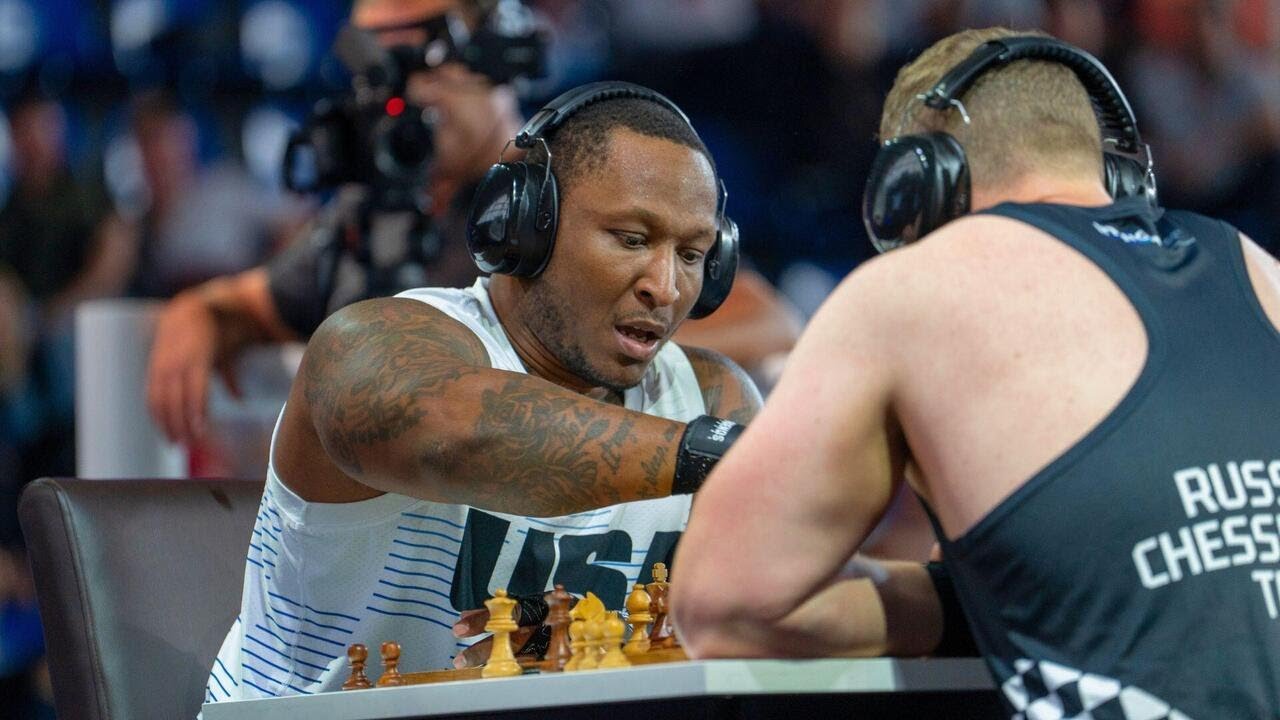
Chess boxing, a unique sport combining alternating rounds of chess and boxing, has evolved from a fictional concept in a French graphic novel to a real and competitive event. Fighters alternate between three-minute rounds of boxing and chess, with victory achievable by either knockout or checkmate. The sport, which has gained popularity particularly in Russia, recently featured an exhibition match at the Paris Olympics and drew competitors from 18 countries to the World Chess Boxing Championships in Serbia.
The American team, led by coach and promoter Matt Thomas, is a diverse group including a lawyer, a math major, and a military veteran. Thomas himself was the first American to compete for a world chess boxing title in 2018, winning by checkmate. Despite initial skepticism about the sport’s legitimacy, Thomas and his team embrace the blend of mental and physical challenge, describing chess as a battle on the board and boxing as a physical form of chess.
One standout American competitor is William “Gambit Man” Grafe, a New York State chess champion who added muscle to transition into chess boxing. Grafe’s journey reflects the sport’s appeal to those who have faced ridicule for their chess skills but seek to prove their toughness in the ring. Like his teammates, Grafe self-funded his participation, motivated by national pride and the challenge of competing against the dominant Russian team, which benefits from widespread institutional support in schools and universities.
The competition showcased intense matches with a mix of knockdowns, knockouts, and strategic chess play. Wayne “God King” Clark, a former Harlem Globetrotter, and James Kanty III, a professional chess player and boxer, represented the U.S. with determination. Kanty’s remarkable victory over a seasoned Russian opponent to claim the super heavyweight world championship was a highlight, demonstrating the sport’s demanding physical and mental endurance.
Russia maintained its dominance by winning the majority of medals, but the U.S. team’s strong showing with nine medals, including two golds, surprised many. The sport’s unique challenge lies not only in excelling at both chess and boxing but also in mastering the critical transition between the two disciplines. With growing interest and grassroots efforts like school tours in the U.S., chess boxing is poised to expand its reach, blending brains and brawn in a truly distinctive athletic contest.