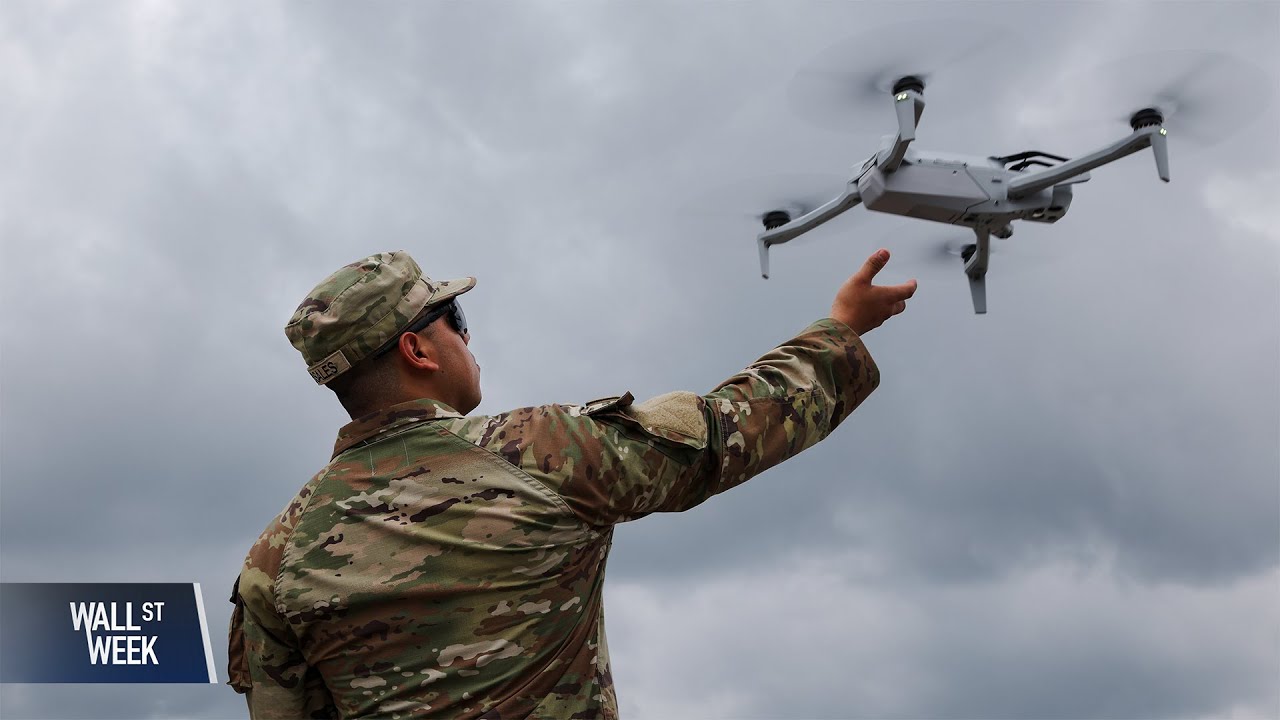
The video explores the transformative impact of artificial intelligence (AI) on the U.S. military, emphasizing that AI is not just about current deployments but fundamentally changing the theory and preparation of warfare. The future battlefield is envisioned as a blend of human and machine collaboration, where autonomous vehicles and robotic systems are integrated with AI that can see, think, and act independently. This shift requires the military to adopt a faster, more agile approach to innovation, moving away from the traditionally slow and cautious acquisition processes that have hindered rapid technological adoption.
Secretary of the U.S. Army Dan Driscoll highlights the need to overhaul the Pentagon’s bureaucratic system, which previously involved a cumbersome 16-step process for approving new technologies. The new approach collapses these steps, holding leaders directly accountable for quickly testing and learning from new innovations. Former Deputy Secretary of Defense Kathleen Hicks acknowledges that cultural resistance within the Pentagon and among stakeholders is a significant challenge, but stresses that AI’s ability to process vast amounts of data quickly is already proving invaluable, especially in countering threats like improvised explosive devices (IEDs).
Companies like Shield AI are at the forefront of developing AI-powered drones and autonomous systems that can enhance battlefield effectiveness. Ryan Tseng, Shield AI’s president, explains that AI enables the deployment of large numbers of robotic systems capable of independent decision-making, which is crucial for managing complex scenarios such as defending against swarms of drones. This AI-driven autonomy is seen as essential for future warfare, where human decision-making alone cannot keep pace with the speed and scale of modern combat.
The ongoing conflict in Ukraine serves as a real-time testing ground for these technologies, with drone warfare significantly altering traditional combat strategies. The U.S. military and its NATO allies are closely studying these developments to learn and adapt. Additionally, autonomous ground vehicles, like those developed by German company Fernride, are gaining importance for logistics and defense, especially in geopolitically sensitive regions where human drivers face significant risks.
Despite the promise of AI, the video stresses that it is not a replacement for human soldiers but a tool to enhance their capabilities. Successful integration of AI requires collaboration between traditional defense manufacturers and innovative startups. Ultimately, warfare remains a human act of judgment, but AI can bring unprecedented speed, precision, and efficiency to military operations, marking a new era in defense technology.