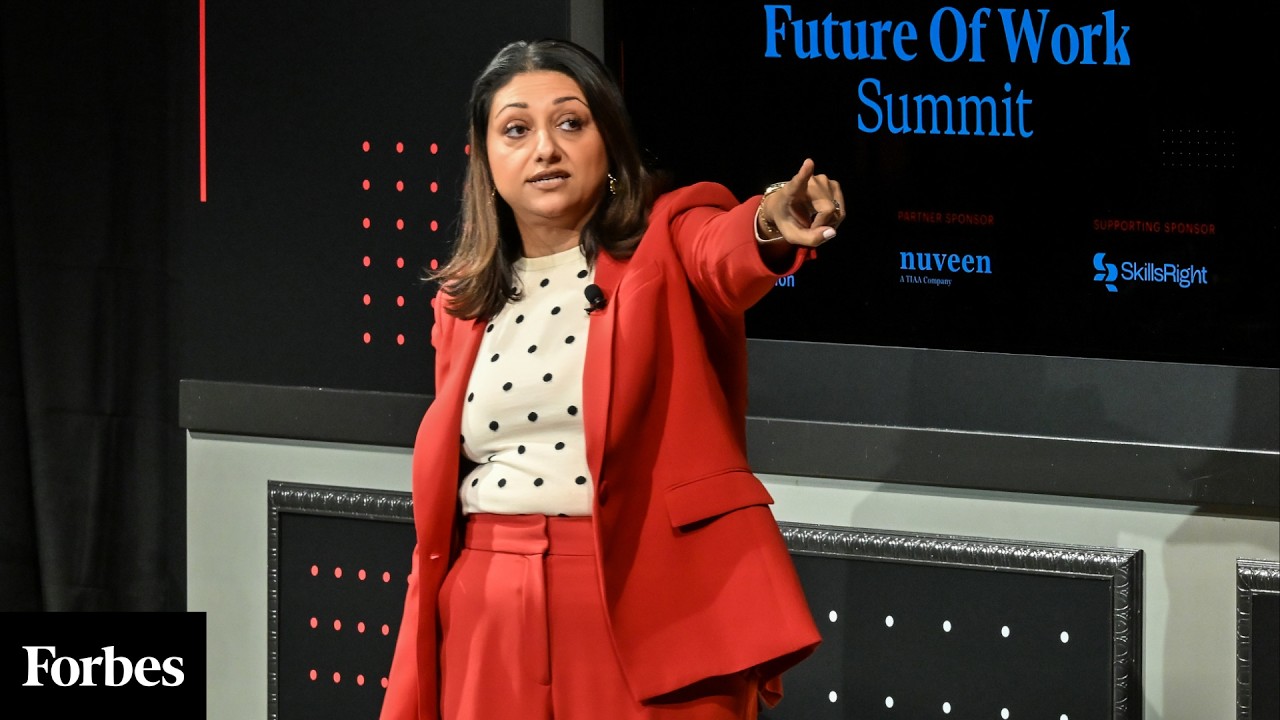
In this talk, Deepa Vyas, the global head of data and AI executive search at ZRG Partners, addresses the pervasive concern about AI and its impact on jobs and organizational structures. She begins by highlighting the increasing prominence of AI in corporate earnings calls, noting that since the release of ChatGPT in late 2023, AI has become a critical topic for CEOs, with companies mentioning it frequently to signal their commitment to innovation. This trend reflects real market pressure, as companies openly discussing AI have shown better stock performance compared to those that do not.
Deepa challenges the common narrative of AI as a job killer by dissecting the headline figure of 116,000 job cuts attributed to AI. She explains that these numbers often represent a reallocation of resources rather than outright layoffs, with companies investing in AI infrastructure and talent instead of traditional payroll. The organizational chart is evolving, with AI squeezing traditional roles, especially at the entry-level and middle management layers. Entry-level hiring has slowed, not because of mass firings, but due to fewer new hires, which poses a long-term risk for talent pipelines. Meanwhile, middle managers face increased pressure to do more with less, often managing larger teams and integrating AI tools into their workflows.
The speaker emphasizes that AI is reshaping job roles rather than eliminating them. New positions such as Chief AI Officers, AI deployment engineers, and AI agent operators are emerging, requiring a blend of technical skills and emotional intelligence. Managers are transitioning from task delegation to coaching roles, focusing on human judgment and critical thinking, which AI cannot replace. Deepa stresses that AI fluency is now a baseline requirement for job seekers, and those who fail to demonstrate AI skills risk becoming obsolete in the job market.
Deepa offers practical advice for organizations navigating this shift. She urges companies to redesign entry-level roles with AI in mind, focusing on skills and outcomes rather than years of experience. Job descriptions need to be frequently updated to keep pace with rapid technological changes. She also highlights the growing trend of portfolio careers, where experienced professionals prefer flexible, fractional roles over traditional full-time positions, presenting new challenges for talent acquisition and retention.
Finally, Deepa underscores the importance of transparent communication about AI within organizations. Leaders must proactively inform their employees about AI initiatives to build trust and alleviate fears of replacement by machines. She concludes by encouraging organizations to embrace AI thoughtfully and collaboratively, ensuring that people remain at the center of this technological transformation.
Useful Links