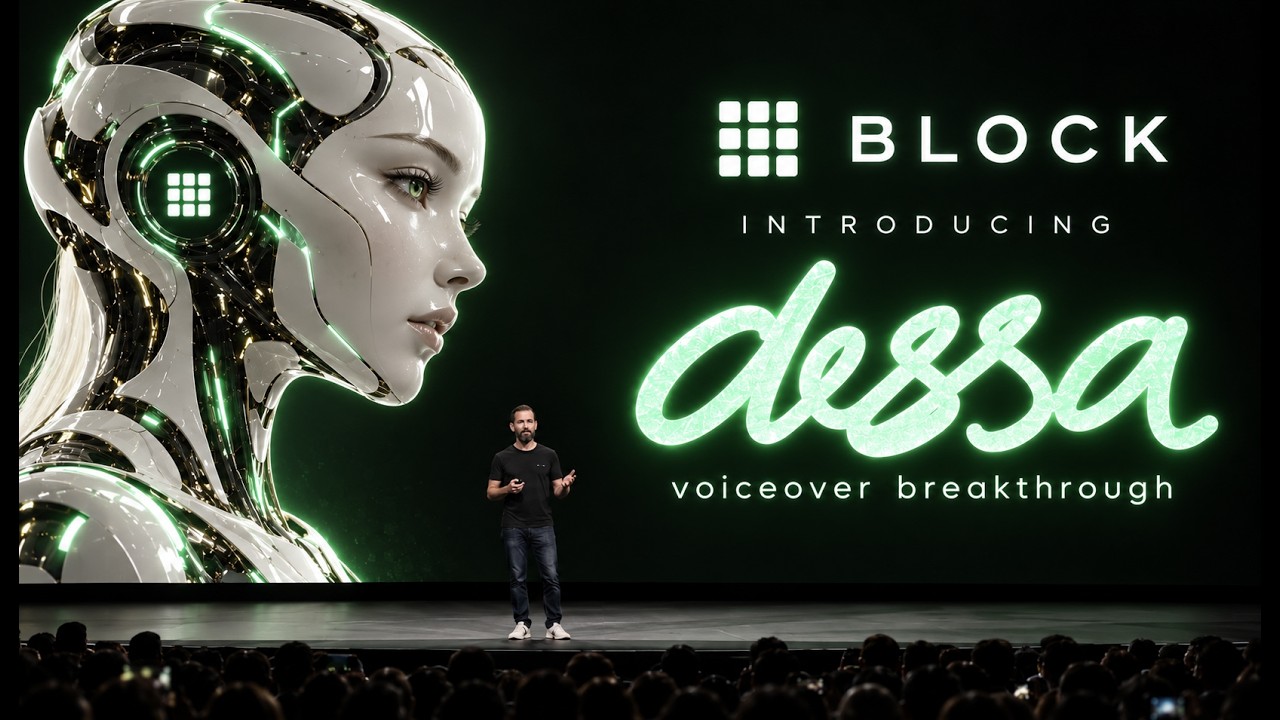
Jack Dorsey’s company Block has unveiled Desa, an AI voice model so human-like that it is nearly indistinguishable from a real person. Desa can laugh, interrupt, pause, and respond with natural emotion during conversations, unlike traditional AI assistants that rely on text-based processing and take turns speaking. This breakthrough was achieved by training Desa solely on recordings of real human conversations, without any text input, enabling it to capture the nuances of natural speech such as hesitations, overlaps, and emotional cues. The announcement has garnered over 11 million views and is being hailed as a “GPT-3 moment” for speech AI, signaling a major leap forward in voice technology.
The key to Desa’s realism lies in its full duplex speech-to-speech model, which allows it to listen and talk simultaneously, mimicking human conversational dynamics. Unlike previous AI voices that sounded robotic or required users to speak in specific ways, Desa reacts in real-time with laughter, interruptions, and changes in volume, making interactions feel authentic. This approach mirrors how humans learn language—through listening and engaging in conversations rather than reading text—resulting in a voice that embodies the imperfections and emotional depth of real speech. Desa’s ability to run on a standard MacBook Pro also highlights its efficiency and potential for widespread use.
While Desa’s capabilities are impressive, they raise significant concerns about misuse, particularly in phone scams. Because the AI voice is so convincing, it could be exploited to impersonate loved ones or trusted officials, making scams more effective and harder to detect, especially for vulnerable populations like the elderly. The technology’s ability to fabricate believable personal stories on the fly further complicates detection. Although Block has restricted access to Desa for safety research, the existence of such technology foreshadows a future where scam calls could reach pandemic levels, and distinguishing AI from humans by voice alone becomes increasingly difficult.
Another important implication is the potential impact on jobs and social relationships. Desa’s natural conversational abilities could accelerate the replacement of human call center workers with AI, offering businesses cost-effective and efficient customer service but threatening employment for millions. Additionally, the emotional realism of Desa may lead some individuals to form attachments to AI voices, potentially increasing social isolation. While AI companionship could benefit lonely or isolated people, it also risks blurring the line between human and machine interactions, raising ethical and psychological questions about reliance on AI for emotional support.
Looking ahead, Desa represents just the beginning of a new era in voice AI, with rapid improvements expected in the near future. Its small size and efficiency mean such technology could become widely accessible, beyond the control of large companies or regulators. To mitigate risks, experts recommend practical measures like establishing family safe words, educating vulnerable groups about AI voice scams, and advocating for regulations requiring AI voices to disclose their nature. While Desa’s technical achievements are remarkable and hold promise for positive applications, society must prepare for the challenges it brings to trust, security, and human connection in an increasingly AI-driven world.
Useful Links