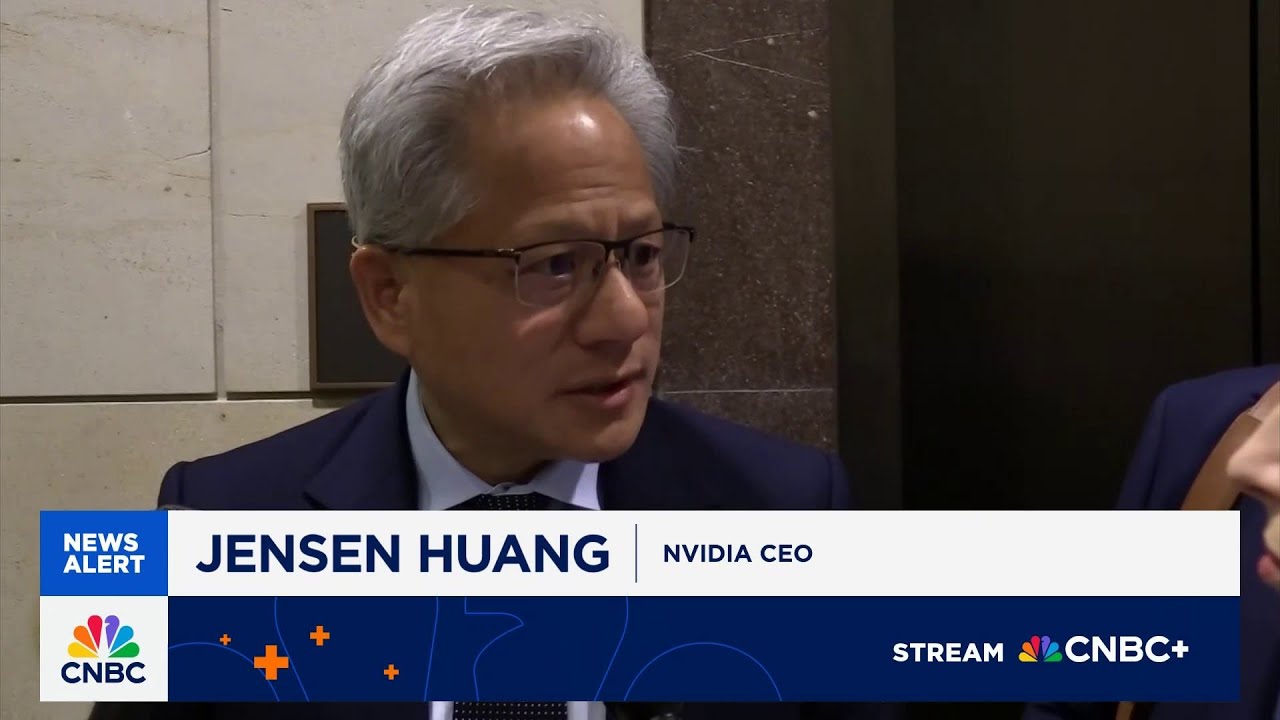
In the video, Jensen Huang, CEO of Nvidia, discusses the global competition in AI development, emphasizing that China is not behind the United States but is actually very close in technological capabilities. He highlights that China has made significant progress in AI research, with about 50% of the world’s AI researchers being Chinese. Huang stresses that AI is a long-term, ongoing race that requires sustained effort and investment from both countries, and that China possesses formidable technology in computing, networking, and software.
Huang also talks about the importance of U.S. policy in maintaining its leadership in AI. He advocates for policies that support onshore manufacturing and innovation, including the need for resources and infrastructure to build factories within the U.S. He mentions that tariffs and other trade policies could impact the ability of American companies to compete effectively and to develop AI domestically, which is crucial for national security and economic strength.
The CEO is scheduled to visit the White House to discuss AI policy and tariffs, indicating ongoing government-industry collaboration. He notes that the Biden administration has a different approach to AI compared to the previous Trump administration, which had reversed some earlier plans. Huang emphasizes the importance of clear, supportive policies to ensure the U.S. remains a leader in setting global standards and rules for AI development.
Huang acknowledges the strategic importance of China in the AI ecosystem, noting that the country has a wealth of resources, talent, and technological capabilities. Despite U.S. efforts to restrict certain chip exports, China continues to advance rapidly, making it a key competitor. He underscores that the U.S. must invest in its own ecosystem—covering skills, energy, manufacturing, and policy—to stay ahead in this race.
Finally, the discussion touches on broader concerns about U.S. competitiveness, especially in light of recent shifts in government priorities and policies. Huang emphasizes that maintaining leadership in AI requires a long-term commitment and coordinated effort across industry, government, and academia. The overall message is that the U.S. is not in a position of dominance but is in a close race with China, and strategic policies and investments are essential to secure its future leadership in AI technology.