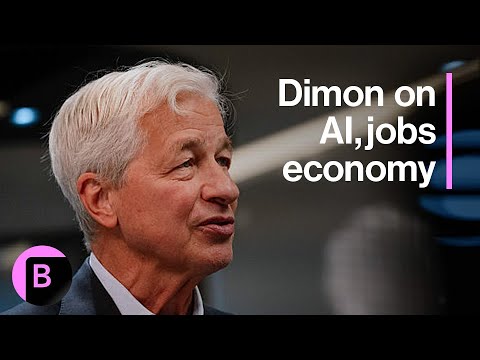
JPMorgan CEO Jamie Dimon discussed the extensive integration of artificial intelligence (AI) within the bank, highlighting that JPMorgan has been investing in AI since 2012 with around $2 billion spent annually. AI is transforming various aspects of the business, including risk management, fraud detection, marketing, idea generation, and customer service. Dimon emphasized that AI has already generated about $2 billion in cost savings and improved productivity, with 150,000 employees using AI tools weekly. The bank is also exploring AI applications in coding and research, and plans to continue expanding its use safely and responsibly under strict regulations.
Regarding the impact of AI on jobs, Dimon acknowledged that AI will affect employment by enhancing some roles and eliminating others. He stressed the importance of retraining and redeploying employees to stay ahead of the curve. While some functions may see job reductions, JPMorgan expects overall job growth as the bank adapts to new technologies. Dimon also commented on the massive global spending on AI infrastructure, comparing it to previous technological booms like the internet, where many investments failed but a few major companies emerged successfully.
Dimon shared his views on the current economic environment, noting that the bull market has lasted nearly three years with high asset prices and low credit spreads. He expressed some concern about inflation potentially not declining as expected, partly due to ongoing government spending. While he does not currently worry about a recession in 2026, he acknowledged it as a possibility and emphasized JPMorgan’s readiness to navigate any economic challenges. On the topic of the US government shutdown, Dimon criticized the practice as harmful but did not foresee a prolonged shutdown significantly impacting the economy or markets.
On geopolitical and regulatory matters, Dimon discussed the US government’s industrial policies, particularly in relation to national security and trade. He supported targeted government support for critical industries, such as rare earth magnets and chip manufacturing, but cautioned against excessive intervention or virtue signaling. Dimon also praised efforts to reduce regulatory burdens in the UK and the US, advocating for reforms that encourage more companies to go public and foster an equity culture. He highlighted the importance of maintaining a competitive and innovative financial ecosystem globally.
Finally, Dimon addressed talent and immigration issues, particularly the H-1B visa program in the US. While acknowledging past abuses, he supported a merit-based immigration system that attracts highly skilled workers, including those with advanced degrees who contribute to the economy. Dimon expressed optimism about the future of banking, technology, and global investment, emphasizing JPMorgan’s commitment to innovation, client service, and adapting to changing economic and technological landscapes.