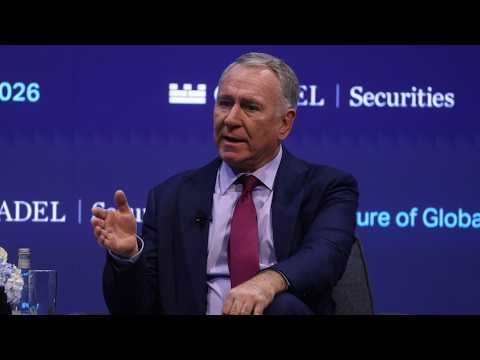
In this interview at the annual Citadel Securities Conference, Ken Griffin reflects on the rapid advancements in artificial intelligence (AI) over the past year, describing a mix of emotions from initial depression to optimism. He highlights how AI is transforming white-collar work by drastically reducing the time needed to complete complex tasks, which poses challenges for certain jobs but also creates golden opportunities for entrepreneurs and startups. Griffin emphasizes the need for national reskilling initiatives to help workers adapt and stresses that corporate America must innovate faster to remain competitive, ultimately benefiting consumers.
Griffin discusses how Citadel approaches investing amid these technological shifts, underscoring that fundamental research remains at the core of their business. While trading has become highly automated, the creativity and analysis of their research teams drive alpha generation. He also comments on recent market volatility, particularly in semiconductor stocks, attributing it to investors becoming more discerning about the sustainability of high margins and demand for GPUs. Griffin warns of potential price declines if supply outpaces demand and notes that corporate America is becoming more strategic in balancing costs related to AI model usage.
Addressing concerns about a possible AI bubble, Griffin acknowledges that technological revolutions often coincide with market bubbles, citing the dot-com era as an example. However, he believes that despite any bubble elements, the long-term impact of AI will be transformative and positive. On market sell-offs, he cautions against blaming hedge fund deleveraging as a default explanation, advocating instead for deeper analysis to understand underlying causes. He also reflects on Citadel’s recent strategic moves, such as the situational awareness portfolio acquisition, highlighting their expertise in managing complex trades during turbulent times.
Turning to politics, Griffin shares his perspective on the upcoming U.S. midterm elections, predicting losses for the president’s party as part of the normal political cycle. He expresses concern about rising democratic socialist candidates and critiques policies like tariffs and immigration enforcement, advocating for pragmatic solutions such as embracing robotics and supporting entrepreneurship to grow the economy. Griffin stresses the importance of fiscal responsibility, warning that unchecked deficits and spending could lead to inflation, a weaker dollar, and a lower standard of living if not addressed through growth and reform.
Finally, Griffin discusses Citadel’s geographic and cultural positioning, describing the firm’s center of gravity as spanning between London, Miami, and New York. He praises Miami’s pro-business environment and diverse immigrant community, particularly Cuban Americans, for fostering a strong entrepreneurial spirit. He highlights the transformative potential of Carnegie Mellon University’s new Miami campus in robotics and AI. On company culture, Griffin emphasizes the value of physical proximity for team collaboration and talent development, advocating for in-person interaction to foster creativity and mentorship within Citadel.
Useful Links