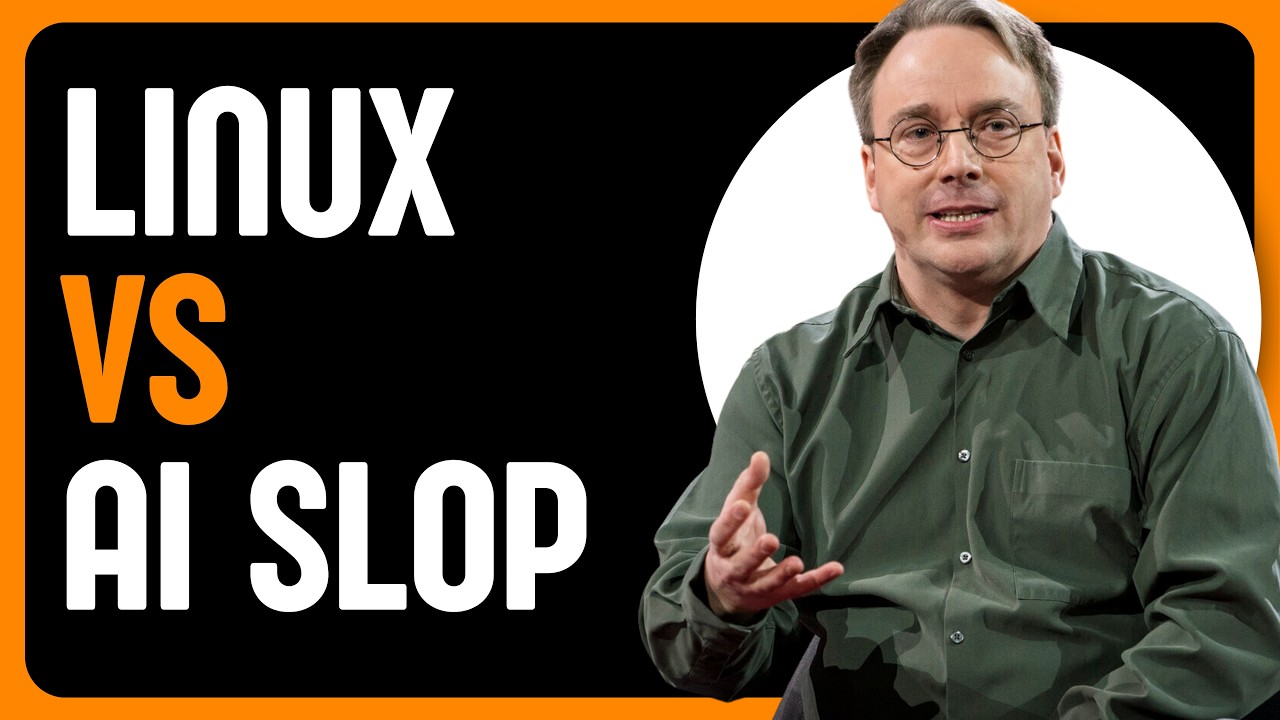
Linus Torvalds has grown to appreciate AI as a valuable assistant in Linux kernel development, using it for debugging, patch reviews, and even hobby projects, while acknowledging its limitations and the need for human oversight. He emphasizes that AI should enhance maintainers’ productivity without replacing their expertise, highlighting ongoing efforts to improve AI tools to reduce stress and improve code quality within the Linux community.
The video explores Linus Torvalds’ evolving perspective on artificial intelligence (AI) and its integration into Linux kernel development. Linus has personally used AI tools for debugging and brainstorming, notably during a challenging debug session involving a memory management bug in Intel’s GPU driver. Despite AI suggesting he give up, Linus persisted and credited the AI for handling much of the tedious investigative work. This experience reflects his growing comfort with AI as a valuable assistant in programming tasks.
Linus discusses the impact of AI on the Linux kernel development process, particularly through AI-driven patch reviews. Tools like Sashiko, maintained by Google, automatically review patches submitted to the Linux kernel mailing lists. While not perfect and sometimes producing incorrect feedback, these AI tools have changed how maintainers work by filtering a large influx of patches, including those addressing long-neglected code or security issues. However, this AI-driven deluge of patches also contributes to maintainer stress, highlighting the need for AI tools to ease rather than replace human oversight.
The conversation also touches on the broader challenges maintainers face, such as burnout and stress, and how AI tools can help mitigate these issues by catching common errors like off-by-one mistakes or API misuse. At a recent maintainer summit, much discussion centered on improving AI tools for code generation and review to make them more effective and less burdensome. Linus emphasizes that AI is not a magic solution for automatically implementing new features but rather a supportive tool that can enhance maintainers’ productivity.
Linus shares his personal journey with AI, from skepticism to appreciation, especially in his hobby projects. He recounts using AI to create a modern JavaScript UI for an acoustic guitar pedal, a task outside his usual expertise in low-level C programming. Although the AI’s initial output was poor, iterative prompting and guidance led to impressive results. Linus views AI as a “gateway drug” for programming, lowering the barrier to entry for newcomers and making coding more enjoyable by handling tedious or unfamiliar tasks.
In conclusion, Linus Torvalds sees AI as a powerful tool that, when used correctly, can enhance programming and maintainers’ workflows without replacing human expertise. He encourages treating AI as a helpful assistant rather than a crutch, especially for serious projects. The video ends by noting the ongoing conversation within the Linux community about balancing AI’s benefits with the challenges it brings, inviting viewers to reflect on Linus’ positive yet cautious stance on AI’s role in software development.
Useful Links